The Kynix Blog
Stay Ahead with Expert Electronics Insights,
Industry Trends, and Innovative Tips
- Electronic Components
- News Room
- General electronic semiconductor
- Components Guide
- Sort by
- Robots
- Transmitters
- Capacitors
- IC Chips
- PCBs
- Connectors
- Amplifiers
- Memory
- LED
- Diodes
- Transistors
- Battery
- Oscillators
- Resistors
- Transceiver
- RFID
- FPGA
- Mosfets
- Sensor
- Motors, Solenoids, Driver Boards/Modules
- Relays
- Optoelectronics
- Power
- Transformer
- Fuse
- Thyristor
- potentiometer
- Development Boards
- RF/IF
- Semiconductor Information
- PCB
- transistor
"What Capacitor Types Should I Choose?" - Complete Guide 2025This is a question asked by many beginners and even experienced engineers. I will give you a comprehensive answer to this question, covering all the essential details you need to know. After reading this updated guide, you should be able to confidently select the right capacitor for your project. Understanding why one capacitor type might be better than another is crucial because there are many factors (temperature characteristics, package size, ESR, lifetime, etc.) that can make a specific type of capacitor the optimal choice for your application.2025 Update: This guide has been updated to include the latest capacitor technologies, including advanced ceramic capacitors, solid polymer electrolytes, and new packaging formats that have emerged since 2016.I What is a Capacitor?A capacitor is a passive two-terminal electronic component that stores electrical energy in an electric field. The effect of a capacitor is known as capacitance. While some capacitance exists between any two electrical conductors in proximity in a circuit, a capacitor is a component specifically designed to add capacitance to a circuit. The capacitor was originally known as a condenser or condensator, and this original name is still widely used in many languages, though not commonly in English.The physical form and construction of practical capacitors vary widely, and many capacitor types are in common use. Most capacitors contain at least two electrical conductors, often in the form of metallic plates or surfaces separated by a dielectric medium. A conductor may be a foil, thin film, sintered bead of metal, or an electrolyte. The nonconducting dielectric acts to increase the capacitor's charge capacity. Materials commonly used as dielectrics include glass, ceramic, plastic film, paper, mica, air, vacuum, and various oxide layers. Capacitors are widely used as parts of electrical circuits in many common electrical devices. Unlike a resistor, an ideal capacitor does not dissipate energy, though real capacitors have some energy loss.When two conductors experience a potential difference, for example, when a capacitor is attached across a battery, an electric field develops across the dielectric, causing a net positive charge to collect on one plate and a net negative charge to collect on the other plate. No current actually flows through the dielectric; however, there is a flow of charge through the source circuit. If the condition is maintained sufficiently long, the current through the source circuit ceases. However, if a time-varying voltage is applied across the leads of the capacitor, the source experiences an ongoing current due to the charging and discharging cycles of the capacitor.II Capacitor Functions1. Blocking DC (DC Blocking): The function is to prevent the passage of DC current while allowing AC signals to pass through. This is fundamental to AC coupling applications.2. Bypass (Decoupling): Provides a low impedance path for AC signals, effectively bypassing certain components in AC circuits. This is crucial for power supply decoupling and noise reduction.3. Coupling: Acts as a connection between two circuits, allowing AC signals to pass while blocking DC components. This enables signal transmission to the next stage while maintaining DC isolation.The purpose of using a capacitor as a coupling element is to transmit the AC signal from one stage to the next while preventing DC bias voltages from affecting subsequent stages. This makes circuit design simpler and performance more stable.Without coupling capacitors, AC signal amplification would still occur, but the DC operating points of all stages would need to be carefully coordinated. The interaction between stages makes this extremely difficult, especially in multi-stage amplifiers.4. Filtering: This is critically important for circuits, especially those behind CPUs and power supplies. Capacitors filter out unwanted frequency components.The impedance of a capacitor decreases with increasing frequency (Z = 1/(2πfC)). At low frequencies, the capacitor presents high impedance, allowing signals to pass. At high frequencies, the capacitor presents very low impedance, effectively shorting high-frequency noise to ground.5. Temperature Compensation: Improves circuit stability by compensating for temperature-dependent variations in other components.Analysis: Since the timing capacitor's value determines the oscillation frequency, it must remain stable across temperature variations. Capacitors with positive and negative temperature coefficients can be combined for temperature compensation.When operating temperature increases, one capacitor's value increases while another decreases. Since they're connected in parallel, the total capacitance remains relatively stable. Similarly, when temperature decreases, the opposite occurs, maintaining stable oscillation frequency.6. Timing: Used with resistors to determine circuit time constants in RC timing circuits.When a signal transitions from low to high and passes through an RC circuit, the capacitor's charging characteristics prevent the output from changing immediately. Instead, there's a gradual transition, creating a time delay that depends on the RC time constant.7. Tuning: Used in frequency-selective circuits such as those in mobile phones, radios, and televisions for channel selection and filtering.8. Switching/Rectification: Controls the switching of semiconductor components at predetermined times in power conversion circuits.9. Energy Storage: Stores electrical energy for release when needed. Examples include camera flash units, defibrillators, and backup power systems. Modern supercapacitors can store energy approaching the levels of small lithium batteries.III Capacitor TypesThere are several different types of capacitors that vary by polarity, performance, cost, and application. Below are the most common capacitor types: aluminum electrolytic, ceramic, tantalum, film, mica, and polymer capacitors, along with their features, applications, and selection criteria.1. Aluminum Electrolytic CapacitorAluminum electrolytic capacitors use aluminum foil electrodes separated by electrolyte-impregnated paper. The thin aluminum oxide layer acts as the dielectric. Due to the oxide film's unidirectional conduction properties, these capacitors are polarized.Advantages: High capacitance values, can handle large ripple currents, cost-effective for bulk energy storage.Applications: Power supply filtering, energy storage, motor starting, audio coupling.Disadvantages: Large tolerance (typically ±20%), significant leakage current, limited high-frequency performance (typically below 100kHz), temperature sensitivity, finite lifetime due to electrolyte evaporation.2025 Update: Modern aluminum electrolytics now feature improved electrolytes with operating temperatures up to 150°C and lifetimes exceeding 10,000 hours at rated temperature.2. Ceramic CapacitorCeramic capacitors use ceramic materials with high dielectric constants, such as barium titanate, formed into discs, tubes, or chips. Silver electrodes are applied through firing processes.Available in two main classes:Class 1 (C0G/NP0): Temperature-stable, low loss, used in precision timing and filteringClass 2 (X7R, X5R, Y5V): Higher capacitance density but with temperature and voltage dependenceApplications: High-frequency circuits, decoupling, bypass, timing circuits, RF applications.Advantages: Excellent high-frequency characteristics, low ESR, small size, non-polarized, good temperature stability (Class 1).Disadvantages: Voltage and temperature dependence (Class 2), microphonic effects in some types, limited capacitance values in stable types.2025 Update: Multi-layer ceramic capacitors (MLCC) now achieve capacitance values up to 1000µF in small packages, with improved temperature stability and reduced acoustic noise.3. Tantalum CapacitorUses sintered tantalum powder as the anode with tantalum pentoxide as the dielectric and manganese dioxide or conductive polymer as the cathode.Advantages: Excellent temperature and frequency characteristics, low leakage current, stable capacitance, long service life, high capacitance-to-volume ratio, low ESR (polymer types).Applications: Mobile devices, computers, automotive electronics, medical equipment, aerospace applications.Disadvantages: Higher cost, susceptible to voltage transients, can fail catastrophically if overvoltaged.2025 Update: Polymer tantalum capacitors now offer ESR values below 10mΩ and improved surge current handling, making them ideal for high-performance applications.4. Film CapacitorStructure: Film capacitors use plastic films such as polyethylene terephthalate (PET), polypropylene (PP), polystyrene (PS), or polycarbonate as dielectrics, with metal foil or metallized film electrodes.Common types include:Polyester (PET): General purpose, good stabilityPolypropylene (PP): Low loss, high frequency capabilityPolystyrene (PS): Excellent stability, low temperature coefficientPolycarbonate: Good temperature stability (now less common)Advantages: Non-polarized, high insulation resistance, excellent frequency characteristics, low dielectric loss, self-healing properties (metallized types).Applications: Power electronics, motor drives, lighting ballasts, audio equipment, power factor correction, snubber circuits.2025 Update: New film capacitor technologies include improved polypropylene films for electric vehicle applications and enhanced metallization techniques for better self-healing properties.5. Mica CapacitorStructure: Uses natural mica sheets as the dielectric with silver electrodes, assembled in a stacked configuration and encapsulated in epoxy or molded plastic.Characteristics: Extremely stable, low temperature coefficient, high Q factor, excellent frequency characteristics up to several GHz.Applications: RF circuits, oscillators, filters, precision timing circuits, test equipment, military and aerospace applications.Advantages: Outstanding stability, low loss, predictable temperature coefficient, radiation resistant.Disadvantages: Higher cost, limited availability, larger size compared to ceramic alternatives.6. Polymer CapacitorStructure: Uses conductive polymers as the cathode material, available in both aluminum and tantalum versions. The polymer provides better conductivity than traditional liquid electrolytes.Advantages:Extremely low ESR (as low as a few milliohms)High ripple current capabilityStable capacitance over frequencyNo voltage derating required within ratingsFail-safe behavior (no catastrophic failures)Long operational lifeApplications: CPU power supplies, graphics cards, high-frequency switching converters, automotive electronics, telecommunications equipment.2025 Update: Hybrid polymer capacitors now combine the benefits of wet and polymer electrolytes, offering improved performance across temperature ranges and extended lifetimes.IV Capacitor Value Marking Methods1) Direct Marking MethodUses letters and numbers to directly mark values on the component body. For example, 1µF denotes 1 microfarad. Some capacitors use "R" to denote decimal points, such as R56 for 0.56 microfarads.2) Character-Symbol MethodCombines numbers and characters where symbols represent units: p (pico), n (nano), µ (micro), m (milli), F (farad). Examples:p10 = 0.1 pF1p0 = 1 pF6P8 = 6.8 pF2µ2 = 2.2 µFTolerance markings for values less than 10pF: B=±0.1pF, C=±0.2pF, D=±0.5pF, F=±1pF.3) Color Code MethodSimilar to resistor color codes, uses colored bands or dots to indicate capacitance, tolerance, and voltage rating.4) Numerical Code MethodThree-digit system where the first two digits are significant figures and the third digit is the multiplier (power of 10). Examples:272 = 27 × 10² = 2700 pF473 = 47 × 10³ = 47000 pF105 = 10 × 10⁵ = 1,000,000 pF = 1 µF2025 Update: QR codes are now being used on some capacitors to provide detailed specifications and traceability information accessible via smartphone apps.V Capacitor Characteristics(1) Capacitance and Tolerance: The maximum allowable deviation between actual and nominal capacitance. Standard tolerance grades include:Grade I: ±5%Grade II: ±10%Grade III: ±20%Precision grades: ±1%, ±2%, ±0.5%, ±0.1%(2) Rated Working Voltage: The maximum continuous voltage a capacitor can withstand while maintaining reliable operation. Higher voltage ratings generally require larger physical sizes for the same capacitance.(3) Temperature Coefficient: The relative change in capacitance per degree of temperature change. Smaller temperature coefficients indicate better stability.(4) Insulation Resistance: Indicates leakage current levels. Higher insulation resistance means lower leakage. Typical values range from megohms to teraohms depending on capacitor type and size.(5) Dielectric Loss: Energy dissipated as heat during operation, usually expressed as loss tangent (tan δ) or dissipation factor (DF).(6) Frequency Characteristics: How electrical parameters vary with frequency. Different capacitor types have different frequency limitations:Small mica capacitors: up to 1 GHzCeramic capacitors: up to several GHzFilm capacitors: up to 1 MHz (depending on type)Electrolytic capacitors: typically below 100 kHz2025 Update: New measurement techniques now allow characterization of capacitor behavior up to millimeter-wave frequencies, important for 5G and beyond applications.VI Capacitor Electrical SymbolsHere are the standard schematic symbols for various capacitors:(1) ①: Basic capacitor symbol for non-polarized types (ceramic, film, mica)(2) ②-⑥: Polarized capacitor symbols (electrolytic, tantalum) - curved plate indicates negative terminal(3) ⑦: Variable capacitor symbol(4) ⑧: Adjustable (trimmer) capacitor symbolStandard Capacitor ValuesCapacitors are available in standard values following the E-series. Here are the most commonly found values:Standard Capacitor ValuespFpFpFpFµFµFµFµFµFµFµF1.01010010000.010.11.0101001000100001.51515015000.0150.151.5151501500150002.22222022000.0220.222.2222202200220003.33333033000.0330.333.3333303300330004.74747047000.0470.474.7474704700470006.86868068000.0680.686.868680680068000VII How to Choose Capacitors Correctly?7.1 Selection Requirements1) Application-Based Selection:Power Supply Filtering: Aluminum electrolytic or polymer capacitorsHigh-Frequency Decoupling: Ceramic capacitors (MLCC)Precision Timing: C0G/NP0 ceramic or film capacitorsAudio Coupling: Film or non-polarized electrolytic capacitorsMotor Starting: Film capacitors rated for AC operationEnergy Storage: Supercapacitors or high-capacity electrolytics2) Voltage Rating Selection: Choose capacitors with voltage ratings 1.5-2 times the maximum expected voltage. For pulsed applications, consider peak voltages. In high-temperature environments, derate voltage further.3) Temperature Considerations: Select capacitors rated for the expected operating temperature range. Consider both ambient temperature and self-heating effects.4) Frequency Response: Match the capacitor's frequency characteristics to your application requirements. High-frequency applications require low-ESR types.5) Lifetime Requirements: Consider operational lifetime, especially for electrolytics. Calculate expected life based on temperature and ripple current.6) Environmental Factors: Consider humidity, vibration, shock, and chemical exposure in the operating environment.7.2 Advanced Selection Criteria1) Frequency-Based Selection:DC to 1 kHz: Aluminum electrolytic, tantalum1 kHz to 1 MHz: Film capacitors, low-ESR electrolytics1 MHz to 100 MHz: Ceramic capacitors (X7R, X5R)Above 100 MHz: C0G/NP0 ceramic capacitors2) Temperature Stability Ranking:C0G ceramic ≥ Film ≥ Solid tantalum ≥ Mica ≥ X7R ceramic ≥ Aluminum electrolytic3) ESR Performance Ranking:Ceramic ≥ Film ≥ Polymer ≥ Solid tantalum ≥ Wet tantalum ≥ Aluminum electrolytic4) Ripple Current Capability:Film ≥ Polymer ≥ Aluminum electrolytic ≥ Ceramic ≥ Tantalum2025 Update: New selection tools include AI-powered capacitor selection software that considers multiple parameters simultaneously and suggests optimal components based on application requirements.7.3 Common Selection Mistakes to Avoid1. Voltage Derating: Always provide adequate voltage margin. A 10V capacitor should not be used in a 10V circuit.2. Temperature Effects: Consider both ambient temperature and self-heating. Electrolytic capacitors lose significant capacitance at low temperatures.3. Frequency Mismatch: Using electrolytics in high-frequency applications or ceramics in precision low-frequency circuits.4. Ignoring ESR: High ESR can cause excessive heating and poor performance in switching applications.5. Lifetime Calculations: Not considering the impact of temperature and ripple current on electrolytic capacitor lifetime.6. Mechanical Stress: Ignoring thermal expansion, vibration, and mechanical mounting stress.2025 Update: Modern design software now includes comprehensive capacitor models that account for parasitic effects, aging, and environmental factors, helping prevent common selection errors.VIII Emerging Capacitor Technologies (2025)1. Supercapacitors (EDLC/Ultracapacitors)Supercapacitors bridge the gap between traditional capacitors and batteries, offering:Capacitance values from 0.1F to over 3000FHigh power densityLong cycle life (>1 million cycles)Fast charging/dischargingWide temperature range operationApplications: Energy harvesting, backup power, automotive start-stop systems, renewable energy storage, IoT devices.2. Solid-State CapacitorsNew solid-state electrolyte technologies offer:Improved safety (no liquid electrolyte)Extended temperature rangeBetter reliabilityReduced size3. Graphene-Enhanced CapacitorsGraphene electrodes provide:Ultra-low ESRHigh frequency capabilityImproved thermal managementEnhanced durabilityIX ConclusionCapacitor technology continues to evolve rapidly, with improvements in materials science, manufacturing processes, and design techniques leading to better performance and lower costs. Whether you're beginning a new design or updating an existing one, it's essential to stay current with the latest capacitor technologies and selection criteria.The key to successful capacitor selection lies in understanding your application requirements and matching them to the appropriate capacitor characteristics. Consider not just the basic electrical parameters, but also environmental factors, lifetime requirements, and cost constraints.Modern design tools and simulation software can help optimize capacitor selection, but fundamental understanding of capacitor behavior remains crucial for successful circuit design.Frequently Asked Questions (FAQ)1. What is a capacitor used for?A capacitor is a passive electronic component used to store electrical energy in an electric field. Common applications include power supply filtering, signal coupling, timing circuits, energy storage, and frequency tuning.2. What is the difference between polarized and non-polarized capacitors?Polarized capacitors (like electrolytics and tantalums) have positive and negative terminals and must be connected correctly. Non-polarized capacitors (like ceramics and films) can be connected either way.3. How do I choose the right voltage rating?Select a voltage rating at least 1.5-2 times higher than the maximum voltage in your circuit. For critical applications or harsh environments, use even higher derating factors.4. What's the difference between ESR and ESL?ESR (Equivalent Series Resistance) represents resistive losses, while ESL (Equivalent Series Inductance) represents inductive effects. Both affect high-frequency performance.5. Can I replace an electrolytic capacitor with a ceramic one?It depends on the application. Ceramics offer better high-frequency performance but may not provide sufficient capacitance for power supply filtering. Consider the specific requirements of your circuit.6. How long do capacitors last?Lifetime varies by type: ceramic and film capacitors can last decades, while electrolytic capacitors typically last 2,000-10,000 hours at rated temperature. Actual lifetime depends on operating conditions.7. What causes capacitor failure?Common failure modes include overvoltage, overtemperature, aging (especially in electrolytics), mechanical stress, and manufacturing defects. Proper selection and derating minimize failure risk.8. Are supercapacitors better than regular capacitors?Supercapacitors excel in energy storage applications but have lower voltage ratings and higher cost per farad. They're complementary technologies rather than direct replacements.9. How do I measure capacitor performance?Key parameters include capacitance, ESR, leakage current, and temperature coefficient. Specialized LCR meters and impedance analyzers provide accurate measurements.10. What's the impact of temperature on capacitor performance?Temperature affects capacitance value, ESR, leakage current, and lifetime. Different capacitor types have varying temperature sensitivities, with C0G ceramics being most stable.2025 Update InformationLast Updated: November 2025
Kynix On 2016-08-22
LM4910LQ belonging to the Boomer series of National Semiconductors is an integrated stereo amplifier primarily intended for stereo headphone applications. The IC can be operated from 3.3V ans its can deliver 0.35mW output power into a 32 ohm load. The LM4910LQ has very low distortion ( less than 1%) and the shutdown current is less than 1uA. This low shut down current makes it suitable for battery operated applications. The IC is so designed that there is no need of the output coupling capacitors, half supply by-pass capacitors and bootstrap capacitors. Other features of the IC are turn ON/OFF click elimination, externally programmable gain etc. Stereo headphone amplifier LM4910LQCircuit diagram of the LM4910LQ stereo headphone amplifier is shown above.C1 and C2 are the input DC decoupling capacitors for the left and right input channels. R1 and R2 are the respective input resistors. R3 is the feed back resistor for left channel while R4 is the feed back resistor for the right channel. C3 is the power supply filter capacitor. The feedback resistors also sets the closed loop gain in conjunction with the corresponding input resistors. Notes:The IC is available only in SMD packages and care must be taken while soldering.The circuit can be powered from anything between 2.2V to 5V DC.The load can be a 32 ohm headphone.Absolute maximum supply voltage is 6V and anything above it will destroy the IC.A logic low voltage at the shutdown pins shut downs the IC and a logic high voltage at the same pin activates the IC.
kynix On 2016-08-20
The current memory landscape spans from venerable DRAM to hard disk drives to ubiquitous flash. But in the last several years PCM has attracted the industry's attention as a potential universal memory technology based on its combination of read/write speed, endurance, non-volatility and density. For example, PCM doesn't lose data when powered off, unlike DRAM, and the technology can endure at least 10 million write cycles, compared to an average flash USB stick, which tops out at 3,000 write cycles. This research breakthrough provides fast and easy storage to capture the exponential growth of data from mobile devices and the Internet of Things. Applications IBM scientists envision standalone PCM as well as hybrid applications, which combine PCM and flash storage together, with PCM as an extremely fast cache. For example, a mobile phone's operating system could be stored in PCM, enabling the phone to launch in a few seconds. In the enterprise space, entire databases could be stored in PCM for blazing fast query processing for time-critical online applications, such as financial transactions. Machine learning algorithms using large datasets will also see a speed boost by reducing the latency overhead when reading the data between iterations. How PCM Works PCM materials exhibit two stable states, the amorphous (without a clearly defined structure) and crystalline (with structure) phases, of low and high electrical conductivity, respectively. To store a '0' or a '1', known as bits, on a PCM cell, a high or medium electrical current is applied to the material. A '0' can be programmed to be written in the amorphous phase or a '1' in the crystalline phase, or vice versa. Then to read the bit back, a low voltage is applied. This is how re-writable Blue-ray Discs store videos. Previously scientists at IBM and other institutes have successfully demonstrated the ability to store 1 bit per cell in PCM, but today at the IEEE International Memory Workshop in Paris, IBM scientists are presenting, for the first time, successfully storing 3 bits per cell in a 64k-cell array at elevated temperatures and after 1 million endurance cycles. "Phase change memory is the first instantiation of a universal memory with properties of both DRAM and flash, thus answering one of the grand challenges of our industry," said Dr. Haris Pozidis, an author of the paper and the manager of non-volatile memory research at IBM Research - Zurich. "Reaching three bits per cell is a significant milestone because at this density the cost of PCM will be significantly less than DRAM and closer to flash." To achieve multi-bit storage IBM scientists have developed two innovative enabling technologies: a set of drift-immune cell-state metrics and drift-tolerant coding and detection schemes. More specifically, the new cell-state metrics measure a physical property of the PCM cell that remains stable over time, and are thus insensitive to drift, which affects the stability of the cell's electrical conductivity with time. To provide additional robustness of the stored data in a cell over ambient temperature fluctuations a novel coding and detection scheme is employed. This scheme adaptively modifies the level thresholds that are used to detect the cell's stored data so that they follow variations due to temperature change. As a result, the cell state can be read reliably over long time periods after the memory is programmed, thus offering non-volatility. "Combined these advancements address the key challenges of multi-bit PCM, including drift, variability, temperature sensitivity and endurance cycling," said Dr. Evangelos Eleftheriou, IBM Fellow. The experimental multi-bit PCM chip used by IBM scientists is connected to a standard integrated circuit board. The chip consists of a 2 × 2 Mcell array with a 4- bank interleaved architecture. The memory array size is 2 × 1000 μm × 800 μm. The PCM cells are based on doped-chalcogenide alloy and were integrated into the prototype chip serving as a characterization vehicle in 90 nm CMOS baseline technology. Source from IBM
kynix On 2016-08-20
A new highly efficient power amplifier for electronics could help make possible next-generation cell phones, low-cost collision-avoidance radar for cars and lightweight microsatellites for communications.Fifth-generation, or 5G, mobile devices expected around 2019 will require improved power amplifiers operating at very high frequencies. The new phones will be designed to download and transmit data and videos faster than today's phones, provide better coverage, consume less power and meet the needs of an emerging "Internet of things" in which everyday objects have network connectivity, allowing them to send and receive data.Power amplifiers are needed to transmit signals. Because today's cell phone amplifiers are made of gallium arsenide, they cannot be integrated into the phone's silicon-based technology, called complementary metal-oxide-semiconductor (CMOS). The new amplifier design is CMOS-based, meaning it could allow researchers to integrate the power amplifier with the phone's electronic chip, reducing manufacturing costs and power consumption while boosting performance."Silicon is much less expensive than gallium arsenide, more reliable and has a longer lifespan, and if you have everything on one chip it's also easier to test and maintain," said Saeed Mohammadi, an associate professor of electrical and computer engineering at Purdue University. "We have developed the highest efficiency CMOS power amplifier in the frequency range needed for 5G cell phones and next-generation radars."Findings are detailed in two papers, one to be presented during the IEEE International Microwave Symposium on May 24 in San Francisco, authored by former doctoral student Sultan R. Helmi, who has graduated, and Mohammadi. They authored another paper with former doctoral student Jing-Hwa Chen to appear in a future issue of the journal IEEE Transactions on Microwave Theory and Techniques.The amplifier achieves an efficiency of 40 percent, which is comparable to amplifiers made of gallium arsenide.The researchers created the new type of amplifier using a high-performance type of CMOS technology called silicon on insulator (SOI). The new amplifier design has several silicon transistors stacked together and reduces the number of metal interconnections normally needed between transistors, reducing "parasitic capacitance," which hinders performance and can lead to damage to electronic circuits."We have merged transistors so we are using less metallization around the device, and that way we have reduced the capacitance and can achieve higher efficiencies," Mohammadi said. "We are trying to eliminate metallization between transistors."The new amplifiers could bring low-cost collision-avoidance radars for cars and electronics for lightweight communications microsatellites.The CMOS amplifiers could allow researchers to design microsatellites that are one-hundredth the weight of today's technology.
kynix On 2016-08-20
It goes without saying that with many distributors of electronic component available, it becomes difficult to find out a reliable one, who emphasizes on mutual growth. If you have been looking for this kind of electronic distributor or wholesaler, you have to be little precautious and keep certain things in mind. This piece of writing is intended to help you on how you should select the best distributor.Try to maintain harmonious relationshipYou are suggested to emphasize on establishing good and harmonious relationship with your business partner. Trust is by far the most important factor to maintain when dealing with a supplier or wholesaler of electronic components. If you fail to gain trust on your business partner, your business operations would be imprudent to carry out.Comprehend financial stabilityIt would be better if you emphasize on checking out a few things before signing a deal. These factors include financial stability and association with reputed entities. Along with this, you should check if whether or not your electronic distributor is backed by a well-established sales department, if yes, how many employees it has in the same. Also, you should conduct an extensive market research to ensure whether they provide professional service and support or not.Comprehensive knowledge of the marketYou are suggested to check whether your electronic component distributor has a thorough knowledge of the competitive products and prices. For example, when buying the resistors, you should know the exact category and the price. Along with this, ask for whether they have a good network of representatives and contacts, which could further help your business thrive. If they do have such contacts, check how many years' experience they have in their field. In this manner, you would be able to determine their ability to execute business related functions. You can approach reputed TI Wholesale Distributors to get complete information about the trends prevailing in the market.Wide networkA distributor wholesaler with a wide distribution channel would be able to deliver the ordered consignments to every nook and cranny of the city or state. Thereby making you reach out to the customers in an efficient manner. This enables you to expand your business.Extensive range of servicesBefore closing a deal with your distributor, duly check if it offers services such as procurement and distribution, inventory management, and others. These services benefit your business to a greater extent. A dealer offering such services helps promote your business in an efficient manner.Transparent customer-centric policiesIn order to maintain a long-term business relationship with a distributor, it is important that they offer you comprehensive and transparent customer-centric policies. Only customer-oriented policies can be a foundation of a good rapport.
kynix On 2016-08-17
An alliance led by IBM Research today announced that it has produced the semiconductor industry's first 7nm (nanometer) node test chips with functioning transistors. The breakthrough, accomplished in partnership with GLOBALFOUNDRIES and Samsung at SUNY Polytechnic Institute's Colleges of Nanoscale Science and Engineering (SUNY Poly CNSE), could result in the ability to place more than 20 billion tiny switches—transistors—on the fingernail-sized chips that power everything from smartphones to spacecraft.To achieve the higher performance, lower power and scaling benefits promised by 7nm technology, researchers had to bypass conventional semiconductor manufacturing approaches. Among the novel processes and techniques pioneered by the IBM Research alliance were a number of industry-first innovations, most notably Silicon Germanium (SiGe) channel transistors and Extreme Ultraviolet (EUV) lithography integration at multiple levels.Industry experts consider 7nm technology crucial to meeting the anticipated demands of future cloud computing and Big Data systems, cognitive computing, mobile products and other emerging technologies. Part of IBM's $3 billion, five-year investment in chip R&D (announced in 2014), this accomplishment was made possible through a unique public-private partnership with New York State and joint development alliance with GLOBALFOUNDRIES, Samsung, and equipment suppliers. The team is based at SUNY Poly's NanoTech Complex in Albany."For business and society to get the most out of tomorrow's computers and devices, scaling to 7nm and beyond is essential," said Arvind Krishna, senior vice president and director of IBM Research. "That's why IBM has remained committed to an aggressive basic research agenda that continually pushes the limits of semiconductor technology. Working with our partners, this milestone builds on decades of research that has set the pace for the microelectronics industry, and positions us to advance our leadership for years to come."Microprocessors utilizing 22nm and 14nm technology power today's servers, cloud data centers and mobile devices, and 10nm technology is well on the way to becoming a mature technology. The IBM Research-led alliance achieved close to 50 percent area scaling improvements over today's most advanced technology, introduced SiGe channel material for transistor performance enhancement at 7nm node geometries, process innovations to stack them below 30nm pitch and full integration of EUV lithography at multiple levels. These techniques and scaling could result in at least a 50 percent power/performance improvement for next generation mainframe and POWER systems that will power the Big Data, cloud and mobile era."Governor Andrew Cuomo's trailblazing public-private partnership model is catalyzing historic innovation and advancement. Today's announcement is just one example of our collaboration with IBM, which furthers New York State's global leadership in developing next generation technologies," said Dr. Michael Liehr, SUNY Poly Executive Vice President of Innovation and Technology and Vice President of Research. "Enabling the first 7nm node transistors is a significant milestone for the entire semiconductor industry as we continue to push beyond the limitations of our current capabilities."The 7nm node milestone continues IBM's legacy of historic contributions to silicon and semiconductor innovation. They include the invention or first implementation of the single cell DRAM, the Dennard Scaling Laws, chemically amplified photoresists, copper interconnect wiring, Silicon on Insulator, strained engineering, multi core microprocessors, immersion lithography, high speed SiGe, High-k gate dielectrics, embedded DRAM, 3D chip stacking and Air gap insulators.
kynix On 2016-08-17
Join our mailing list!
Be the first to know about new products, special offers, and more.
Feature Posts
How Resistors Work: From Basic Principles to Advanced Applications2025-07-30
DC Switching Regulators: Principles, Selection, and Applications2025-05-30
FPGA vs CPLD: In-depth Analysis of Architecture, Performance and Application2025-05-07
MOSFET Technology: Essential Guide to Working Principles & Applications2025-05-04
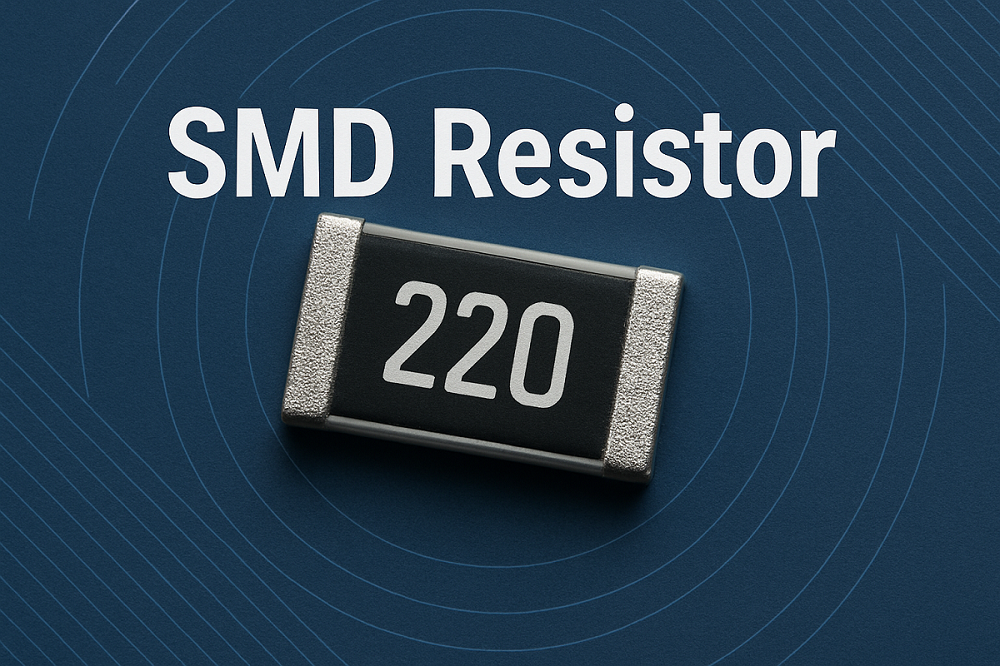
SMD Resistor: Types, Applications, and Selection Guide2025-04-30