info@kynix.com
 00852-6915 1330


 0
0



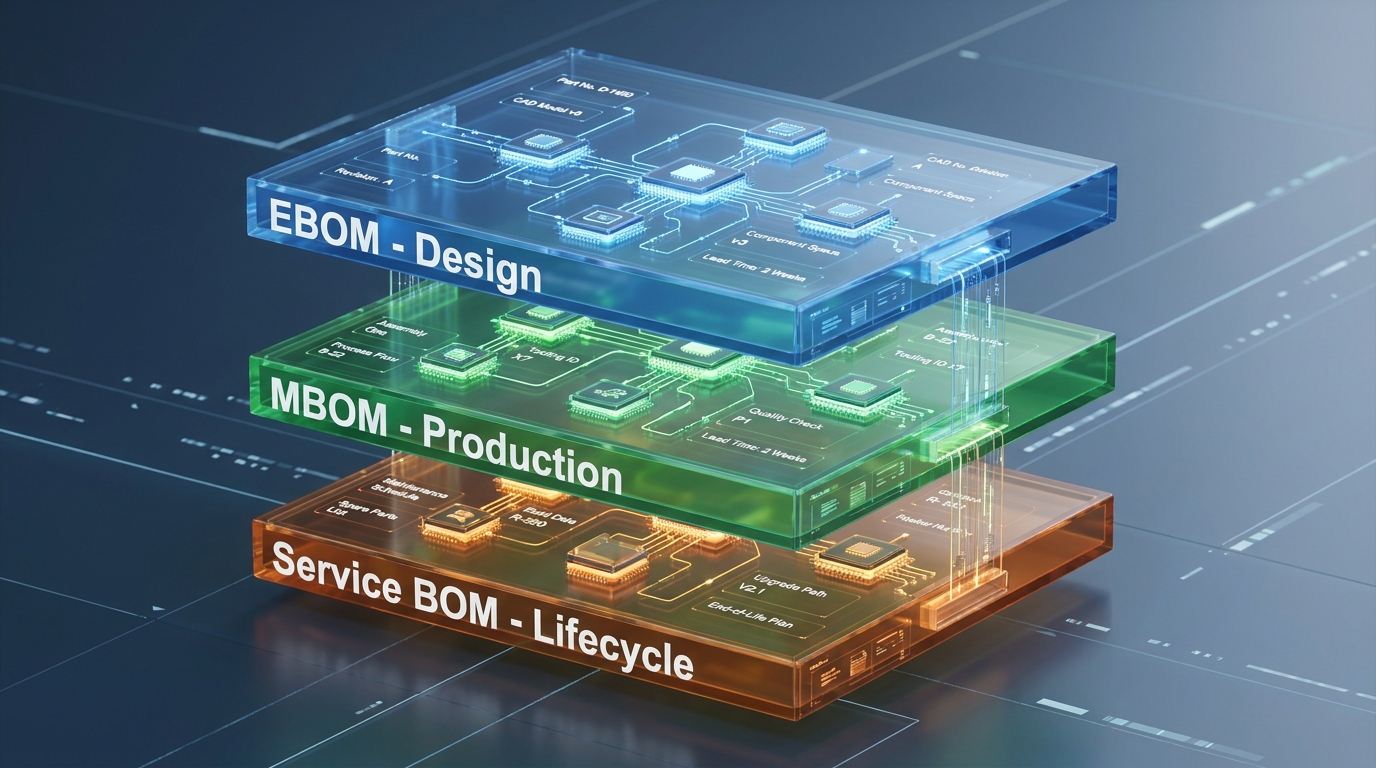


Executive Summary: The 30-Second Engineering Qualification FrameworkPhysical pin-for-pin compatibility is merely an entry gate for laboratory testing; it is never proof of electrical or functional equivalence. Integrated circuit (IC) substitutions fail in the field because catalog parametric summaries conceal dynamic differences in analog loop stability, internal silicon process nodes, transient step recovery, and thermal impedance.A robust second-source qualification follows a strict five-stage gate:Desktop Gap Audit⟶Dynamic Bench Stress⟶Thermal \ Reliability Screening⟶SMT Pilot Batch⟶Scoped ECO ReleaseThe Rule of Scoped Release: A component approved for a low-speed industrial controller must not be automatically released for a high-vibration, battery-sensitive, or mission-critical product sharing that base part number. Alternate parts must be qualified and released strictly against explicit top-level assembly numbers within your Product Lifecycle Management (PLM) system.1. The Drop-In Illusion: Exposing Vendor-Seeded Sourcing Myths vs. Engineering RealityCommercial component aggregators and supply chain brokers often describe pin-compatible semiconductors as "friction-free drop-in replacements" according to general second sourcing electronic components[8] literature. In production hardware, true drop-in components are exceptionally rare. Treating physical footprint alignment as functional equivalence creates severe engineering risks, including intermittent bus lockups, field returns, and assembly line shutdowns.The Component Validation Gap: Catalog vs Silicon BehaviorThe Physics Behind Silicon Node TransitionsA primary driver of second-source failure is silicon process node variation. A legacy incumbent IC designed on a 180 nm planar process may feature relaxed rise and fall times (dV/dt), forgiving input hysteresis, and high internal parasitic capacitances. If a candidate alternate IC implements the same functional logic on a 55 nm or 28 nm node, the internal transistor switching speeds are significantly faster.Even if nominal clock rates match, faster edge rates generate steep high-frequency spectral content:ΔV=Ltrace·dIdtOn a printed circuit board (PCB) designed without high-speed termination or matched trace impedance, this edge acceleration introduces:Transmission line ringing and excessive overshoot/undershoot that exceeds the absolute maximum ratings of downstream devices.High-frequency radiated emissions that can cause previously compliant equipment to fail regional electromagnetic compatibility (EMC) standards.Elevated ground bounce and supply rail bounce caused by the simultaneous switching of faster output buffers through inductive bond wires.Package Parasitics and Internal Die ConstructionTwo packages with identical JEDEC outlines (such as a QFN-16 or SOIC-8) can exhibit fundamentally different internal physical layouts:Bond-Wire Metallurgy and Leadframe Thickness: Switching from gold (Au) to copper (Cu) wire bonding alters parasitic inductance (Lpackage) and pin-to-substrate capacitance (Cin).Thermal Slug Construction: The die attach paddle (DAP) inside a candidate package may be physically smaller than the incumbent's, reducing heat transfer into the PCB thermal vias despite sharing identical external solder-pad dimensions.Internal Routing and Substrate Diodes: Alternate manufacturers route internal power domains differently. Floating an unused pin or tying it high may bias internal parasitic silicon-controlled rectifiers (SCRs), triggering CMOS latch-up under transient input conditions.2. The 6-Pillar Component Specification Matrix: What to Audit Before ProbingBefore issuing a purchase order for physical qualification samples, perform a datasheet gap analysis using min/max limits across operating conditions rather than nominal catalog parameters.PillarKey Focus AreasEngineering Audit Checklist1. Mechanical & PackagingStandoff height, coplanarity, exposed pad sizeLead coplanarity (≤0.08 mm), thermal pad isolation status, footprint solder fillet dimensions.2. DC Electrical BoundariesWorst-case VIH/VIL, drive strength, leakage, IQInput logic threshold margins across temperature, sink/source capabilities, sub-micron leakage currents.3. Dynamic AC & TimingSlew rate (dV/dt), propagation delays, tSU/tHMinimum/maximum propagation delays (tPLH,tPHL), hold/setup compliance, bus edge rates.4. Thermal & EnvironmentalθJA, θJC, max TJ, derating curvesThermal resistance package metrics, Safe Operating Area (SOA), derating at elevated ambient temperatures.5. Firmware & Logic StatesPOR trip windows, register maps, ACK timingPower-on reset rising/falling trip boundaries, clock-stretching support, sub-address handling.6. SMT & Process ReadinessMSL floor life, plating finish, reflow curvesJ-STD-020 moisture sensitivity level, pure matte tin whisker risks vs NiPdAu wetting profiles.1. Mechanical and Packaging ParametersLead Coplanarity and Standoff: Verify maximum coplanarity variance (typically ≤0.08 mm for fine-pitch surface-mount devices) to prevent unsoldered pins.Exposed Thermal Pad Isolation: Confirm whether the bottom ground slug is internally bonded to circuit ground (VSS), tied to a negative substrate potential, or required to float. Connecting a live substrate slug to a grounded copper pour can destroy the device.Footprint Heel and Toe Fillets: Confirm that lead-frame land geometries provide adequate mechanical solder joint volume per IPC-7351 guidelines.2. DC Electrical Operating LimitsInput Logic Threshold Margins (VIH/VIL): Compare worst-case input thresholds across the full operating voltage and temperature ranges. A candidate part with higher VIH(min) reduces noise margins when driven by low-voltage CMOS logic.Output Drive Capabilities (VOH/VOL): Verify source and sink current capabilities under load. Inadequate drive strength causes logic level degradation on heavily loaded trace networks.Quiescent Current (IQ and IDDQ): Verify static and sleep state current draw at elevated temperatures. Sub-micron silicon alternates can exhibit orders-of-magnitude increases in high-temperature sub-threshold leakage current.3. Dynamic AC and Timing SpecificationsPropagation Delays and Skew: Tabulate minimum and maximum propagation delays (tPLH,tPHL). Reductions in propagation delay can violate hold-time constraints (tH) on digital buses just as easily as excessive delays violate setup times (tSU).Bus Slew Rates (dV/dt): Identify internal slew-rate limiting features. Standard transceivers (such as CAN, RS-485, or I2C drivers) rely on controlled edge rates to preserve line termination performance.4. Thermal Headroom and Package ImpedanceThermal Metrics (θJA,θJC,ΨJT): Standardized thermal resistance metrics indicate how efficiently heat escapes the silicon die into the ambient air and the host circuit board, as detailed in industry thermal management for integrated circuits[5] resources.Safe Operating Area (SOA) and Temperature Derating: Review power dissipation curves at the system's maximum ambient operating temperature (TA(max)).5. Functional Logic, Sequences, and FirmwarePower-On Reset (POR) Thresholds and Timing: Cross-reference rising and falling supply rail thresholds and internal power-good release delays.Bus Control Protocols: Verify support for clock-stretching, secondary address decoding, repeated-start conditions, and register configuration maps on intelligent mixed-signal parts.6. SMT Assembly and SolderabilityMoisture Sensitivity Level (MSL): Identify package baking and open floor-life storage constraints per IPC/JEDEC J-STD-020.Terminal Plating Chemistry: Confirm compatibility between package termination finishes (such as pure Matte Tin vs. NiPdAu) and assembly solder paste alloys (such as SAC305).3. Comparative Case Study: The "Identical" IC Benchmark (Candidate A vs. Candidate B)To illustrate the hidden hazards of second sourcing, evaluate this scenario: An engineering team must qualify an alternate for an incumbent 3.3V Step-Down (Buck) Regulator IC housed in a standard QFN-16 (3×3 mm) package.Both alternate candidates match the incumbent's catalog specifications: VIN=4.5V to 18V, VOUT=3.3V, and IOUT(max)=2.0A.ParameterIncumbent PartCandidate IC-ACandidate IC-BPackage / FootprintQFN-16 (3x3 mm)QFN-16 (3x3 mm)QFN-16 (3x3 mm)Output Cap ESR Stability Range0.01 to 0.80 Ohm0.01 to 1.00 Ohm0.20 to 2.00 OhmTransient Droop (80% Load Step)45 mV48 mV140 mVTransient Recovery Time12 microseconds15 microseconds85 microsecondsQuiescent Current (Sleep Mode)18 microamps19 microamps85 microampsThermal Resistance (θJC)12.0 °C/W13.5 °C/W28.0 °C/WPOR Rising Trip Threshold2.75 V2.72 V2.95 VRequired Supply Ramp Rate≤ 2.0 ms≤ 2.0 ms≥ 5.0 msIn-Circuit Qualification VerdictBASELINEAPPROVEDREJECTED (Catastrophic)Engineering Failure Analysis for Candidate IC-B1. Control Loop Oscillation (Output Capacitor ESR Incompatibility)The incumbent design uses high-reliability, low-ESR multilayer ceramic capacitors (MLCCs) with an effective series resistance (ESR) of approximately 0.03Ω. Candidate IC-A incorporates internal loop compensation designed for low-ESR ceramic outputs.Candidate IC-B relies on older internal dominant-pole compensation that requires an output capacitor ESR zero (fZ\_ESR=12π·COUT·RESR) between 10 kHz and 50 kHz to maintain a minimum phase margin of ≥45∘. When paired with low-ESR MLCCs, Candidate IC-B's phase margin collapses to 12∘, causing continuous sub-harmonic oscillation, high output voltage ripple, and rapid inductor heating.2. Microcontroller Brownout (Severe Transient Droop)Under an $80\%$ step load transition (such as an RF power amplifier turning on), Candidate IC-B exhibits a 140 mV output drop and requires 85μs to settle.Because the downstream microcontroller operates with a narrow input voltage tolerance (3.3V±5%, or 3.135V minimum), Candidate IC-B's 140 mV transient droop breaches the microcontroller's internal brownout reset threshold (3.15V typical), triggering sudden, recurring processor reboots.3. Thermal Throttling Under Full System LoadCandidate IC-B exhibits a thermal resistance (θJC) of 28∘C/W—more than double the incumbent’s 12∘C/W—due to a thinner internal leadframe paddle.When operating at an ambient temperature of TA=65∘C and dissipating 1.8W of power:TJ(B)=TA+(PD·θJA)=65∘C+(1.8W·48∘C/W)=151.4∘CThis operating temperature exceeds Candidate IC-B's absolute maximum junction rating (TJ(max)=150∘C), triggering its internal thermal shutdown circuitry during sustained operational loads. Candidate IC-A remains well below safe thermal thresholds under the same conditions.4. Bench Verification Protocol: Electrical Margins, Dynamic Transients, and Thermal BoundariesKey Takeaway: Ambient bench testing (25∘C) fails to catch latent hardware bugs. Engineering validation requires a full 4-corner stress matrix (Vmin/Vmax across Tmin/Tmax), frequency-response stability verification (phase margin ≥45∘), and in-circuit junction temperature logging.Corner SettingSupply Voltage (VIN)Chamber Temperature (Tambient)Primary Validation TargetCorner 1: Minimum StressVIN(min)Tambient(min)Cold-start sequencing, POR release, oscillator start-up.Corner 2: Thermal / VoltageVIN(max)Tambient(min)Maximum breakdown headroom, input surge clamping.Corner 3: Low Voltage CornerVIN(min)Tambient(max)Brownout trip limits, full-load gate drive headroom.Corner 4: Maximum StressVIN(max)Tambient(max)Maximum junction temperature, thermal dissipation, SOA stability.Dynamic Load Transient and Control Loop StabilityFor power converters and regulators, verify stability margins using an injection transformer and a Frequency Response Analyzer (FRA) across minimum, nominal, and maximum load points:Phase Margin Target: Verify that the phase margin remains ≥45∘ (with 60∘ preferred for critical digital rails) across operating temperatures.Gain Margin Target: Confirm that the gain margin is ≥10 dB before loop gain crosses zero.Dynamic Step Response: Using a high-speed programmable electronic load, execute a 10%⟷90% load step at maximum rated slew rate (dI/dt≥2.5 A/μs). Measure peak voltage undershoot, overshoot, ringing cycles, and recovery settling time.High-Speed Bus Signal Integrity and TimingWhen qualifying digital transceivers, logic buffers, or microcontrollers, connect wideband active oscilloscope probes directly at the receiver pins:Rise/Fall Slew Rates (dV/dt): Measure 10% to 90% transition durations to evaluate the risk of transmission line reflections or crosstalk into adjacent analog traces.Setup and Hold Windows (tSU/tH): Confirm timing margins on SPI, I2C, and parallel memory buses against host controller minimums under maximum bus capacitive loading.Differential Eye Diagrams: When evaluating differential transceivers (such as CAN-FD, RS-485, or Ethernet PHYs), generate continuous eye diagrams to confirm compliance with industry jitter, differential output voltage (VOD), and transition mask requirements.In-Circuit Thermal CharacterizationCalculate maximum expected operating junction temperature (TJ) using verified parameters from research on challenges in component qualification[4] and established thermal management techniques for integrated circuits[5]:TJ=TA+(PD·θJA)Or, using case temperature telemetry:TJ=TC+(PD·θJC)Mount calibrated thermocouples directly to the component package body and monitor thermal behavior inside the final sealed system enclosure at full electrical load. Supplement with calibrated infrared (FLIR) imaging on open assemblies to detect localized printed trace bottlenecks, excessive thermal via resistance, or abnormal power dissipation profiles.5. Semiconductor Reliability Standards: Applying JEDEC JESD47 & AEC-Q100Key Takeaway: Hardware teams must strictly differentiate between chipmaker-level silicon reliability (such as JEDEC JESD47 HTOL 3 lots × 77 parts) and system-level PCBA qualification. A supplier Certificate of Analysis verifies isolated silicon endurance, but cannot guarantee in-circuit thermomechanical survival on your specific board assembly.JEDEC JESD47 vs AEC-Q100 Reliability MatrixJEDEC JESD47 Stress Test SuitesJEDEC standard JESD47 defines baseline stress-test qualification requirements for integrated circuits, supported by established JESD47 stress-test standards[1] and documented acceptance testing provisions[2]. When auditing a component supplier's qualification data package, confirm the following accelerated life tests:High Temperature Operating Life (HTOL): Standard qualification requires testing across three distinct production lots with 77 units per lot[1] (231 units total) for 1,000 hours at a junction temperature of TJ≥125∘C, with zero allowable failures (0 Fail). HTOL activates Arrhenius-driven thermal degradation mechanisms, including gate oxide breakdown, electromigration, and channel hot-carrier damage.Highly Accelerated Stress Testing (HAST / THB): Verifies moisture resistance and package corrosion resistance under biased voltage conditions (typically 130∘C/85% RH for 96 hours, or traditional 85∘C/85% RH Temperature-Humidity-Bias for 1,000 hours).Temperature Cycling (TC): Accelerates thermomechanical fatigue across die attach interfaces, internal bond wires, and molded plastic packages (typically 500 to 1,000 cycles between −55∘C and +125∘C).Electrostatic Discharge (ESD): Confirms electrostatic protection levels using the Human Body Model (ANSI/ESDA/JEDEC JS-001) and Charged Device Model (ANSI/ESDA/JEDEC JS-002).AEC-Q100 Automotive Temperature ClassificationFor harsh industrial and automotive applications, verify the candidate component's explicit rating under AEC-Q100 Rev J specifications[3]:Grade 0: −40∘C to +150∘C ambient operating temperature range.Grade 1: −40∘C to +125∘C ambient operating temperature range.Grade 2: −40∘C to +105∘C ambient operating temperature range.Grade 3: −40∘C to +85∘C ambient operating temperature range.When Is PCBA-Level Environmental Stress Testing Required?A manufacturer's component-level Certificate of Analysis (CoA) proves only that the bare silicon survives in isolation. Internal system-level environmental testing—such as Highly Accelerated Life Testing (HALT) and thermal shock screening—is mandatory when:The candidate component operates within $15\%$ of its absolute maximum electrical or thermal ratings.The device interfaces with high-vibration inductive loads, high-energy transients, or noisy outdoor installations.The substitute IC features a different internal die geometry or leadframe metallurgy than the incumbent part.6. Manufacturing & SMT Pilot Line Verification: The First Article RunA component that passes bench characterization can still fail during automated surface-mount technology (SMT) assembly as highlighted in EMS reviews of engineering change notices for PCB production[6]. Manual soldering with a benchtop iron masks critical manufacturing risks, including thermal pad solder voiding, package warping, and terminal de-wetting.Gate 1: Component MSL Audit — Verify IPC/JEDEC J-STD-020 floor life and baking control protocols.Gate 2: Reflow Temperature Profiling — Confirm peak reflow tolerance (245∘C vs 260∘C).Gate 3: Pilot Production Run — Assemble 20 to 50 PCBA units on the automated manufacturing line.Gate 4: AOI Optical Audit — Inspect for tombstoning, lead lifting, skew, and bridging.Gate 5: AXI X-Ray Inspection — Measure thermal pad solder voiding percentage (Target: ≤25%).Moisture Sensitivity Level (MSL) and Thermal ProfilingFloor Life Tracking: Review the candidate component's MSL rating per IPC/JEDEC J-STD-020. Upgrading from MSL 1 (unlimited shelf life at ≤30∘C/85% RH) to MSL 3 (168 hours of open-air floor life) requires moisture-barrier dry bags, humidity indicator cards, and controlled desiccant storage on the production floor.Reflow Profile Limits: Confirm that the replacement IC survives standard lead-free peak reflow temperatures (260∘C maximum). Certain legacy or cost-reduced plastic packages tolerate peak temperatures of only 245∘C, making them incompatible with SAC305 solder profiles.Terminal Metallurgy and Wetting PerformanceConfirm the candidate part's terminal plating chemistry:Matte Tin (Sn) Plating: Highly compatible with SAC305 solder paste, but carries potential risks of tin whisker growth in high-reliability applications unless mitigated by internal barrier plating (such as nickel under-plate).Nickel-Palladium-Gold (NiPdAu): Immune to tin whiskers and offers planar coplanarity, but features a different wetting balance curve that may require adjusting reflow soak profiles to eliminate solder balling or voiding.The First Article Inspection (FAI) RunExecute a controlled SMT pilot build of 20 to 50 boards on the automated manufacturing line. Subject the finished boards to two primary quality gates:Automated Optical Inspection (AOI): Audit the pilot batch for component body skew, lead lifting, solder bridges, and component tombstoning.Automated X-ray Inspection (AXI): Under IPC-A-610 and IPC-7093 standards, bottom-termination components (BTC) and QFN thermal center pads must maintain cumulative solder voiding at:Voiding Area≤25%Solder voiding above $25\%$ creates localized hot spots, degrades heat transfer into the PCB, and significantly increases operational junction temperatures (θJC).7. Diagnostic Matrix: Common Latent Failure Modes in Alternate IC DeploymentsSubtle discrepancies between silicon steppings and vendor architectures frequently escape nominal testing. Use this diagnostic matrix to identify and prevent latent hardware bugs.Observed Failure SymptomLatent Silicon / Circuit Root CauseBench Diagnostic & Prevention ProtocolSystem fails to boot under slow power-supply rampMismatched Power-On Reset (POR) comparator thresholds, missing internal hysteresis, or sensitivity to supply ramp rates (dV/dt).Sweep the power-rail rise time across operating boundaries (0.1V/ms to 100V/ms). Verify that internal reset lines assert cleanly and release without intermediate output glitching.Unpowered IC draws unexpected current via data linesUnpowered internal ESD protection diodes forward-biasing into the internal VDD supply plane.Drive I/O pins with operational signals while the candidate IC's local VDD rail is grounded. Measure pin leakage currents to ensure the device supports true "Fail-Safe" (I-off) high-impedance inputs.Intermittent logic resets in noisy electrical environmentsPins marked "No Connect" (NC) are connected internally to internal silicon test points or unbonded substrate nodes.Review internal die bond diagrams. Do not leave NC pins floating on the PCB if the candidate component datasheet requires tying them to ground or supply potential.Random bus lockups or lost communication framesDifferences in clock-stretching support, bus turnaround timing, or stricter setup/hold time requirements.Capture high-speed communication traces using a digital logic analyzer at maximum bus capacitance. Verify bus acknowledge (ACK) timing and clock-stretching handshakes across operational temperature corners.Radiated emissions fail regulatory limits (EMC)A smaller silicon process node produces faster edge rates (dV/dt), increasing harmonic energy across RF frequencies.Measure high-frequency output switching edges with a wideband oscilloscope. Add damping series resistors (22Ω to 47Ω) or local ferrite beads if emissions increase.8. Engineering Change Governance: ECN/ECO Workflow and Scoped Part NumberingA successful technical evaluation must not lead to unverified part swaps across unrelated designs. Managing alternate components requires formal configuration control across engineering, manufacturing, and procurement systems as defined in ECR, ECN, and ECO change frameworks[7].How to Qualify Secondary Reference Standards to Ensure Compliance (ICH Q2/Q6B/Q7A Guidelines)The Closed-Loop Change Control WorkflowEngineering Change Request (ECR): Identifies the business or technical driver (such as component obsolescence, extended lead times, or manufacturing cost reduction) and assigns a preliminary risk classification.Technical Qualification Execution: The component and hardware engineering teams execute the physical qualification plan (bench testing, thermal profiling, reliability review, and SMT pilot assembly).Engineering Change Order (ECO): Compiles the final qualification report, attaches test telemetry and X-ray inspection images, and authorizes updates to the engineering Bill of Materials.Engineering Change Notice (ECN): Transmits authorized BOM changes to contract manufacturing partners, procurement teams, and downstream operations.PLM and ERP Architecture: Internal vs. Manufacturer Part NumbersTo prevent unvetted substitutions, maintain strict separation between design identities within your Product Lifecycle Management (PLM) and Enterprise Resource Planning (ERP) databases:Manufacturer Part Number (MPN): The specific part number assigned by the semiconductor fabricator (e.g., XYZ789-33QFN).Internal Part Number (IPN): The company-owned part number representing a specific functional BOM line item (e.g., IC-REG-00452).Never map multiple MPNs under a single IPN as universal equivalents unless they have been qualified across every product assembly that uses that internal part number.Enterprise PLM Scoped BOM Release Rule ArchitectureThe Scoped BOM Release ProtocolIf Candidate Component B is qualified specifically for an industrial control board, the ECO must approve Candidate B only for that specific PCBA top-level assembly.If Candidate B exhibits higher quiescent current or marginal thermal characteristics that are unacceptable for battery-powered or automotive variants using the same base regulator, the PLM system must block procurement from using Candidate B on those unverified boards.If complete interchangeability cannot be achieved across all products, create a unique IPN for the alternate component to prevent unvetted BOM swaps.Supplier Notification Windows (JEDEC J-STD-046)Standard industry governance guidelines, including JEDEC standard J-STD-046, establish a baseline 90-day advance notification window for major component changes affecting form, fit, function, quality, or reliability.The guideline notes that an absence of customer response within 30 days of notification is often treated as acceptance under standard commercial supply agreements. Engineering teams must maintain proactive internal second-source pipelines rather than waiting for short-notice Product Discontinuation Notices (PDN) or Product Change Notifications (PCN).9. Frequently Asked Questions (FAQ)What is the difference between a direct drop-in replacement and a functional equivalent?A direct drop-in replacement matches the incumbent component in mechanical footprint, pinout, absolute electrical ratings, dynamic switching characteristics, control loop dynamics, thermal metrics, and firmware state machines. It requires zero PCB layout modifications, no passive component value adjustments, and no firmware alterations. A functional equivalent delivers matching high-level functional performance, but may require layout adjustments, retuning of external passive components (such as compensation networks or filter capacitors), or firmware updates to operate reliably.What sample size should be tested during bench qualification of an alternate IC?Bench qualification typically uses 5 to 10 serialized samples evaluated across four-corner operating extremes (Vmin/Vmax across Tmin/Tmax). This bench-level testing verifies functional and electrical margins, while component-level statistical reliability (such as JEDEC JESD47 standards requiring 3 lots × 77 parts) is documented through the semiconductor manufacturer's formal qualification data package. Production assembly validation is performed separately using an SMT pilot batch of 20 to 50 boards.How far in advance must a component supplier notify customers of silicon or process changes?JEDEC standard J-STD-046 establishes a recommended 90-day advance notification window prior to shipping components affected by major process, material, assembly, or foundry modifications. However, actual contractual notice periods depend on direct supply agreements, and parts sourced through open distribution networks may experience shorter notification windows.Should an alternate component receive a new Internal Part Number (IPN) in our PLM system?If the alternate part is validated as completely interchangeable across every design in the company's portfolio, it can be mapped as an approved alternate MPN under the existing IPN. However, if the alternate component is approved only for specific designs, exhibits tighter environmental limits, or requires design-specific passive components, it must be assigned a unique IPN to prevent unauthorized procurement substitutions on incompatible products.When is PCBA-level environmental stress testing (HALT) mandatory versus relying on chipmaker JEDEC data?Chipmaker JEDEC data qualifies the standalone packaged IC under isolated conditions. System-level HALT testing is mandatory whenever the alternate IC operates near its electrical or thermal limits, runs in mission-critical or safety-critical applications, or relies on PCB-dependent control-loop stability (such as low-ESR ceramic capacitor networks) that cannot be fully evaluated through static datasheet analysis.10. The Pre-BOM Swap Engineering Checklist (Stage-Gated Execution Template)Use this stage-gated audit checklist to verify and document component qualifications prior to issuing production Engineering Change Orders.StageAudit CheckpointValidation ToolingPass / Fail CriteriaSign-Off AuthorityPhase 1: Desktop AuditPinout & Pad GeometryCAD footprint overlay mechanical audit100% pinout match; footprint meets IPC-7351 rules.Component EngineerParametric Gap AnalysisDatasheet min/max cross-comparisonWorst-case VIH/VIL, drive, and timing meet design spec.Hardware EngineerLifecycle & ComplianceSilicon fab lifecycle portal; RoHS/REACHStatus "Active" (not NRND); full material CoC verified.Compliance LeadPhase 2: Bench Stress4-Corner Functional TestThermal chamber, programmable suppliesZero execution faults across Vmin/max and Tmin/max.Hardware EngineerDynamic Load StabilityHigh-speed load step, Frequency Resp. Anlz.Phase margin ≥45∘; transient droop within spec.Hardware EngineerBus Timing & IntegrityWideband oscilloscope, logic analyzerRise/fall times within spec; zero setup/hold violations.Hardware EngineerPhase 3: Thermal & Rel.In-Circuit Thermal AuditThermocouples, FLIR thermal cameraOperating TJ remains safely below maximum rated limit.Reliability LeadSupplier Quality ReviewJEDEC JESD47 / AEC-Q100 qualification pkgHTOL (3x77, 1000h) and HAST verified; zero lot failures.Quality EngineerPhase 4: SMT PilotMSL & SolderabilityIPC/JEDEC J-STD-020, reflow profilingMSL floor life documented; peak profile compatible.Process EngineerPilot SMT Production Run20-50 board SMT line run; AOI + AXI X-rayZero tombstoning or bridges; thermal voiding ≤25%.Manufacturing LeadPhase 5: Change ControlScoped ECO DocumentationPLM system workflow and change boardComplete qualification data attached to ECO package.Lead System Arch.Scoped BOM RestrictionsERP AVL database updateMPN linked strictly to approved PCBA assemblies.Quality DirectorSources and references used for this guideJEDEC Standard JESD47: Stress-Test-Driven Qualification of Integrated CircuitsSource type: standards bodyUsed for: Baseline industry standard acceptance tests, accelerated stress methodologies, and qualification criteria for semiconductor devices and product family changes.Caution: Official standard document; access may require membership or formal purchase for latest revision letters (JESD47L/K).JEDEC Standard JESD47 Acceptance Tests CitationSource type: official company documentationUsed for: Independent legal and technical corroboration of JEDEC baseline qualification acceptance testing requirements across IC families.Caution: Government legal proceeding repository document; cite for public verification of JEDEC baseline testing clauses.AEC-Q100 Rev J: Failure Mechanism Based Stress Test Qualification for Integrated CircuitsSource type: standards bodyUsed for: Automotive-grade semiconductor qualification matrices, operating temperature grades (Grade 0 to Grade 4), and mission-critical stress parameters.Caution: Specific to automotive electronics; requirements exceed standard commercial and industrial electronic applications.Challenges in the Qualification of Electronic Components and Systems (IEEE Transactions)Source type: research sourceUsed for: Peer-reviewed analysis of component qualification limitations, physics-of-failure acceleration, and the interaction of electrical and thermomechanical stress.Caution: Scholarly research paper; provides scientific justification rather than standardized commercial pass/fail criteria.IC Thermal Analysis: Thermal Management for Integrated CircuitsSource type: reputable professional sourceUsed for: Engineering guidelines on junction temperature calculations, thermal resistance metrics (Theta-JA, Theta-JC), and PCB thermal pad heat sinking.Caution: Commercial EDA vendor publication; extract thermal design engineering principles rather than tool-specific marketing.Engineering Change Notice (ECN) for PCB: How to Manage Design ChangesSource type: reputable professional sourceUsed for: EMS manufacturing procedures for Engineering Change Notices (ECN), trial production lots, First Article Inspection (FAI), and assembly sign-off.Caution: Contract manufacturing perspective; focuses on factory floor execution and inventory risk mitigation.Engineering Change Notes: ECR vs ECN vs ECO in Electronics Manufacturing ServicesSource type: reputable professional sourceUsed for: Formal change-control stage-gate workflow separating change requests, internal engineering orders, and customer change notifications.Caution: EMS industry blog; provides procedural governance rather than electronic circuit design rules.Second Sourcing Electronic Components GuideSource type: background sourceUsed for: High-level framework for Bill of Materials (BOM) risk auditing, Form-Fit-Function classification, and supply chain vulnerability ranking.Caution: Supply chain consultancy guide; must be supplemented with empirical engineering test data for technical release.
On 2026-09-23