The Kynix Components
Stay Ahead with Expert Electronics Insights,
Industry Trends, and Innovative Tips
Catalog FeaturesDescriptionOrder CodePin ConnectionsSchematic DiagramAbsolute Maximum RatingsElectrical CharacteristicsPackage Mechanical DataLM301AN DatasheetLM301AN FAQ Features■Input offset voltage 0.7mV 2mV■Input bias current 25nA 70nA■Input offset current 1.5nA 2nA■Slew rate as inversing 10V/µs 10V/µs amplifier DescriptionThe LM101A is a general purpose operational amplifier which offers many features: supply voltages from ±5V to ±22V, low current drain, overload protection on the input and output, no latch-up when the common-mode range is exceeded, free from oscillations and compensation with a single 30pF capacitor. It has advantages over internally compensated amplifiers in that the compensation can be tailored to the particular application: slew rate of 10V/µs and bandwidth of 3.5MHz can be easily achieved. Order CodePart NumberTemperature RangePackageNDLM101A-55°C, +125°C··LM201A-40°C, +105°C··LM301A0°C, +70°C··Example : LM201AN N = Dual in Line Package (DIP)D = Small Outline Package (SO) - also available in Tape & Reel (DT) Pin Connections1 - Balance, compensation2 - Inverting input3 - Non-inverting input4 - VCC-5 - Balance6 - Output7 - VCC+8 - Compensation 2 Schematic Diagram Absolute Maximum RatingsSymbolParameterLM101ALM201ALM301AUnitVCCSupply voltage±22VViInput Voltage±15VVidDifferential Input Voltage±30VPtotPower Dissipation N Suffix D Suffix500300mW Output Short-circuit DurationInfinite ToperOpearting Free-air Temperature Range-55 to +125-40 to +1050 to +70°CTstgStorage Temperature Range-65 to +150°C Electrical Characteristics±5V ≤ VCC ≤ ±20V, C1 = 30pF, Tamb = 25°C (unless otherwise specified)SymbolParameterLM101A - LM201ALM301AUnitMin.Typ.Max.Min.Typ.Max.VioInput Offset Voltage (RS ≤ 10kΩ)Tamb = +25°CTmin ≤ Tamb ≤ Tmax 0.7 23 2 7.510 mVDVioInput Offset Voltage Drift Tmin ≤ Tamb ≤ Tmax 3 15 6 30mV/°CIibInput Bias Current - note Tamb = +25°CTmin ≤ Tamb ≤ Tmax 25 75100 70 250300 nAIioInput Offset Current Tamb = +25°CTmin ≤ Tamb ≤ Tmax 1.5 1020 2 5070 nADIIioInput Offset Current Drift Tmin ≤ Tamb ≤ 25°C Tmin ≤ Tamb ≤ Tmax 1020 100200 1020 300600 pA/°CAvdLarge Signal Voltage Gain * VO ≤ 10V, RL = 2kΩ) Tamb = +25°CTmin ≤ Tamb ≤ Tmax 5025 100 2515 100 V/mVSVRSupply Voltage Rejection Ratio (Rs ≤ 10kΩ) Tamb = +25°CTmin ≤ Tamb ≤ Tmax 8080 96 7070 96 dBICCSupply Current, no load Tamb = +25°CTmin ≤ Tamb ≤ Tmax 1.8 33 1.8 33 mAVicmInput Common Mode Voltage Range(VCC = ±20V) Tamb = +25°CTmin ≤ Tamb ≤ Tmax ±15±15 ±15±15 V CMRCommon Mode Rejection Ratio (Rs ≤ 10kΩ) Tamb = +25°CTmin ≤ Tamb ≤ Tmax 8080 96 7070 96 dBIOSOutput Short-circuit Current * Tamb = +25°C 10 30 50 10 30 50mA ±VOPPOutput Voltage Swing *Tamb = +25°C RL = 10kΩRL = 2kΩTmin ≤ Tamb ≤ Tmax RL = 10kΩ RL = 2kΩ 12101210 1413 12101210 1413 VSRSlew Rate (Vi = ±10V, RL = 2kΩ,CL = 100pF, unity gain) - 1) 0.25 0.5 0.25 0.5 V/ms1.May be improved up to 10V/µs in inverting amplifier configuration* ==> VCC = ±15V, Tamb = +25°C (unless otherwise specified) Package Mechanical DataDim.MillimetersInchesMin.Typ.Max.Min.Typ.Max.A 3.32 0.131 a10.51 0.020 B1.15 1.650.045 0.065b0.356 0.550.014 0.022b10.204 0.3040.008 0.012D 10.92 0.430E7.95 9.750.313 0.384e 2.54 0.100 e3 7.62 0.300 e4 7.62 0.300 F 6.6 0260i 5.08 0.200L3.18 3.810.125 0.150Z 1.52 0.060 LM301AN DatasheetYou can download the datasheet of LM301AN from the link given below:LM301AN Datasheet LM301AN FAQWhat is a single op amp?A single-supply op amp is specifically designed to have a common-mode range which extends all the way to the negative supply (ground). Also, its output stage is usu- ally designed to swing close to ground. What is OPM amplifier?An operational amplifier is an integrated circuit that can amplify weak electric signals. An operational amplifier has two input pins and one output pin. Its basic role is to amplify and output the voltage difference between the two input pins. What are the types of operational amplifier?Op amps can be classified into 3 main types based on the input/output voltage range: Dual Supply, Single Supply, and Rail-to-Rail. The input/output voltage range of each type of op amp is shown below. What is compensated op amp?Compensated op amps, or simply op amps, are traditionally designed to be stable for gains down to and including unity gain. Decompensated, or less compensated op amps, exhibit higher bandwidth and slew rate than op amps compensated for unity gain. Where are operational amplifiers used?741 Operational Amplifiers (also known as Op Amps) are used in a range of circuits. They are generally used to amplify weak electrical current in a circuit. Radios, stereo systems, headphones, TVs and many other electrical products include an operational amplifier as a component in many of their circuits.
kynix On 2022-04-27
CatalogFeaturesApplicationsDescriptionInternal schematic diagramsAbsolute maximun ratingElectrical characteristicsPackage mechanical dataRevision historyDatasheet PDF DownloadTIP3055 FAQ FeaturesLow collector-emitter saturation voltageComplementary NPN - PNP transistors ApplicationsGeneral purposeAudio Amplifier DescriptionThe devices are manufactured in epitaxial-base planar technology and are suitable for audio, power linear and switching applications. Internal schematic diagrams Absolute maximun ratingSymbolParameterValueUnitNPNTIP3055PNPTIP2955VCBOCollector-emitter voltage (IE = 0)100VVCERCollector-emitter voltage (RBE = 100 L)70VVCEOCollector-emitter voltage (IB = 0)60VVEBOCollector-base voltage (IC = 0)7VICCollector current15AIBBase current7APtotTotal dissipation at Tc £25°C90WTstgStorage temperature-65 to 150°CTJMax. operating junction temperature150°CElectrical characteristicsSymbolParameterTest conditionsMin.Typ.Max.UnitICEXCollector cut-off current (VBE = -1.5 V)VCE = 100 VVCE = 100 V TC = 150 oC 15mA mAICEOCollector cut-off current (IB = 0)VCE = 30 V 0.7 mAIEBOEmitter cut-off current (IC = 0)VEB = 7 V 5 mAVCEO(sus)(1)Collector-emitter sustaining voltage (IB = 0)IC = 200 mA 60 VVCER(sus)(1)Collector-emitter sustaining voltage (RBE = 100 L)IC = 200 mA 70 VVCE(sat)(1)Collector-emitter saturation voltageIC = 4 A IB = 400 mAIC = 10 A IB = 3.3 A 13V V(1)VBEBase-emitter voltageIC = 4 A VCE = 4 V 1.8VhFE(1) DC current gainIC = 4 A VCE = 4 VIC = 10 A VCE = 4 V205 70 Package mechanical dataIn order to meet environmental requirements, ST offers these devices in ECOPACK® packages. These packages have a Lead-free second level interconnect . The category of second level interconnect is marked on the package and on the inner box label, in compliance with JEDEC Standard JESD97. The maximum ratings related to soldering conditions are also marked on the inner box label. ECOPACK is an ST trademark. TO-247 Mechanical dataDim.mm.Min.TypMax.A4.85 5.15A12.20 2.60b1.0 1.40b12.0 2.40b23.0 3.40c0.40 0.80D19.85 20.15E15.45 15.75e 5.45 L14.20 14.80L13.70 4.30L2 18.50 øP3.55 3.65øR4.50 5.50S 5.50 Revision historyDateRevisionChanges30-Aug-19994 10-Jan-20085Package change from TO-218 to TO-247.Datasheet PDF DownloadYou can download the datasheet the link given below.TIP3055-DatasheetTIP3055 FAQWhat is complementary power transistor?Complementary. Power Transistors. For Isolated Package Applications. Complementary power transistors are for general purpose power amplification and switching such as output or driver stages in applications such as switching regulators, converters and power amplifiers. Why the complementary symmetry amplifier is used?The complementary symmetry circuit provides all the advantages of conventional push-pull amplifiers without the need for a phase-inverter driver stage, or for a center-tapped input transformer. Does transistor work on AC or DC?As we said before, transistors are DC components. This means that the output will also be a DC voltage. But if we amplify an AC voltage, then we probably want to get an AC voltage at the output as well. Can AC flow through a transistor?Normally in transistor circuits, ac means small signal ac. If this is what you mean, the answer is yes. Small signal ac is what a transistor designed to do. Small signal ac means a transistor is operating with relatively small changes around its operating point where the operation can be considered linear. What is complementary power amplifier?In most applications where AC power is driving a load, a complementary symmetry (push-pull) power amplifier is employed. This amplifier usually has a voltage gain of one, and a large current gain. It is the most efficient configuration for transforming DC power from the power supply to the AC power driving the load.
kynix On 2022-04-27
lR44 batteries and 357 batteries that are round, flat, and look like small silver buttons seem to look the same. Since they all look the same, can they be used universally? This article will answer your questions and show you their similarities and differences, as well as the interchangeability. CatalogWhat is a lR44 Battery?What is a 357 Battery?lR44 vs 357 Features ComparisonlR44 vs 357 Dimension DiagramlR44 vs 357 Spec ComparisonlR44 EquivalentslR44 vs 357 InterchangeabilitySilver Oxide Batteries vs Alkaline BatteriesProduct DatasheetUsing WarningslR44 vs 357 FAQ What is a lR44 Battery?The IR44 battery is an Alkaline Zinc Manganese button cell battery. The IR44 battery is typically a 1.5 Volt with an operating temperature ranging from 0°C- 60°C, while optimal temperature is 20°C. The IR44 battery can be utilized in many devices such as watches, motherboards, and a variety of medical devices like thermometers. lR44 Battery What is a 357 Battery?You can get the durable, reliable power that keeps going with this Energizer 357/303 Silver Oxide button cell battery. It delivers long-lasting power to your button-battery-operated devices, from household electronics like keyless entry systems, to e-books, toys, calculators, and watches, to heart rate and glucose monitors. And these zero-mercury coin batteries can hold power for up to five years in storage. Choose Energizer specialty batteries for long-lasting power you can count on when you need it. 357 Battery lR44 vs 357 Features ComparisonlR44 FeaturesExcellent cost performance - High cost performance has been achieved owing to the use of manganese dioxide as a cathode material.Excellent stable discharge and high-drain pulse discharge characteristics - Stable voltage output is available during the high-drain pulse discharge.Excellent leakage resistance - Murata-unique sealing structure, coupled with special sealing-material treatment, has helped accomplish the excellent leakage resistance.RoHS Directive / European Directives - This product does not contain Mercury(Hg), Cadmium(Cd), nor Lead(Pb), and conforms to EC regulation values. (Directive 2006/66/EC, 2013/56/EU) - Battery pack are excluded from RoHS directive. (DIRECTIVE 2011/65/EU OF THE EUROPEAN PARLIAMENT AND OF THE COUNCIL of 8 June 2011 on the restriction of the use of certain hazardous substances in electrical and electronic equipment) 357 Features3 pack of Energizer 357/303 BatteriesIdeal calculator batteries, watch batteries, and medical device batteriesEnergizer button cell batteries hold power for up to 5 years in storageZero-mercury batteries are a more environmentally conscious choiceReplaces a variety of button cell battery sizes, including 280-03, 280-08, 303/357, D303/357, SB-A9, SR 1154 SW, SR 44 SW, SR 44SW, SR44SW and WS14Energizer is the #1 specialty brand of battery, ensuring dependability lR44 vs 357 Dimension DiagramThe following are the diagrams of lR44 and 357 dimension. lR44 Dimension Diagram 357 Dimension Diagram lR44 vs 357 Spec Comparison lR44357Battery typeAlkaline Manganese Batteries Silver OxideNominal Voltage1.5V1.55VNominal Capacity120mAh150 mAhOperating Temperature Range-10℃ to 60℃ Diameter (inch)0.457inch Diameter (mm)11.6mm11.6mmHeight (inch)0.213inch0.213inchHeight (mm)5.4mm5.4mmIEC (JIS)LR44 Mass (oz)0.0705oz Mass (g)2g2.3g lR44 EquivalentsLR44 battery equivalents are also referred to as A76, AG13, L1154, LR1154, 157. These sizes are possible LR44 battery replacements. There are other batteries that are similar to the LR44 battery but are different in composition chemistry. The LR44 battery is identical in size, but different in chemistry to silver oxide button cells such as SR44, SR44SW, 303, 357. Although batteries can fit into each other's devices fairly easily, it is important to choose the recommended battery type for your device to avoid over/under discharge. Please be sure to double check the size and voltage of the battery you need, to avoid any issues that can damage your device. lR44 vs 357 Interchangeability357 silver oxide is a 1.55V Silver Oxide button cell battery. The 357 silver oxide is same size as the LR44 but performs better and lasts longer. This 357/303 is not automatically interchangeable with the LR44 because of the low mAh(capacity) of the LR44 and lower voltage will cause very poor performance for devices designed for the 357. For long life and steady power output use only the 357 silver oxide. For example it is best to use this battery in Insulin pump MiniMed 507C and not the LR44 even though it is less expensive. Silver Oxide Batteries vs Alkaline BatteriesFor several of our battery sizes, we carry both Silver Oxide and Alkaline chemistry batteries. So what's the difference between the two (outside of price)? Well, Silver Oxide batteries often have a higher energy density and have the ability to put out a high current for their size. These batteries typically last longer than their alkaline counterparts. These should never be used on a battery charger, ever As for alkaline batteries, they are often used for most kinds of batteries, and watch batteries are no exception. They have a shorter shelf life compared to silver oxide batteries, but they still last pretty long regardless. They are cheaper to make (hence the smaller cost), the only problem with alkaline watch cells would be that they could potentially leak and could cause corrosion and damage your watch (or other devices that use these batteries. Product DatasheetlR44 Datasheet357 Datasheet Using Warnings(1) Keep away from children. If swallowed, promptly see doctor.(2) Do not install backwards, charge, put in fire, or mix with used or other battery types - may explode or leak causing injury. Replace all batteries at the same time. lR44 vs 357 FAQWhat battery is equivalent to LR44?LR44 battery equivalents are also referred to as A76, AG13, L1154, LR1154, 157. These sizes are possible LR44 battery replacements. There are other batteries that are similar to the LR44 battery but are different in composition chemistry. What does LR stand for in batteries?For example, LR means round alkaline battery, while CR means round lithium battery. The first letter denotes the type of battery, while the second denotes the shape (R meaning round). Which is better silver oxide or alkaline batteries?Compared with alkaline batteries, silver oxide batteries have a flatter discharge curve, and compared with lithium-ion batteries, silver oxide batteries have a greater run time. Also, silver oxide batteries do not have flammability problems and are free from thermal runaway, unlike their lithium-ion counterpart. Are LR44 batteries Lithium?Manufacturers often have their own naming system; for example, the cell called LR1154 by the IEC standard is named AG13, LR44, 357, A76, and other names by different manufacturers. How long does a LR44 battery last?6-8 Years. Are 357 batteries the same as LR44?No. lr44 is alkaline 357 is silver oxide. 357 is a longer lasting silver oxide version of the alkaline L44. What battery is equivalent to 357?A size 357 battery is the equivalent of a SR44W battery. Both versions (SR44W and SR44SW) have the same voltage and same physical dimensions, it is perfectly safe to use the high drain version instead of the regular version. What is the difference between 357 and 303 battery?303 is the designation for SR44SW and 357 is the designation for SR44W/LR44. So this is a SR44W (aka 357), which can be used when SR44SW (aka 303) could also be used. but if your device requires 303 you are just wasting money buying 357. How long does a 357 battery last?It delivers long-lasting power to your button-battery-operated devices, from household electronics like keyless entry systems, to e-books, toys, calculators, and watches, to heart rate and glucose monitors. And these zero-mercury coin batteries can hold power for up to five years in storage. Can I use a 357 battery instead of 357A?The difference between a 357 & 357A is the way the voltage drops off with use. The 357A slowly loses voltage throughout the life of the battery. Higher demanding devices (calculators, i.e.) need 357s. If you use a 357A and it dies quickly, you needed a 357.
kynix On 2022-04-27
Product OverviewThe MC33340 and MC33342 are monolithic control IC ’s that are specifically designed as fast charge controllers for Nickel Cadmium (NiCd) and Nickel Metal Hydride (NiMH) batteries. These devices feature negative slope voltage detection as the primary means for fast charge termination. Accurate detection is ensured by an output that momentarily interrupts the charge current for precise voltage sampling. An additional secondary backup termination method can be selected that consists of either a programmable time or temperature limit. Protective features include battery over and undervoltage detection, latched over temperature detection , and power supply input undervoltage lockout with hysteresis. Fast charge holdoff time is the only difference between the MC33340 and the MC33342. The MC33340 has a typical holdoff time of 177 seconds and the MC33342 has a typical holdoff time of 708 seconds. This blog will introduce MC33340 systematically from its features, pinout to its specifications, applications, also including MC33340 datasheet and so much more. CatalogProduct OverviewMC33340 FeaturesMC33340 PinoutMC33340 CAD ModelsMC33340 Circuit DiagramMC33340 Block DiagramMC33340 PackageMC33340 SpecificationMC33340 ManufacturerMC33340 DatasheetUsing WarningsMC33340 FAQ MC33340 FeaturesNegative Slope Voltage Detection with 4.0 mV SensitivityAccurate Zero Current Battery Voltage SensingHigh Noise Immunity with Synchronous VFC/LogicProgrammable 1 to 4 Hour Fast Charge Time LimitProgrammable Over/Undertemperature DetectionBattery Over and Undervoltage Fast Charge ProtectionPower Supply Input Undervoltage Lockout with HysteresisOperating Voltage Range of 3.25 V to 18 V177 seconds Fast Change Holdoff Time (MC33340)708 seconds Fast Change Holdoff Time (MC33342)Pb−Free Packages are Available MC33340 PinoutThe following figure is the diagram of MC33340 pinout. MC33340 Pinout MC33340 CAD ModelsThe following are MC33340 Symbol, Footprint, and 3D Model . MC33340 Symbol MC33340 Footprint MC33340 3D Model MC33340 Circuit DiagramThe following are the circuit diagrams of MC33340. Typical Battery Charging Application Line Isolated Linear Regulator Charger Line Isolated Switch Mode Charger MC33340 Block DiagramThe following figures show the block diagrams of MC33340. MC33340 Block Diagram Timer Functional Block Diagram MC33340 PackageThe following diagram shows the MC33340 package. MC33340 Package MC33340 SpecificationTYPEDESCRIPTIONCategoryIntegrated Circuits (ICs)PMIC - Battery ChargersMfronsemiPackageTubePart StatusObsoleteBattery ChemistryMulti-ChemistryProgrammable FeaturesTimerFault ProtectionOver Temperature, Over VoltageVoltage - Supply (Max)18VOperating Temperature -25C ~ 85C (TA)Mounting TypeSurface MountPackage / Case8-SOIC (0.154", 3.90mm Width)Supplier Device Package8-SOIC MC33340 ManufacturerON Semiconductor is a Fortune 500 company driving energy efficient innovations, empowering customers to reduce global energy use. The company is a leading supplier of semiconductor-based solutions, offering a comprehensive portfolio of energy efficient power and signal management, logic, standard and custom devices. The company’s products help engineers solve their unique design challenges in automotive, communications, computing, consumer, industrial, medical and military/aerospace applications. MC33340 DatasheetYou can download MC33340 datasheet from the link given below:MC33340 Datasheet Using WarningsNote: Please check their parameters and pin configuration before replacing them in your circuit. MC33340 FAQWhat are the MC33340 and MC33342? Monolithic control IC’s. What is the primary means for fast charge termination? Negative slope voltage detection. What ensures Accurate detection? An output that momentarily interrupts the charge current for precise voltage sampling. What is the primary backup termination method? A programmable time or temperature limit. What is the only difference between the MC33340 and the MC33342?Fast charge holdoff time.
Kynix On 2022-04-27
CatalogFEATURESOPTIONSELECTRICAL SPECIFICATIONSMECHANICAL SPECIFICATIONSENVIRONMENTAL SPECIFICATIONSDRAWINGORDERING INFORMATIONDatasheet PDF DownloadRV4NAYSD103A FAQ FEATUREShot molded carbon elementgold-plated terminalsstainless-steel shaft and housingquality meeting or exceeding MIL-R-94 - QPL listedOPTIONScustom shafts and bushingsspecial tapersfourth (center) terminalhigh lifeattached switchELECTRICAL SPECIFICATIONSResistance range, linear taper: 50 Ω to 5 Meg ΩResistance range, logarithmic taper: 150 Ω to 1 Meg ΩResistance tolerance: ±10% or ±20%Resistance taper: linear, logarithmic, reverse logarithmic; other tapers by special orderPower rating: 2 watts at 70°C derated to 0 watts at 120°CInsulation resistance:dry: 10K Meg Ωwet: 100K Meg ΩDielectric strength: 900 V RMS at sea levelOperating voltage: 500 V, subject to power ratingMECHANICAL SPECIFICATIONSMechanical rotation: 314°Operating torque: 1 oz/in to 6 oz/inRotational life: 25,000 cyclesENVIRONMENTAL SPECIFICATIONSOperating temperature: − 65°C to +125°CResistance to soldering heat: 350°C for 5 secondsHumidity range: per MIL-R-94Vibration range: per MIL-R-94Shock resistance: per MIL-R-94Load life: 1000 hours at 70°CDRAWING ORDERING INFORMATION Series Bushing Switch Taper Resistance Value Tolerance Shaft StyleShaftLengthK = series KBlank =Blank =U = linearTotal resistance value in1 = 10% ofR = round S16 = 1/2" 20 standardwithout Ω: first 2 digits significant,nominal= slotted F == 5/8" 24 = switch third digit = flatted3/4" L = lockingS = SPSTA =number of zeroes2 = 20% of 28 = 7/8" 32 switchlogarithmic nominal = 1" W = panel & B = reverse 40 = 1 1/4" shaft steel logarithmic 48 = 1 1/2" 64 = 2" 80 = 2 1/2" 96 = 3"Example: KSU1031R16note: not all part number combinations are valid Style Bushing Switch Temperature & Moisture Characteristics Shaft Style Shaft Length Resistance Value Taper & ToleranceRV4 = MIL style RV4N = standardA = withoutY = as per MIL-R-94S = slottedB = 1/2"Total resistance valueA = linear 10% L = lockingswitch F = flattedA = 5/8"in Ω: first 2 digitsB = linear 20% S = panel &shaft steelB = SPSTswitch D = 7/8"G = 1 1/4"significant, third digit =number of zeroesC = logarithmic 10%D = logarithmic 20% J = 2" E = reverse logarithmic K = 2 1/2" 10%F = reverse logarithmic 20%Example: RV4NAYSB000Anote: not all part number combinations are valid Type K Cross ReferencePrecisionMilitaryClarostatAllen BradleyOhmiteKU S28RV4NAYSDA380C3 / 53C3JA1N056SUACMUKLU S20RV4LAYSAA280C2 / 53C2JA1L040SUCCLUKU S16RV4NAYSBAN/AJA1N032SUAN/AKU S64RV4NAYSJAN/AJA1N200SUACUKU R64N/A 380C1 / 53C1JA1N200PUAN/AKU S80RV4NAYSKAN/AJA1N232SUAN/AKA R64N/A 53C1ZJA1N200PAAN/AKLU S28RV4LAYSDAN/AJA1L056SUAN/A Datasheet PDF DownloadYou can download the datasheet from the link given below.RV4NAYSD103A-DatasheetRV4NAYSD103A FAQHow do you find the shaft diameter of a power?P = 2πNT /60 . You can find out the Torque (T). t ( shear stress) . by this equation you can find out the Diameter of the shaft (D). What is the area of the end of a 2 diameter shaft?Each end is a circle so the surface area of each end is π * r2, where r is the radius of the end. There are two ends so their combinded surface area is 2 π * r2. What material is used for shafts?The material used for ordinary shafts is carbon steel of grades 40 C 8, 45 C 8, 50 C 4 and 50 C 12. Shafts are generally manufactured by hot rolling and finished to size by cold drawing or turning and grinding. The cold rolled shafts are stronger than hot rolled shafts but with higher residual stresses.
kynix On 2022-04-26
CatalogFeaturesKey Market Segments & ApplicationsModel SelectorPinoutOther DC-DC ProductsDatasheet PDF DownloadPH300S FAQ FeaturesHigh DensityWide Range InputOutput adjustment CapabilityRemoteOn/OffFixed Switching FrequencyInternational SafetyApprovalsLow component countKey Market Segments & ApplicationsSpecificationsModel 3.3V5V12V15V24V28V48VInput rangeVDC24V nom: 18-36, 48V nom: 36-76V, 110V nom: 82-185V, 280V nom: 200-400VOutput Voltage Adj. RangeVDC2.97~3.634.5~5.510.8~13.213.5~16.521.6~26.425.2~30.843.2~52.8Line Regulation-0.4% or 20mV (whichever is greater) over entire input range with constant loadLoad Regulation-0.8% or 40mV (whichever is greater) from no load to full load with constant input lineRipple and Noisepk-pk100mV150mV240mV280mV480mVSeries Operation-Possible - Refer to installation manualOver Voltage Protection%150 - 180%125 - 145%Overload Protection%Approximately 105 - 140%, automatic recoveryRemote On/Off-Low = ON, Open = OFFRemote Sensing-PH100S, PH150S, PH300S, PH600S modelsParallel operation-PH300S & PH600S only: Requires external circuitryInverter Good signal-PH300S & PH600S only: Signal available for status of inverterThermal Protection-Internal sensing, self resettingCooling-Conduction or forced air. See application notes for cooling and heatsink selectionOperating Temperature Range°CBaseplate temperature -20°C to +85°C (100°C on PH300 & PH600).-40°C start up possible - consult factoryStorage Temperature°C-40°C to +85°C (+100°C on PH300 & PH600)Temperature Coefficient-0.02%/°CIsolation-Input to output: 3000VAC, Input to Baseplate: 2500VAC(1)Isolation Resistance-Output to Baseplate -100MOhm at 500VDC and 70%RHSafety Agency Certification (1)-UL60950-1, CSA60950-1, EN60950-1 and CE Mark.WarrantyyrsTwo years Model SelectorNominal Output Voltage (V)Output Current (A)Output Power (W) 24V input 48V input 110V input 280V input3.310.033.0-PH50S48-3.3-PH50S280-3.33.315.049.5-PH75S48-3.3-PH75S280-3.33.320.066.0-PH100S48-3.3-PH100S280-3.33.330.099.0-PH150S48-3.3-PH150S280-3.33.350.0165.0---PH300S280-3.33.3100.0330.0---PH600S280-3.35.010.050.0PH50S24-5PH50S48-5PH50S110-5PH50S280-55.015.075.0-PH75S48-5PH75S110-5PH75S280-55.020.0100.0-PH100S48-5-PH100S280-55.030.0150.0-PH150S48-5PH150S110-5PH150S280-55.050.0250.0---PH300S280-55.0100.0500.0---PH600S280-512.04.250.0PH50S24-12PH50S48-12PH50S110-12PH50S280-1212.06.375.0-PH75S48-12PH75S110-12PH75S280-1212.08.4100.0-PH100S48-12-PH100S280-1212.012.5150.0-PH150S48-12PH150S110-12PH150S280-1212.025.0300.0---PH300S280-1212.050.0600.0---PH600S280-1215.03.450.0PH50S24-15PH50S48-15PH50S110-15PH50S280-1515.05.075.0-PH75S48-15PH75110-15PH75S280-1515.06.7100.0-PH100S48-15-PH100S280-1515.010.0150.0-PH150S48-15PH150S110-15PH150S280-1515.020.0300.0---PH300S280-1515.040.0600.0---PH600S280-1524.02.150.0PH50S24-24PH50S48-24PH50S110-24PH50S280-2424.03.275.0-PH75S48-24PH75S110-24PH75S280-2424.04.2100.0-PH100S48-24-PH100S280-2424.06.3150.0-PH150S48-24PH150S110-24PH150S280-2424.012.5300.0---PH300S280-2424.025.0600.0---PH600S280-2428.01.850.0PH50S24-28PH50S48-28PH50S110-28PH50S280-2828.02.775.0-PH75S48-28PH75S110-28PH75S280-2828.03.6100.0-PH100S48-28-PH100S280-2828.05.4150.0-PH150S48-28PH150S110-28PH150S280-2828.010.8302.0---PH300S280-2828.021.5602.0---PH600S280-2848.048.06.312.5302.0600.0------PH300S280-48 PH600S280-48PinoutPin DescriptionFunction-VinNegative Input Terminal+VinPositive Input Terminal+SPositive Remote sense-SNegative Remote sense+VPositive Output Terminal-VNegative Output TerminalIOGInverter Good SignalTRIMOutput adjustment trim pinCNTOn/Off Control TerminalCSCurrent Monitor Signal Other DC-DC ProductsPH Full Function50 - 300W, full function versions of PHPAQ, PAH, PAF50 - 700W quarter, half & full bricksPX10-40W, 12-48V input, DC-DCCC-E1.5-30W, 5-48V input, DC-DC Datasheet PDF DownloadYou can download the datasheet from the link given below.PH300S-DatasheetPH300S FAQWhat does an DC/DC converter do?As its name implies, a DC-DC converter converts one DC voltage to another. The operating voltage of different electronic devices such as ICs can vary over a wide range, making it necessary to provide a voltage for each device.Why do you need a DC-to-DC converter?Switched DC to DC converters offer a method to increase voltage from a partially lowered battery voltage thereby saving space instead of using multiple batteries to accomplish the same thing. Most DC-to-DC converter circuits also regulate the output voltage.What is difference between AC and DC?Both AC and DC describe types of current flow in a circuit. In direct current (DC), the electric charge (current) only flows in one direction. Electric charge in alternating current (AC), on the other hand, changes direction periodically.
kynix On 2022-04-26
Join our mailing list!
Be the first to know about new products, special offers, and more.
Feature Posts
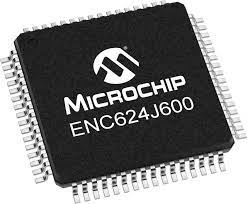
ENC624J600-I/PT microcontroller: Datasheet, Features, Application[FAQ]2023-03-07
ATMEGA1280-16AU microcontroller: Datasheet, Features, Application[FAQ]2023-03-07
STM8S207CBT6 Microcontroller: Datasheet, Features, Application[FAQ]2023-03-06
2N7002P Mosfet: Datasheet, Pinout, Features [FAQ]2021-10-21
L298N Motor Driver: Datasheet, Arduino, Circuit [Video&FAQ]2021-10-21