The Kynix Blog
Stay Ahead with Expert Electronics Insights,
Industry Trends, and Innovative Tips
- Electronic Components
- News Room
- General electronic semiconductor
- Components Guide
- Sort by
- Robots
- Transmitters
- Capacitors
- IC Chips
- PCBs
- Connectors
- Amplifiers
- Memory
- LED
- Diodes
- Transistors
- Battery
- Oscillators
- Resistors
- Transceiver
- RFID
- FPGA
- Mosfets
- Sensor
- Motors, Solenoids, Driver Boards/Modules
- Relays
- Optoelectronics
- Power
- Transformer
- Fuse
- Thyristor
- potentiometer
- Development Boards
- RF/IF
- Semiconductor Information
- PCB
- transistor
Ⅰ IntroductionIf you've been around electrical equipment for a long time, you may have heard of the transformer. Yeah, they're the enormous bulky things found in the corners of the street that make random scary noises and spit sparks sometimes. There is also a sort of small transformer in your phone charger, but much, much smaller and with a different mechanism.CatalogⅠ IntroductionⅡ Transformer DefinitionⅢ Importance of Transformers in Electrical SystemⅣ Transformer SymbolsⅤ Working Principle of a TransformerⅥ Transformer PropertiesⅦ Transformer Construction 7.1 BOBBIN 7.2 CORE 7.3 WINDINGSⅧ Transformers ApplicationⅨ ConclusionⅩ FAQⅡ Transformer DefinitionA transformer is a device that converts one voltage or current to another using the principles of electromagnetism. It consists of a pair of wounds around a magnetic core of the insulated wire. The winding to which the voltage or current to be converted is connected is called the primary winding and the secondary winding is called the output winding. Transformers come in two types: step up, which increases the voltage or current, and step down, which lowers the input of the voltage or current. The transformers in your microwave oven, for example, are a secondary transformer that is used in the microwave oven to supply about 2200Volts to the vacuum tube. One thing to remember is that transformers only operate with AC voltages or adjustments and do not work with DC. We'll understand why now. Ⅲ Importance of Transformers in Electrical SystemIt was around 1856 that there was a rivalry between two brilliant minds, Nikola Tesla and Thomas Edison. Those were the days when electricity and its applications were merely noticed by glowing a lamp and driving a motor. It was Edison and his associates who first discovered the DC (Direct Current) system, and then Tesla developed his AC (Alternating Current) system sometime after that. The two have since tried to show that their scheme is more advantageous than the other. The time has come for houses to get electricity by then. Although Edison was busy showing how dangerous AC is by electrocuting elephants, Tesla and his team came up with the transformers that made it much simpler and more effective to transmit electricity. Also, transformers play a key role in the transmission system today. Let's learn why. High-voltage and low-current transmission of electricity will help us minimize the thickness of the transmission wires and thus the cost, which will also improve the system's performance. For this purpose, a typical transmission system may be anywhere from 22KV to 66KV, although some generators have an output voltage of only 11kV in the power plant and need only 220V/110V for the household AC unit. So where does this transfer of voltage take place and who does it? Transformers are the answer to the issue. There will be transformers in the system from the power plant to your home that will either step-up the voltage (increase voltage) or step-down (decrease voltage) to preserve the system's efficiency. The transformers are therefore referred to as the heart of an electrical transmission system. In this post, we will be learning more about them. Ⅳ Transformer SymbolsFor a transformer, the circuit symbol is simply two inductors placed together side by side that share the same center. The type of core used is shown by the existence of the line between the two windings: a dashed line represents ferrite, two parallel lines represent laminated iron, and no line represents the core of air.The number of 'bumps' is often used as a rough measure of the role of the transformer-less bumps on one side and more on the other which means that there is a lower number of turns on the first side than the other.Ⅴ Working Principle of a TransformerWe need to go back in time, to the laboratory of Michael Faraday, to understand the operation of a transformer. Perhaps the father of the transformer can be named Michael Faraday, as it was his experiments that helped us understand electromagnetism and create devices such as motors and generators. There was a race to try to create a practical system that could harness the strength of magnets to produce electricity in the late 1800s when it was discovered that electricity and magnetism were related phenomena. Faraday figured out that by bringing a magnet close to a coil of wire, electricity could be produced. What he discovered was that only when the magnetic field shifts can the voltage be produced, that is, whether either the coil or the magnet is shifted relative to the other. In DC, the movement of the current is constant and so is the magnetic field. There is no voltage generated on the secondary because the field is constant and not changing and the transformer just looks like a regular coil of resistive wire to the power supply. So, with DC currents, transformers do not operate. He also found that a current flowing in one coil might cause the current in the other coil when two coils of wire were held close to each other. This definition is referred to as mutual inductance, which governs the operation of all modern transformers.The transformer consists of two windings wound on a magnetic core, as shown in the figure. The goal of having a core is that air is not a very good magnetic field supporter, so having a magnetic core increases the magnetic field for a certain amount of current flowing through one winding, which in turn generates a stronger current in the other, improving the device's overall performance. A magnetic field is built up in the core as a current moves through the primary and is limited mostly to the core. This magnetic field passes through the center of the secondary and, thus, the law of reciprocal induction causes a current in the other. The beauty of this method is that the ratio between the input voltage and the output voltage is simply the ratio between the main and the secondary windings, summarized by the following formula:Vout/Vin = Nsec/NpriVin is the input voltage, Nsec is the number of turns in the secondary winding, and Npri is the number of turns in the main winding, where Vout is the output voltage.So if you have two transformers, one with 100 turns on the primary and 1000 turns on the secondary and one with 10 turns on the primary and 100 turns on the secondary, you can measure the ratio of turns to be 1:10 on both of them, so that they both increase voltage to the same degree. Ⅵ Transformer PropertiesIf we take a closer look at the above example, the first transformer would have higher winding resistance (since more wire is used) and will restrict the amount of current that can be drawn from the transformer in certain instances. This property is called winding resistance, but since the copper wire used normally has a low resistance, it does not matter in most cases. Another thing you see is that the main and secondary windings have no direct electrical connection. This is called galvanic isolation and, as we can see, can be very useful. Looking at each of the transformer windings, we can see that they are shaped like inductors and also have an inductance, a coil of wire wrapped around a magnetic center. This inductance, given by this formula, is proportional to the square of the number of turns:Lpri/Lsec = Npri2/Nsec2Where Lpri is the primary winding inductance, Lsec is the secondary winding inductance, Npri is the number of turns on the primary windings and Nsec is the number of turns on the secondary windings. The proportionality constant can be found in the datasheet for a given core and is typically given in μH/turn2 units. The exact value is based on the core form and scale. Suppose you have a transformer core with a 1uH/turn2 specification. If you wind one winding on that heart, the value of the constant multiplied by the number of turns squared will be the inductance, in this case, 1. So the winding inductance of that one will be 1μH. If you wind the same core with another winding with 10 turns, then the inductance will be:(1µH/turn2)*(10 turns)2 = 100µHSince the windings have inductance, they provide an impedance to AC signals, given by the formula:XL = 2π*f*LWhere XL is the impedance in ohms, f is the frequency in ohms and L is the inductance in Henries.Say, you want to design a transformer at 50Hz, which is the standard power line frequency, that draws 3A at 220V AC. Then, by Ohm's law, the impedance of the main will need to be 73.3 Ohms. Now that we know the appropriate impedance and the frequency, we can rearrange the formula to find out the inductance required for the winding:L = (XL)/(2π*f)Substituting the values, we find that 233mH would be the required inductance.We can calculate the windings necessary to get the inductance needed using this information and the value of μH/turns2 from the datasheet.Assuming the value is 50μH/turns2, we can rearrange the formula to evaluate the inductance: Where N is the number of turns, L is the inductance required, and the term t2/μH is just the inverse of the value of the datasheet.We get the necessary number of turns of 2158 when adding our values to the formula. So, as you can see, you can build transformers for almost any application once you get the hang of the formulas! Ⅶ Transformer ConstructionAn awareness of transformer construction is vital for someone who wants to wind their own transformers.A transformer is made up of a few fundamental components: 7.1 BOBBINFor every transformer, the bobbin is the fundamental structure. It provides a spool on which the windings will wind and keeps the core in place as well. It is typically composed of plastic that is heat resistant. It also sometimes involves metal pins onto which, for example, you can weld the ends of the windings if you want to mount it to a PCB. 7.2 COREPerhaps the most significant aspect of the transformer is this. The cores can come in several shapes and sizes, as seen in the image. It is the core's magnetic properties that decide the transformer's electrical properties that are built around the core. 7.3 WINDINGSThe wire used in the house, though it can seem like a trivial item, is as critical as any other element. In general, solid enameled copper wire is used because the insulation is strong and thin, so plastic insulating sheaths do not waste space. Ⅷ Transformers Application • MAINS VOLTAGE CONVERSIONThis is possibly the most common transformer application, stepping down the mains voltage for low voltage devices. This stuff, like microwaves and old TVs and wall brick power supplies, you might even find inside. These transformers have iron cores that make them bulky and much less efficient than other types, providing excellent permeability.Three secondary wires mark them as 12-0-12 or 6-0-6. If you make the center wire the ground reference, this means that the outer two wires have an output of 12V AC RMS. If you calculate the 12v winding over each, you get 24V AC RMS. This gives you the flexibility to use the transformer as you may like. • SWITCH MODE POWER SUPPLIESThese are very specific type of power supplies that generate a DC output and take a DC input. Both modern phone chargers are located here. The transformers used in these PSUs are shaped more like medium- to high-permeability inductors with a limited number of turns and ferrite cores. For a brief period, a DC voltage is applied across the 'primary' so that the current ramps up to a certain amount and retains some magnetic energy in the core. At a lower voltage, this energy is then passed to the secondary, since it has a smaller number of turns. They work and achieve outstanding efficiencies at high frequencies and are very thin. • ELECTRICAL ISOLATIONThere are special transformers with a 1:1 turn ratio, such that the voltages of the input and output are the same. They are used to decouple equipment from the earth's mains. Since mains are referred to as earth, touching even one wire will lead to a shock since the return path is simply the ground. The unit is separated from the main earth by the use of isolation transformers, as transformers are galvanically insulated. • VOLTAGE CONVERSION TRANSFORMERSMany countries use 220V AC as the normal supply voltage around the world, but some countries use 110V AC, such as the US. This means that it is not possible to operate certain devices such as blenders in all countries. To this end, transformers that convert from 110V to 220V or vice versa can be used to ensure that appliances can be used in any region. • IMPEDANCE MATCHINGThere are unique transformer types that are used to balance the source and load impedance. RF and audio circuits are commonly used.The ratio of turns is equal to the source's square root and load impedance. • AUTOTRANSFORMERThis is a special type of transformer that has only one winding that forms the secondary with a 'tap' output. This tap is normally variable, so the output AC voltage can be varied, much like a voltage divider. Ⅸ ConclusionTransformers are useful instruments and it can be very useful to learn how to build and operate with them! Although we have covered the basics here, it is something that can be discussed in another whole article to build a transformer right from scratch, so for some other time. But now, you'll know why it's there and how it works when you see a transformer again. Ⅹ FAQ1. How does a transformer convert AC into DC?The transformer is not designed to convert ac to dc. It is a pure AC device used to step down/up voltage levels keeping frequency, power, FLUX constant. In mobile charger, we use transformer along with bridge rectifier to convert domestic AC supply to dc. (with ripples) Finally, such a transformer that converts ac to dc is not designed yet. 2. Will a transformer work with DC?Transformers work in the principle of Faraday's law of 'mutual induction', in which an EMF is induced in the transformer's secondary coil by the magnetic flux generated by the voltages and currents flowing in the primary coil winding. As in DC(voltage being always constant), the change in flux is zero so no mutual induction, thus transformers can't work with a DC supply. Moreover, if DC or a similar rating of AC(Voltage & Current) is fed into the terminals of a Transformer there is a high possibility that it would burn the primary coil. 3. What is a transformer's simple definition?Transformer, device that transfers electric energy from one alternating-current circuit to one or more other circuits, either increasing (stepping up) or reducing (stepping down) the voltage. 4. What is the use of a transformer?Transformers are most commonly used for increasing low AC voltages at high current (a step-up transformer) or decreasing high AC voltages at low current (a step-down transformer) in electric power applications, and for coupling the stages of signal-processing circuits. 5. What is the basic principle of a transformer?A transformer consists of two electrically isolated coils and operates on Faraday's principle of ‘mutual induction’, in which an EMF is induced in the transformer's secondary coil by the magnetic flux generated by the voltages and currents flowing in the primary coil winding. 6. What are the two types of transformer?The different types of transformer are Step up and Step down Transformer, Power Transformer, Distribution Transformer, Instrument transformer comprising current and Potential Transformer, Single phase and Three phase transformer, Auto transformer, etc. 7. What are the main parts of the transformer?There are three basic parts of a transformer:• an iron core that serves as a magnetic conductor,• a primary winding or coil of wire.• a secondary winding or coil of wire. 8. What does a transformer look like?A transformer keeps wired doorbells powered at the right voltage for optimal operation. It looks like a small metal box and can be silver, off-white, or even brass colored. If your doorbell is no longer working, you may need to troubleshoot the transformer in order to perform the repair. 9. What is a transformer ratio?The transformer turns ratio is the number of turns of the primary winding divided by the number of turns of the secondary coil. The transformer turns ratio provides the expected operation of the transformer and the corresponding voltage required on the secondary winding. 10. What are the ideal transformers?A transformer that doesn't have any losses like copper and core is known as an ideal transformer. In this transformer, the output power is equivalent to the input power. The efficiency of this transformer is 100%, which means there is no loss of power within the transformer.
kynix On 2021-01-15
In daily production and life, ultrasonic ranging sensors are mainly used for non-contact automatic parking distance control (PDC) of automobiles, obstacle avoidance robots, construction sites and industrial working environments that require liquid level, well depth, pipeline length, etc. In general, there are two commonly used ultrasonic distance measurement methods: - The ultrasonic ranging system based on single chip microcomputer or embedded equipment; - An ultrasonic ranging system based on CPLD (complex programmable logic device). In order to understand the design and application of ultrasonic ranging sensor, let us first understand the working principle of ultrasonic sensor. Introducing ultrasonic sensor & taking HC-SR04 as an example Catalog I What is ultrasonic sensor? II Methods for ultrasonic ranging III Principles for ultrasonic ranging IV Conclusion FAQ I What is ultrasonic sensor? Figure 1. Working principle of ultrasonic sensor ranging An ultrasonic sensor is a sensor that converts an ultrasonic signal into another energy signal (usually an electrical signal). Ultrasonic is a mechanical shock wave generated in elastic media with a frequency greater than 20 kHz. Because of its strong directivity, slow energy consumption and relatively long propagation distance, it is often used in non-contact ranging. In addition, ultrasonic has the big ability to penetrate liquid and solid, especially in the sunshine opaque solid. When an ultrasonic hits an impurity or an interface, itwill produce a significant reflection to form an echo, and when it hits a moving object will cause a phenomenon called Doppler Effect. Therefore, ultrasonic ranging has a good adaptability to the environment, and ultrasonic distance measurement can be well compromised in real time, precision, and price. II Methods for ultrasonic ranging At present, there are various methods for ultrasonic ranging: - round-trip time detection; - phase detection; - acoustic amplitude detection. The principle is that the ultrasonic sensor emits ultrasonic waves of a certain frequency, propagates through the air medium, and is reflected back after reaching the measurement target or the obstacle. After being reflected, the ultrasonic receiver receives the pulses, and the time it takes, is the round-trip time, which is related to the distance traveled by ultrasonic waves. Measuring the wave propagation time to get the wave propagation distance: Assuming that s is the distance between the measured object and the range finder, the time measured is t / s, and the velocity of ultrasonic propagation is expressed as v/m·s-1, then there is a relation (1): s=vt/2 (1) When the accuracy is required, the influence of temperature on the ultrasonic propagation speed needs to be considered, therefore the ultrasonic propagation speed is corrected according to relation (2) to reduce the error. v=331.4+0.607T (2) Where T is the actual temperature, the unit is °C; v is the propagation speed of ultrasonic wave in the medium, and the unit is m/s. Figure 2. Working principle of ultrasonic ranging sensor III Principles for ultrasonic ranging The principle of ultrasonic ranging is to transmit ultrasonic waves in a specific direction through an ultrasonic transmitter, and start timing at the same time as the transmission. When ultrasonic waves propagate in the air and hit an obstacle, they will immediately return and be received by the ultrasonic receiver, and stop timing immediately. The ultrasonic ranging sensor uses the principle of ultrasonic echo ranging and uses precise time difference measurement technology to detect the distance between the sensor and the target. It has the advantages of small angle, small blind area, high measurement accuracy, non-contact ranging, waterproof, anti-corrosion, and low cost. Ultrasonic ranging sensors are usually used in a way that one transmitter corresponds to one receiver, but there are also multiple transmitters corresponding to one receiver. Therefore, the ultrasonic distance sensor can measure the return and return time of the ultrasonic wave to determine the distance of the object. This is how the ultrasonic distance sensor works. For the ultrasonic distance sensor, we recommend to use the Korean Hagisonic ultrasonic distance sensor module HG-C40U. Figure 3. Ultrasonic distance sensor module HG-C40U Ultrasonic distance sensor module has two optional transmission modes: - Free operation mode: when there is power supply, the sensor itself can send trigger and burst signals and it is usually for basic applications; - External trigger mode: the external system (controller or processor) controls trigger signals for advanced applications. These two modes are suitable for a variety of purposes. In addition, the sensors also involve the choice of two input power supplies: - Low voltage (5V) for the processor circuit, the distance to the obstacle can be measured is 3.5m; - High voltage (12V) for the controller circuit, the distance to the obstacle can be measured is 5m. The data is transmitted by UART (universal asynchronous receiver-transmitter) with a resolution of less than 5mm. On the other hand, users can select different setting modes according to their own environment needs. Such as free-running / UART triggering / external trigger settings, etc. At the same time, on the basis of baud rate of UART communication, the user can also decide whether to set up the circular buffer or not. The output signal uses high performance ASIC (application-specific integrated circuit) chip to ensure stable transmission and sensitive reception, and the communication between sensor and PC uses "interface board" (RS232, power regulator). The data show that the real received ultrasonic wave can be amplified in real time by using the monitor program on PC, the distance value can be output by UART (ASCII, mm), and then the detection signal can be converted into the rectangular TTL level signal (square wave) in real time. IV Conclusion Ultrasonic sensors are reliable, cost-effective and efficient solutions for distance sensing, level and obstacle detection. Once you understand how ultrasonic sensors work and which ultrasonic technology is most suitable rather than excellent, you can make more informed decisions about the correct sensor system for your application. FAQ 1. What type of sensor is ultrasonic sensor? ultrasonic / level sensors measure the distance to the target by measuring the time between the emission and reception. An optical sensor has a transmitter and receiver, whereas an ultrasonic / level sensor uses a single ultrasonic element for both emission and reception. 2. How many types of ultrasonic sensors are there? four types. All together there are four types of ultrasonic sensors, classified by frequency and shape: the drip-proof type, high-frequency type, and open structure type (lead type and SMD type). 3. What is the range of ultrasonic sensor? For ultrasonic sensing, the most widely used range is 40 to 70 kHz. The frequency determines range and resolution; the lower frequencies produce the greatest sensing range. At 58 kHz, a commonly used frequency, the measurement resolution is one centimeter (cm), and range is up to 11 meters. 4. Can ultrasonic sensor detect human? Finally, ultrasonic sensors assist in detecting people for autonomous navigation of robots. Ultrasonic sensors can be used to set multiple tripwire distances to help navigate around people. Additionally, the high read rate allows you to quickly detect when a person may enter your robot's path. 5. Is ultrasonic sensor harmful? Occupational exposure to ultrasound in excess of 120 dB may lead to hearing loss. Exposure in excess of 155 dB may produce heating effects that are harmful to the human body, and it has been calculated that exposures above 180 dB may lead to death. 6. How do ultrasonic sensors work? Ultrasonic sensors work by emitting sound waves at a frequency too high for humans to hear. They then wait for the sound to be reflected back, calculating distance based on the time required. This is similar to how radar measures the time it takes a radio wave to return after hitting an object. 7. Why is ultrasonic sensor used? Ultrasonic sensors are used primarily as proximity sensors. They can be found in automobile self-parking technology and anti-collision safety systems. ... Ultrasonic sensors are also used as level sensors to detect, monitor, and regulate liquid levels in closed containers (such as vats in chemical factories). 8. Where are ultrasonic sensors used? Ultrasonic sensors have been used throughout many applications and industries. They are used within food and beverage to measure liquid level in bottles, they can be used within manufacturing for an automated process and control maximising efficiency on the factory floor. 9. Is ultrasonic sensor waterproof? Most ultrasonic distance sensors aren't waterproof which can be a problem if you need your project to withstand the elements outdoors. ... This sensor is suitable for outdoor applications such as car reversing sensors, security alarms, industrial inspection, etc. 10. Is ultrasonic sensor analog or digital? Usually, ultrasonic sensors are integrated with an Analog-to-Digital converter (ADC). 11. How do ultrasonic sensors measure distance? As the name indicates, ultrasonic sensors measure distance by using ultrasonic waves. The sensor head emits an ultrasonic wave and receives the wave reflected back from the target. Ultrasonic Sensors measure the distance to the target by measuring the time between the emission and reception. 12. How accurate is the ultrasonic sensor? The more accurate ultrasonic sensors can achieve 0.1 – 0.2% of the detected range under perfectly controlled conditions, and most good ultrasonic sensors can generally achieve between 1% and 3% accuracy. 13. What can ultrasonic sensors detect? Ultrasonic sensors can measure the distance to a wide range of objects regardless of shape, color or surface texture. They are also able to measure an approaching or receding object. 14. Are ultrasonic sensors affected by smoke? Ultrasonic sensors are superior to infrared sensors because they aren't affected by smoke or black materials, however, soft materials which don't reflect the sonar (ultrasonic) waves very well may cause issues. 15. Which is better ultrasonic or IR sensor? Ultrasonic sensors work using sound waves, detecting obstacles is not affected by as many factors. If reliability is an important factor in your sensor selection, ultrasonic sensors are more reliable than IR sensors. If you're willing to compromise reliability for cost, infrared sensors are ideal for your application.
kynix On 2018-07-12
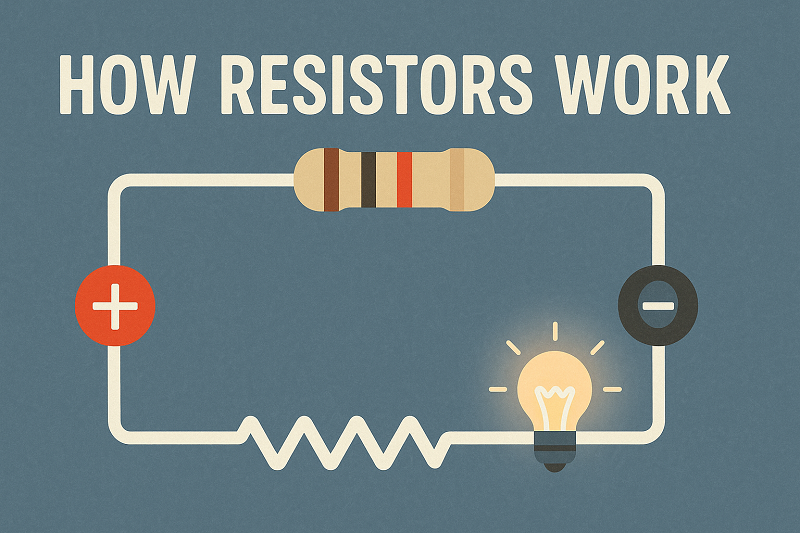
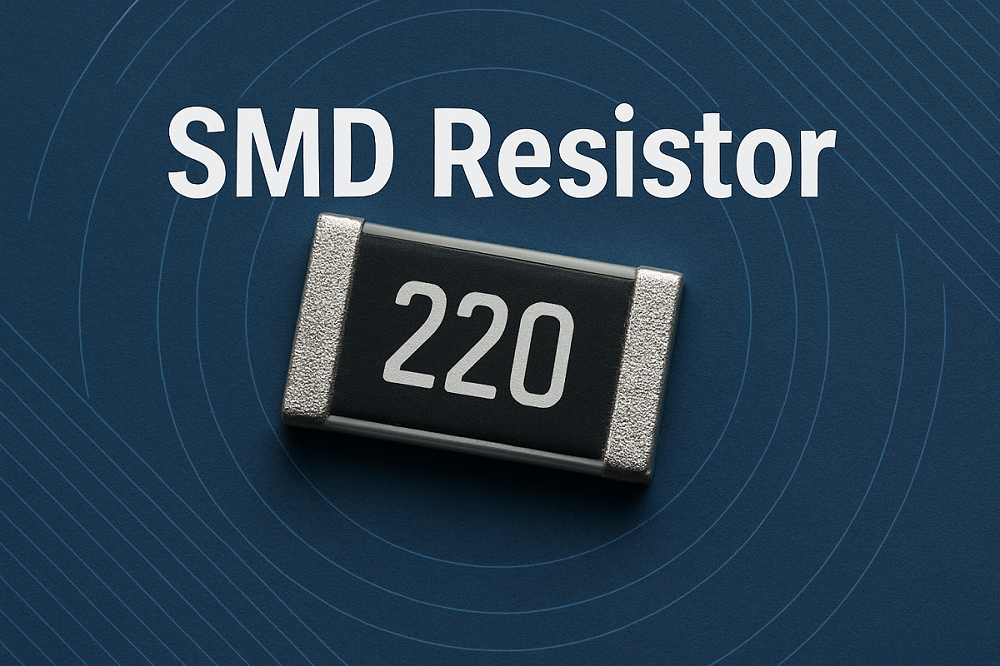
2026 Executive Summary: Reading SMD Resistor CodesHow do you read SMD resistor codes? For standard 3-digit codes, the first two numbers are significant digits, and the third is the multiplier (10^x). For 4-digit codes (precision), the first three are significant. The EIA-96 system uses a two-digit code and a letter multiplier. This authoritative guide covers all calculation methods, updated for 2026 industry standards.What are SMD Resistors? (2026 Overview)SMD Resistor, also known as a Chip Resistor, is a surface-mount passive component essential for modern high-density electronics. Manufactured by sintering metal powder and glass glaze on a ceramic substrate, these components offer superior resistance to humidity, high temperatures, and vibration compared to legacy through-hole parts. As of 2026, they are the industry standard for everything from AI hardware to smartphones. While different resistors feature varied specifications, the critical question remains: how are these microscopic resistance values marked and decoded? Figure 1. Structure of SMD ResistorsⅠ How to Read Resistor Markings: 4 Key MethodsTo master resistor identification, one must understand the four global standards used to denote resistance values. These methods are governed by IEC 60062 standards:1. Direct Marking MethodThis method prints the actual numbers and unit symbols directly on the resistor surface. The allowable error (tolerance) is expressed as a percentage. If no deviation is marked, the standard tolerance is typically ±20%.2. Text Symbol MethodThis approach uses a combination of Arabic numerals and text symbols to indicate the nominal resistance and tolerance. The number preceding the symbol represents the integer value, while the number following represents the decimal. Tolerance characters are standardized: D (±0.5%), F (±1%), G (±2%), J (±5%), K (±10%), M (±20%).3. Digital Method (Most Common for SMD)This method uses a 3-digit or 4-digit code. Read from left to right, the initial digits represent the significant figures (effective values), and the final digit is the exponent (multiplier), indicating the number of zeros to add. The unit is always Ohms (Ω).4. Color Code Marking MethodWhile rare on modern SMDs (except MELF packages), color bands are the standard for through-hole resistors. The bands represent values and multipliers:Black (0), Brown (1), Red (2), Orange (3), Yellow (4)Green (5), Blue (6), Violet (7), Gray (8), White (9)Tolerance: Gold (±5%), Silver (±10%), Colorless (±20%)Figure 2. Universal Resistor Color Code DiagramReading Tip: For a four-band resistor, the last band (usually gold/silver) is the tolerance. The first two bands are digits, and the third is the multiplier. For five-band precision resistors, the first three are digits, the fourth is the multiplier, and the fifth is the tolerance. Ⅱ Calculating SMD Resistor Values (Step-by-Step)2.1 Understanding Character Code MarkingsVideo: SMD Resistor Coding ExplainedMarking chip resistors requires a compact system due to the component's microscopic size. While large packages may use full numbers, 0603, 0805, and 1206 packages use coded systems. Here is the 2026 standard breakdown for decoding these values:The 3-Digit System (Standard Tolerance ±5%):1. The first and second digits represent the significant resistance figures.2. The third digit is the multiplier (10^x).Decoding Guide by Third Digit:• Ends in 0: No extra zeros. Example: 100 = 10 Ω.• Ends in 1: Add one zero (x10). Example: 101 = 100 Ω.• Ends in 2: Add two zeros (x100). Example: 102 = 1,000 Ω (1 kΩ).• Ends in 3: Add three zeros (x1,000). Example: 103 = 10,000 Ω (10 kΩ).• Ends in 4: Add four zeros. Example: 104 = 100 kΩ.• Ends in 5: Add five zeros. Example: 105 = 1 MΩ.• Ends in 6: Add six zeros. Example: 106 = 10 MΩ.The 4-Digit System (Precision Tolerance ±1%):For higher precision, three significant digits are used. Example: 1001 means 100 + one zero = 1000 Ω (1 kΩ).Note: Ultra-small packages like 01005, 0201, and 0402 are physically too small for markings. These must be measured with a multimeter or tracked via reel tape labeling.2.2 Real-World Calculation ExamplesCase 1: 3-Digit Code (±5% Tolerance)This uses two significant digits followed by a multiplier.Calculation: 153 → 15 followed by 3 zeros → 15,000 Ω = 15 kΩDecimal Values: "R" represents the decimal point. Code 6R8 → 6.8 ΩCase 2: 4-Digit Code (±1% Tolerance)Common on packages like 0805, 1206, and 2512. The first three digits are significant.Calculation: 2372 → 237 followed by 2 zeros → 23,700 Ω = 23.7 kΩDecimal Values: 3R24 → 3.24 ΩCase 3: EIA-96 System (The "Cryptic" Code)Used for 1% tolerance resistors on small 0603 packages where 4 digits won't fit. This system uses a two-digit code (referencing a lookup table) and a letter multiplier.Format: [Code] [Letter]Example Multipliers: Y=0.01, X=0.1, A=1, B=10, C=100, D=1000, E=10000.E-96 Series Standard Resistance Lookup Table (Partial)ValueCodeValueCodeValueCode100011471721533102021501822134105031541922635107041582023236110051622123737113061652224338115071692324939118081742425540121091782526141124101822626742127111872727443130121912828044133131962928745137142003029446140152053130147143162103230948 ValueCodeValueCodeValueCode316494646568181324504756669882332514876771583340524996873284348535116975085357545237076886365555367178787374565497280688383575627382589392585767484590402595907586681412606047688792422616197790993432626347893194442636497995395453646658097696EIA-96 Calculation Examples:Code 29B: Lookup "29" in table → Value 196.Multiplier "B" → x10.Result: 196 × 10 = 1.96 kΩCode 10X: Lookup "10" in table → Value 124.Multiplier "X" → x0.1.Result: 124 × 0.1 = 12.4 ΩCase 4: The Underlined Code (Special 0603 Case)Sometimes you see a standard 3-digit code with a line under it on an 0603 package. This usually indicates the manufacturer uses the E-24 series values (loose tolerance) rather than E-96, but the calculation is standard.122 = 12 × 100 = 1.2 kΩ680 = 68 × 1 = 68 Ω (Note: 680 does not mean 680 ohms here, it means 68 and zero extra zeros). Ⅲ How to Identify Damaged SMD Resistor Values?When a resistor is burned or the marking is unreadable, use these four forensic engineering methods to deduce the value:1. Parallel Circuit ComparisonPCB designs, especially in power supplies and audio amplifiers, often use symmetrical channels. • Example: In an LCD backlight driver, if the resistor in Channel A is burnt, check the corresponding position in Channel B. Often R17 = R51, or R23 = R48. Measure the intact sibling component to find the value.2. Circuit Context Analysis (Pull-Up/Pull-Down)For Microcontroller (MCU) circuits, resistors connected to GPIO pins are typically "pull-up" or "pull-down" resistors used to stabilize logic levels.• Common Values: 3.3kΩ, 4.7kΩ, 10kΩ.• Deduction: If the resistor connects a data line to VCC or GND, replacing it with a 10kΩ resistor is a safe starting point for testing.3. Reference Similar SchematicsIf the exact schematic is unavailable, search for schematics of devices using the same main IC. Manufacturers often use the "Reference Design" provided by the chipmaker, meaning the peripheral resistor values will be identical across different brands.4. The Potentiometer Test (Advanced)If all else fails, trace the circuit diagram. Temporarily solder a high-value potentiometer (variable resistor) in place of the damaged part. Power on the device and slowly adjust the resistance while monitoring voltage levels until the circuit functions correctly. Remove the potentiometer, measure its set resistance, and replace it with the closest standard fixed resistor. Ⅳ Top SMD Resistor Manufacturers (2026 Updated)Reliability is paramount in 2026 electronics. The following brands are currently recognized as Tier-1 manufacturers for automotive, industrial, and consumer electronics:YAGEO: Global leader in chip resistors (acquired KEMET).Vishay: Known for high-precision, military-grade foil resistors.Panasonic: Industry standard for high-reliability automotive parts.KOA Speer: Major supplier for automotive and industrial markets.Bourns: Famous for circuit protection and resistors.TE Connectivity: Specialist in harsh environment resistors.Other Notable Brands: ROHM, Ohmite, Welwyn, TT Electronics, UNI-ROYAL (Uniohm). ⅴ Frequently Asked Questions (FAQ)1. What is an SMD resistor used for?SMD (Surface Mount Device) resistors limit current, divide voltage, and stabilize signal lines in compact electronic circuits. They are essential for miniaturizing devices like smartphones, wearables, and IoT sensors where traditional through-hole components would be too bulky. 2. How do I calculate the value of a 3-digit SMD resistor?Use the formula: [1st Digit][2nd Digit] x 10^[3rd Digit]. For example, "103" means 10 x 10^3 (1000) = 10,000 Ohms or 10kΩ. 3. What does "R" mean in a resistor code like 4R7?The letter "R" represents the decimal point. It is used when the resistance value is too small to use a multiplier code. Therefore, 4R7 equals 4.7 Ohms. 4. What is the difference between 103 and 1002 markings?Both equal 10kΩ, but the marking indicates tolerance. "103" (3-digit) typically indicates ±5% tolerance. "1002" (4-digit) indicates higher precision, typically ±1% tolerance. 5. How do I read the cryptic "01A" or "29B" codes?These are EIA-96 codes for 1% precision resistors on small 0603 parts. You cannot read them directly; you must use an EIA-96 lookup table. The number refers to a value code, and the letter is the multiplier. 6. Why do some SMD resistors have no markings?Resistors in package sizes 0402, 0201, and 01005 are physically too small to print legible text. To identify these, you must measure them with a multimeter or refer to the manufacturer's reel tape packaging. 7. What does SMD stand for?SMD stands for Surface Mounted Device. It refers to the component itself. SMT (Surface Mount Technology) refers to the manufacturing process of placing these components onto a PCB. 8. What materials are SMD resistors made of?Most SMD resistors are "Thick Film" or "Thin Film" types. They consist of a ceramic substrate (alumina) coated with a resistive paste (metal oxides and glass). This is fired in a kiln, laser-trimmed to the exact value, and then coated with a protective layer.{ "@context": "https://schema.org", "@type": "Article", "mainEntityOfPage": { "@type": "WebPage", "@id": "https://www.kynix.com/Blog/How-to-Read-the-Value-of-SMD-Resistor-Example-Explained.html" }, "headline": "How to Read SMD Resistor Codes: The 2026 Guide to 3-Digit, 4-Digit & EIA-96 Markings", "image": "https://www.kynix.com/editor_u/image/20211027/2021102711243403.jpg", "author": { "@type": "Organization", "name": "Kynix Electronics" }, "publisher": { "@type": "Organization", "name": "Kynix Electronics", "logo": { "@type": "ImageObject", "url": "https://www.kynix.com/logo.png" } }, "datePublished": "2021-10-27", "dateModified": "2026-01-08", "description": "Learn how to calculate SMD resistor values using 3-digit, 4-digit, and EIA-96 codes. Includes updated 2026 lookup tables and troubleshooting steps for damaged components.", "articleBody": "SMD Resistor, called Chip Resistor, is one type of resistors..."}{ "@context": "https://schema.org", "@type": "FAQPage", "mainEntity": [{ "@type": "Question", "name": "What is an SMD resistor used for?", "acceptedAnswer": { "@type": "Answer", "text": "SMD (Surface Mount Device) resistors limit current, divide voltage, and stabilize signal lines in compact electronic circuits like smartphones and IoT devices." } }, { "@type": "Question", "name": "How do I calculate the value of a 3-digit SMD resistor?", "acceptedAnswer": { "@type": "Answer", "text": "Use the formula: [1st Digit][2nd Digit] x 10^[3rd Digit]. For example, 103 means 10 x 1000 = 10,000 Ohms (10kΩ)." } }, { "@type": "Question", "name": "What does 'R' mean in a resistor code like 4R7?", "acceptedAnswer": { "@type": "Answer", "text": "The letter 'R' acts as a decimal point. 4R7 represents 4.7 Ohms." } }, { "@type": "Question", "name": "How do I read EIA-96 codes like 01A?", "acceptedAnswer": { "@type": "Answer", "text": "EIA-96 codes require a lookup table. The number represents a significant value, and the letter represents a multiplier. For '01A', 01 is 100 and A is x1, resulting in 100 Ohms." } }]}{ "@context": "https://schema.org", "@type": "HowTo", "name": "How to Read a 3-Digit SMD Resistor Code", "description": "Step-by-step guide to calculating resistance from standard 3-digit markings found on most chip resistors.", "step": [{ "@type": "HowToStep", "name": "Identify the Significant Digits", "text": "Read the first two numbers on the resistor. These are your significant digits (e.g., in '103', the significant digits are '10')." }, { "@type": "HowToStep", "name": "Identify the Multiplier", "text": "Read the third number. This indicates the power of 10 to multiply by (or how many zeros to add). In '103', the multiplier is 3 (10^3 or 1000)." }, { "@type": "HowToStep", "name": "Calculate the Result", "text": "Multiply the significant digits by the multiplier. 10 x 1000 = 10,000 Ohms (10kΩ)." }]}
Karty On 2021-10-27
In this article, you will learn what is AVR microcontroller, what are its features, how to choose a suitable AVR microcontroller, and how to program AVR microcontroller in software and so on. Catalog I. What is a AVR Microcontroller? II. AVR Microcontroller Features III. Selection of AVR Series Single-chip Microcomputer IV. AVR Microcontroller Application Field V. Introduction to the experimental tools and equipment used in AVR VI. AVR Microcontroller Programming Software FAQ I. What is AVR Microcontroller? AVR microcontroller is an enhanced 8-bit and built-in Flash RISC order set developed by ATMEL. Compared with CISC, RISC is not just to reduce the command simply, but make the structure of the computer more simple and reasonable to improve the speed of the operation. The design absorbs the advantages of the 8051 and PIC microcontroller and has the ability to execute one instruction in a single clock cycle. The speed can reach 1Mips/MHz. AVR microcontrollers are widely used in the outside devices of the computers, industrial real-time control, instrumentation, communication equipment, home appliances, and other fields. This vedio shows you how to build your own AVR development board and how to use it in your projects. The hardware structure of AVR adopts a compromise strategy of 8-bit and 16-bit computer, that is, the local register memory stack (32 register files) and the single high-speed input/output scheme (i.e. input capture register, the output compares matching registers and corresponding control logic) are adopted, improving the execution speed of instruction, overcoming the bottleneck phenomenon, and enhancing the function. At the same time, it reduces the cost of external equipment management, simplifies the hardware structure, and reduces the cost. Therefore, the AVR microcontroller is a high-performance-price single-chip microcomputer, which has achieved an optimized balance in hardware/software development, speed, performance, and cost. The introduction of the AVR microcontroller breaks this old design pattern completely, abolishes the machine cycle, and gives up the complex instruction computer (CISC) to pursue the instruction complete method; Reducing instruction set, taking words as the unit of instruction length, arranging the rich operands and opcodes in one word (the majority of single-cycle instructions in the order set are the same), and the reference period is short and the instruction can be prefetched, realizing flow operation, so you can execute instructions at high speed. Of course, high reliability must be required. II. AVR Microcontroller Features 1. High-quality embedded Flash program memory, can be repeatedly written and erased, supporting ISP and IAP, which is easy to have product debugging, development, production, update. Long service-life EEPROM, can save key data for a long time and avoid power loss. High-capacity RAM in chips supports the development of system programs in high-level languages. 2. High speed, low power consumption, with SLEEP (power saving when sleeping) function. Each instruction can be executed at 50ns/ 20MHz, while power consumption is between l~2.5mA (typical power consumption, when WDT turned off, is 100nA), AVR (with prefetching instruction function) based on Harvard structure concept. That is, there are different memories and buses for program storage and data, when an instruction is executed, the next instruction is pre-removed from the program memory. This allows instructions to be executed within each clock cycle. The AVR microcontroller can operate at a wide voltage (2.7V~5V), has the strong anti-jamming ability, and reduces the general 8-bit computer software anti-interference design and hardware usage. 3. All the I/O lines of the AVR single-chip computer have an adjustable pull-up resistor. The input and output characteristics of parallel I/O port are similar to those of PIC's HI/LOW output and three-state high impedance H1-Z input, also be set similar to the 8051 series of internal high resistance as input function. It can be set as an input/output or can be set as high resistance input initially. So that I/O resources are flexible, powerful, and fully utilized. AVR's I/ O can accurately reflect the input/output of I/O. 4. AVR microcontroller has a variety of independent clock dividers for URAT, IIC, SPI. The Prescaler with up to 10 bits when matching with the 8 / 16-bit timer, can set the frequency division coefficient through software to provide a variety of timing times. The timer/counter (single) in the AVR microcontroller can be counted bidirectionally to form a triangle wave, then matched with the output comparison matching register, the output PWM of pulse width modulation with variable duty cycle, variable frequency, and variable phase square wave is generated. 5. For industrial products, with high current (irrigation current) lO=20mA~40mA (single output), can directly drive SSR or the relay. The built-in watchdog timer (WDT) is used to avoid the faulty program and improve the anti-interference ability of the product. 6. Superfunctional streamlined instruction. There are 32 general working registers (equivalent to 32 accumulators in 8051 single-chip computers), which overcomes the data processing problems caused by the single accumulator. 7. AVR microcontroller has analog comparator, I/O port can be used for A/D conversion, can form cheap A/D converter. 8. Byte-oriented high-speed hardware serial interface TWI and SPI. TWI is compatible with the I2C interface, with ACK signal hardware transmission and recognition, address recognition, bus arbitration, and other functions, It can realize all four kinds of multi-machine communication from one to another. SPI has the same function. It also looks like the 8051, AVR has multiple fixed interrupt vector entry addresses, so it can respond to interrupts quickly, and it will interrupt like PIC at the same vector address. 9. AVR microcontroller has an automatic power-up reset circuit, an independent watchdog circuit, low voltage detection circuit BOD, multiple reset sources (automatic up and down reset, external reset, watchdog reset, BOD reset). It can set up a delay operation program after running the system, enhancing the reliability of the system. And meanwhile, the AVR microcomputer has many power-saving sleep modes, wide voltage operation(2.7V-5V), strong anti-interference ability. So it is used widely in the electrical industry due to its advantages. 10. Enhanced high-speed synchronous/asynchronous serial port has the functions of generating checking code based on hardware, hardware detecting and debugging, two-stage receiving buffering, baud rate automatically adjusting position (when receiving), shielding data frame, and so on. They improve the reliability of communication and help write the program easily. It also makes up the distributed network and to realize the complex application of multi-computer communication system. The function of the serial port is much more than the serial port of the MCS-51/96 microcontroller. In addition, the AVR single-chip microcomputer has a high-speed operation, and the interrupt service time is short, therefore, high baud rate communication can be realized. Serial asynchronous communication UART does not occupy timer and SPI transmission function, because of its high speed, it can work in a standard integer frequency, while baud rate can reach 576Ko11, with multi-channel 10-bit AID converter and real-time clock RTC. III. Selection of AVR Series Single-chip Microcomputer AVR microcontroller technology embodies a variety of devices (including FLASH program memory, watchdog, EEPROM, synchronous/asynchronous serial port, TWI/ SPI/ AID/ A/D converter, timer, counter, etc.) and various functions (enhanced reliability of reset system, reduced power-consumption and anti-interference sleep mode, various interrupt systems, timer/counter with input capture and match output, replaceable I/O port. It fully reflects the modern single-chip technology develops into the "on-chip" SoC system. AVR series microcontroller is complete, can be applied to different occasions. In order to make good use of it, it is necessary to know its classification based on different standards and functions. And here are introducing three grades and their models as examples. AVR microcontroller has three grades: Low-grade Tiny series: this type of microcontroller has Less memory, small in size, apt only for simpler applications, the applying model like Tiny11/12/13/15/26/28, etc.; Midrange-grade AT90S series: this microcontroller is used commercially for compound applications, it requires large program memory and also high speed, such as AT90S1200/2313/8515/8535, etc.; High-grade ATmega: this type of microcontroller is the most popular one which has a good amount of memory up to 256KB, higher built-in peripherals, and fit for modest to difficult applications, the applying model like the ATmega8/16/32/64/128 (storage capacity is 8/16/32/64/128KB) and ATmega8515/8535. AVR device pins range from 8 to 64, with a variety of packages available. IV. AVR Microcontroller Application Field Air conditioning control panel Printer control board(PRCB) Intelligent meter Intelligent flashlight LED control screen Medical equipment GPS V. Experimental tools and equipment used in AVR IC-CAVR6.31AC Language Compiler Integrated Development Environment(ATMEL AVR Studio) PonyProg2000 Download Software AVR Microcontroller Integrated Test Board AVR-JTAG Simulator Parallel Port Loader High Stability Power Supply Multifunctional TOP2004 USB Programmer PC VI. AVR Microcontroller Programming Software ICCAVR6.31AC Language Compiler ICCAVR6.31A is a C programming language compiler developed by ImageCraft for AVR MCU. It is a pure 32-bit with an integrated development environment, also consists of an editor and project manager. ICCAVR has been widely used because of its powerful function, simple operation, good technical support, and reasonable price. The following figure is the working interface of ICCAVR. AVRStudio Integrated Development Environment AVRStudio is an integrated development environment that integrates project management, program assembly, program debugging, program download, JTAG simulation, and so on. However, AVRStudio does not support the C programming language. Therefore, when we develop an AVR microcontroller with the C programming language, we should first compile the C programming language with ICCAVR, then open the compiled code file with AVRStudio to debug the program. The following figure is the workspace of SVRAStudio. PonyProg2000 software It is mainly used for AVR MCU and PIC MCU program download, can be used in Windows95/98/ME/NT/20001XP operating systems. The following figure is the working interface of PonyProg2000. Attention Write with PORTx, read with PINx During the experiment, try not to connect the pin directly to the GND/VCC. When it is not set properly, the I/O port will output/fill the high current of 80mA (Vcc=5V), resulting in device damage. As Input 1.The suspension (high resistance state) will be susceptible to interference if the internal pull-up resistor is usually allowed(generally, it seems that 51 has a strong anti-interference ability because 51 always has internal resistance to pull up). 2.Try not to let input suspended or analog input level close to VCC/2, because it will consume too much current, especially in low power applications of CMOS circuits. 3.The pin level provided by the reading software usually requires a clock cycle interval between the assignment instruction “out” and the read instruction “in”, such as the nop order. 4.The input of the functional module (interrupt, timer) can be triggered by a low level, also it can be the rising edge trigger or the falling edge trigger. 5.For high-resistance analog signal input, remember not to allow internal pull-up resistor to affect accuracy, such as ADC digital-analog converter input, analog comparator input, and so on. As Output Taking the necessary current limiting measures, for example, drive the LED to serialize the current-limiting resistor. Reset The internal pull-up resistor will be disabled when to reset. If strict level control is required in an application, such as motor control, it is necessary to use an external resistor to fix the level. Dormant As output, it is still in the same state Input is generally invalid, but the input function is valid if the second function is interrupted. For example, the wake-up function of an external interrupt FAQ 1. What is meant by AVR microcontroller? AVR is a family of microcontrollers developed since 1996 by Atmel, acquired by Microchip Technology in 2016. These are modified Harvard architecture 8-bit RISC single-chip microcontrollers. AVR was one of the first microcontroller families to use on-chip flash memory for program storage, as opposed to one-time programmable ROM, EPROM, or EEPROM used by other microcontrollers at the time. 2. How does AVR microcontroller work? AVR is an 8-bit microcontroller belonging to the family of Reduced Instruction Set Computer (RISC). In RISC architecture the instruction set of the computer are not only fewer in number but also simpler and faster in operation. ... The input/output registers available are of 8-bits. 3. What does AVR stand for in electronics? An automatic voltage regulator (AVR) is an electronic device that maintains a constant voltage level to electrical equipment on the same load. 4. What are the types of AVR? In general, there are two types of an Automatic Voltage Regulator. One is the Relay Type and the other is the Servo Motor type. A Relay type AVR makes use of electronic circuitry like relays and semi-conductors to regulate the voltage. 5. Is Arduino AVR or ARM? Arduino uses AVR- or ARM-based microcontrollers, depending on board. PIC is the oldest of the lot. There's no such thing as an “Arduino microcontroller”. 6. What is full form of AVR? The Full form of AVR is Aortic Valve Replacement. An AVR is a type of open heart surgery used to treat problems with the heart's aortic valve. 7. What happens if AVR fails? When AVR fails a protection called Field Failure protection will come into picture and trip the generator. ... If Failure of field is associated with under voltage which might happen due to severe fault near the generator and AVR might trip not able to maintain the voltage, the generator is tripped instantaneously. 8. What is AVR and ARM? ARM is a microprocessor or CPU architecture while AVR is a microcontroller. ARM can be used similar to a microcontroller when combined with ROM, RAM and other peripherals to a single chip like LPC2148. ... Microcontroller has build in RAM, ROM and other peripherals in a single chip. While microprocessor has only the CPU. 9. What are the applications of AVR and ARM? AVR and ARM comes under the family of micro-controller. But ARM can be used as both Microcontroller or as Microprocessor. ARM micro-controller and AVR micro-controller differs from each other in terms of different architecture and different sets of instruction, speed, cast, Memory, Power Consumption, Bus Width etc. 10. What is AVR microcontroller architecture? AVR is a 8-bit RISC architecture (Reduced Instruction Set Computing) microcontroller in market since 1996 which is having on-chip programmable flash memory, SRAM, IO data space & EEPROM. AVR is the first MCU in market which has on-chip flash storage. You May Also Like A Complete Guide to Solid State Drive (SSD) Brief introduction to the Application of some IC chips in Maxim Integrated Product Recommendation KY32-AT49BV162AT(T) KY32-K9T1G08U0M-YIBO KY32-CY7C131E-55NXI
kynix On 2018-12-07
Introduction There are many kinds of LCD interfaces, with wide range of applications. The classification criteria mainly depends on the driving mode and control mode of the LCD. At present, there are generally several connection modes for color LCDs on mobile phones: MCU mode, RGB mode, SPI mode, VSYNC mode, MDDI mode, DSI mode, etc. and only the TFT module has RGB interface. Basics of LCD Interfacing Catalog Introduction Ⅰ LCD Interface Modes 1.1 MCU Mode 1.2 VSYNC Mode 1.3 M6800 Mode 1.4 Intel 8080 Mode 1.5 RGB Mode 1.6 SPI (Serial Peripheral Interface) Mode 1.7 MDDI (Mobile Display Digital Interface) Mode 1.8 DSI (Display Serial Interface) Mode Ⅱ MCU Mode vs RGB Mode Ⅲ TFT-LCD Interface Explained 3.1 TTL Interface 3.2 LVDS 3.3 EDP (Embedded Display Port) 3.4 MIPI Interface Ⅳ FAQ Ⅰ LCD Interface Modes The following is a detailed explanation of the different interface modes: 1.1 MCU Mode It is mainly used in the field of single-chip microcomputers. Later, it is widely used in low-end mobile phones, and its main feature is that it is cheap. The standard term for the MCU-LCD interface is the 8080 bus standard proposed by Intel. Figure 1. Intel 8080 Therefore, 8080 is used to refer to the MCU-LCD screen in many documents. It can be mainly divided into 8080 mode and 6800 mode, and the difference between the two is mainly the timing. There are 8 bits, 9 bits, 16 bits, 18 bits, and 24 bits for data bit transfer. Connections are divided into: CS/, RS (register selection), RD/, WR/, and data lines. The advantages are: the control is simple and convenient, no clock and synchronization signals are required. The disadvantage is: it consumes GRAM, so it is difficult to achieve a large screen (above 3.8). For LCM with MCU interface, the internal chip is called LCD driver. The main function is to transform the data/command sent by the host into the RGB data of each pixel, so that it can be displayed on the screen. This process does not require point, line, frame clocks.The LCD Driver IC of the MCU interface is equipped with GRAM. As a co-processor of the MCU, it accepts the Command/Data sent by the MCU and can work relatively independently. Pay attention to, the internal chip of LCD Module (LCM) is called the LCD driver. The main function is to transform the data/commands sent by the host computer into the RGB data of each pixel, so that it can be displayed on the screen. This process also does not require point, line, frame clocks. 1.2 VSYNC Mode In fact, this mode is to add a VSYNC signal to the MCU mode and applied to the update of the moving picture, which is very different from the above interface. This mode supports the function of direct animation display. It provides a solution for animation display with minimal changes to the MCU interface. In this mode, the internal display operation is synchronized with the external VSYNC signal. Animation display at a higher rate than internal operations can be achieved. However, due to the difference in its operation mode, this mode has a limit on the speed, that is, the write speed to the internal SRAM must be greater than the speed of the display read internal SRAM. 1.3 M6800 Mode The M6800 mode supports selectable bus widths of 8/9/16/18-bit (the default is 8 bits). The actual design idea is the same as that of Intel 8080. The main difference is the bus control read and write signals in this mode. Combined on one pin (with a latch signal (E) data bit transmission has 8, 9, 16 and 18 bits). Figure 2. M6800 Mode 1.4 Intel 8080 Mode Intel 8080 LCD interface is divided into: CS/, RS (register selection), RD/, WR/, and the data line. Advantage: Simple and convenient control, no clock and synchronization signals are required. Disadvantage: It consumes GRAM, so it is difficult to achieve a large screen (above QVGA). Figure 3. Intel 8080 Mode 1.5 RGB Mode The large screen adopts more modes, and the data bit transmission also has the 6-, 16- and 18-, 24-bit. The connections are generally: VSYNC, HSYNC, DOTCLK, CS, RESET, some also need RS, and the rest is the data line. Its advantages and disadvantages are just the opposite of MCU mode. The main difference between the MCU-LCD screen and the RGB-LCD screen is the location of the video memory. The video memory of RGB-LCD is acted by system memory, so its size is only limited by the size of system memory. Where RGB-LCD can be made larger, such as 4.3" can only be regarded as entry-level, and 7" in MID, 10" screens have begun to be widely used. At the beginning of the design of MCU-LCD, it was only necessary to consider that the memory of the single-chip microcomputer was small, so the video memory was built into the LCD module, and then the software updated the video memory through special display commands with small MCU screen. At the same time, the display update speed is slower than RGB-LCD. The display data transmission mode is also different. RGB screen only needs to organize the data in the video memory. After starting the display, the LCD-DMA will automatically transfer the data in the video memory through the RGB interface to the LCM, while the MCU screen needs to send a drawing command to modify the internal RAM of the MCU (that is, the RAM of the MCU screen cannot be directly written).Therefore, the RGB display speed is significantly faster than that of the MCU, and the MCU-LCD is also slower in terms of video playback. For the LCM of the RGB interface, the host directly outputs the RGB data of each pixel without conversion (except for GAMMA correction, etc.). For this interface, an LCD controller is required in the host part to generate RGB data and sync signals. Figure 4. RGB Mode Here gives a note. The color TFT LCD screen mainly has 2 kinds of interfaces: TTL interface (RGB color interface), and LVDS interface (differential signal transmission). The TTL interface is mainly used for small-sized TFT screens below 12.1 inches, and the LVDS interface is mainly used for large-sized TFT screens above 8 inches. The TTL interface has many lines and the transmission distance is short, while the LVDS interface has a long transmission distance and a small number of lines. The large screen adopts more modes, the control pins are VSYNC, HSYNC, VDEN, VCLK, S3C2440 supports up to 24 data pins, and the data pin is VD[23-0].The image data sent by the CPU or graphics card is a TTL signal (0-5V, 0-3.3V, 0-2.5V, or 0-1.8V), and the LCD itself also receives a TTL signal, which is transmitted at a high rate over long distances. However, its performance is poor, and the anti-interference ability is relatively poor. With the time goes by, a variety of transmission modes were proposed, such as LVDS, TDMS, GVIF, P&D, DVI and DFP. They actually just encode the TTL signal sent by the CPU or graphics card into various signals for transmission, and decode the received signal on the LCD side to obtain the TTL signal. No matter what transmission mode is used, the essential TTL signal is the same. Note: TTL/LVDS are two signal transmission modes: TTL is a mode in which high level means 1, and low level means 0; LVDS is the difference of a positive and negative corresponding waveform used to indicate the 1 or 0. 1.6 SPI (Serial Peripheral Interface) Mode It is less used. There are 3-wire and 4-wire, the connection is CS/, SLK, SDI, and SDO, and the software control is more complicated. 1.7 MDDI (Mobile Display Digital Interface) Mode Qualcomm's MDDI, which can improve the reliability of mobile phones and reduce power consumption by reducing wiring. It will replace SPI mode as a high-speed serial interface in the mobile field. The main connection is host_data, host_strobe, client_data, client_strobe, power, and GND. 1.8 DSI (Display Serial Interface) Mode This mode is a serial bidirectional high-speed command transmission mode, with D0P, D0N, D1P, D1N, CLKP, CLKN connected. Ⅱ MCU Mode vs RGB Mode Among them, there are more applications in MCU mode and RGB mode. The differences are as follows:1) MCU interface: it will decode commands, generate timing signals by timing generator, and drive COM and SEG.RGB interface: When writing LCD register setting, it is no different from MCU interface. The difference is only in how the image is written.2) When using the MCU mode, since the data can be stored in the IC's internal GRAM first and then written to the screen, the LCD in this mode can be directly connected to the memory bus. It is different when using RGB mode, and has no internal RAM, HSYNC, VSYNC, ENABLE, CS, RESET, RS can be directly connected to the GPIO port of memory, and use the GPIO port to simulate waveforms.3) MCU Interface vs RGB InterfaceThe main differences between the MCU interface and the RGB interface are:MCU interface mode: display data is written into DDRAM, often used for still picture display.RGB interface mode: The display data is not written into DDRAM, but directly written to the screen, which is fast and often used to display video or animation. Ⅲ TFT-LCD Interface Explained The commonly used interfaces of TFT-LCD, including TTL (RGB), LVDS, EDP, and MIPI. Here roughly talk about the basic principles of the signal composition of these interfaces. Figure 5. TTL (Transistor-Transistor Logic) Schematic 3.1 TTL Interface 🔺Interface OverviewTTL is transistor-transistor logic, and TTL level signals are generated by TTL devices. TTL devices are a large category of digital integrated circuits. They are manufactured by bipolar technology and have the characteristics of high speed, low power consumption and many varieties.The TTL interface is an interface for transmitting data in parallel. When using it, it is not necessary to use a dedicated interface circuit at the driver board end and the LCD panel end of the liquid crystal display, but the TTL data signal output by the main control chip of the driver board is transmitted through the cable. It is directly transmitted to the input interface of the LCD panel. Due to the high signal voltage, many connections and long transmission cables of the TTL interface, the anti-interference ability of the circuit is relatively poor, and it is easy to generate electromagnetic interference (EMI). In practical applications, TTL interface circuits are mostly used to drive small-size (below 15in) or low-resolution LCD panels. The highest pixel clock of TTL is only 28MHz.TTL is the only signal that TFT-LCD can recognize. Early digital processing chips are all TTL, that is, RGB is directly output to TFT-LCD.🔺Signal TypesThe TTL output interface of the driver board generally includes three types of signals: RGB data signal, clock signal and control signal. As shown below:(1) RGB Data-Signala. Single Channel6-BitAs for it, there are 18 RGB data lines in total, including 6 R0~R5 red primary color data lines, 6 G0~G5 green primary color data lines, 6 B0~B5 blue primary color data lines, a total of 18 strips. Since the primary color RGB data is 18bit, it is also called 18-bitTTL interface.8-BitFor it, there are a total of 24 RGB data lines, including 8 R0~R7 red primary color data lines, 8 B0~B7 green primary color data lines, 8 BO~B7 blue primary color data lines, a total of 24 strips. Since the primary color RGB data is 24-bit, it is also called 24-bit TTL interface.b. Dual ChannelDual channels, that is, two sets of RGB data, which are divided into odd channels and even channels. Some clocks are also divided into OCLK/ECLK, and some share one. The following figure has two, as shown below:6-BitIt has 36 RGB data lines in total, including 18 odd RGB data lines, 18 even RGB data lines. Since the primary color ROB data is 36-bit, it is also called 36-bitTTL interface.8-BitIt has 48 RGB data lines, including 24 odd RGB data lines and 24 even RGB data lines. Since the primary color RGB data is 48bit, it is also called 48-bit TTL interface.(2) Clock SignalIt refers to the pixel clock signal, which is the benchmark for transmitting data and reading the data signal. When using odd/even pixel dual way to transmit RGB data, different output interfaces use different methods of pixel clock. Some output interface odd/even pixel dual data share a pixel clock signal, and the others set odd pixel data clock and even pixel two clock signals to meet the needs of different LCD panels.(3) Control SignalThe control signals include a data enable signal (or an effective display data strobe signal) DE, a horizontal sync signal HS, and a vertical sync signal VS. 3.2 LVDS 🔺Overview of LVDS InterfaceLVDS is a low-voltage differential signaling technology interface. A digital video signal transmission method developed to overcome the shortcomings of large power consumption and large EMI electromagnetic interference when transmitting broadband high bit rate data in TTL level mode. The LVDS output interface uses a very low voltage swing (about 350mV) to transmit data differentially on two PCB traces or a pair of balanced cables, that is, low-voltage differential signaling. Using the LVDS output interface, the signal can be transmitted at a rate of several hundred Mbit/s on the differential PCB line or balanced cable. Due to the low-voltage and low-current driving method, low noise and low power consumption are achieved.🔺Composition of LVDS Interface CircuitIn a liquid crystal display, the LVDS interface circuit includes two parts, the LVDS output interface circuit (LVDS transmitter) on the motherboard side and the LVDS input interface circuit (LVDS receiver) on the LCD panel side. The LVDS emitter converts the TTL signal into an LVDS signal, and then transmits the signal to the LVDS decoding IC on the receiving end through the flexible cable (line) between the driver board and the LCD panel, and the LVDS receiver then serializes the serial signal which is converted into a parallel signal of TTL level, and sent to the LCD screen timing control and row and column drive circuit. In other words, TFT only recognizes TTL (RGB) signals.🔺Signal type of LVDS interfaceLVDS signals are composed of data differential and clock differential signals. As shown below:(1) Single Channel6-Bit DataThere are 4 sets of differential lines, 3 sets of signal lines, and one set of clock lines, including Y0M, Y0P, Y1M, Y1P, Y2M, Y2P, CLKOUT_M, CLKOUT_P.8-Bit DataThere are 5 groups of differential lines, 4 groups of signal lines, and a group of clock lines. They are Y0M, Y0P, Y1M, Y1P, Y2M, Y2P, CLKOUT_M, CLKOUT_P.(2) Dual ChannelWhen LVDS transmits data with higher resolution, the anti-interference ability is relatively strong. But when the resolution is higher than 1920×1080, the single channel is overwhelmed, so there is a dual interface. Its purpose is very simple, speed up and enhance anti-interference ability.6-Bit DataIt is exactly twice as long as the single channel, and the clock is also two channels. The red part: the two sets of signals: Y3M, Y3P, Y3M1, and Y3M1 are not connected.8-Bit DataSimilar to the previous comparison. 3.3 EDP (Embedded Display Port) EDP is a communication interface of the computer display screen. The resolution of the computer using the EDP display interface will be higher than that of the LVDS interface. Generally, high-definition screens use this communication interface. It is a fully digital interface based on the DisplayPort architecture and protocol. It can transmit high-resolution signals with simpler connectors and fewer pins, and can achieve simultaneous transmission of multiple data, so the transmission rate is much higher than LVDS. 3.4 MIPI Interface Compared with the LVDS interface, the MIPI interface is rare, but in fact, it has many advantages. The MIPI interface module has the advantages of high speed, large amount of data transmission, low power consumption, and good anti-interference when compared with the parallel port. It is more and more favored by customers and is growing rapidly. For example, an 8M module with both MIPI and parallel port transmission requires at least 11 transmission lines and an output clock of up to 96M to achieve a full pixel output of 12FPS when using an 8-bit parallel port. Channel 6 transmission lines can achieve a frame rate of 12FPS at full pixels, and the current consumption will be about 20MA lower than that of parallel port transmission. Since MIPI uses differential signal transmission, the design needs to be strictly designed according to the general rules of differential design. The key is to achieve differential impedance matching. The MIPI protocol stipulates that the differential impedance of the transmission line is 80-125 ohms. Ⅳ FAQ 1. What is LCD interface?16x2 LCD means that there are two rows in which 16 characters can be displayed per line, and each character takes 5X7 matrix space on LCD. ... In this tutorial we are going to connect 16X2 LCD module to the 8051 microcontroller (AT89S52). 2. What is LCD parallel interface?LCD Displays that use a parallel interface include Character, Graphic and TFT. ... The initial step is to energize the LCD. Reads and Writes are sent via 8 data lines and 3 control lines. These control lines are Read/Write (R/W), Enable (E) and Register Select (RS). 3. What is TFT interface?A TFT LCD display module consists of a TFT LCD panel, one or more COG (chip-on-glass) or COB (chip-on-board) driver ICs, a backlight, and an interface. Several TFT display interface technologies exist today. Picking the right interface depends on specific end-product concerns. 4. What are the different types of LCDs?Different Types of LCD PanelsTwisted Nematic (TN) Twisted Nematic LCDs are the most commonly manufactured and used types of monitors across a wide range of industries. ...IPS Panel TechnologyVA PanelAdvanced Fringe Field Switching 5. What is MCU interface?The MCU interface has two standard types, the Intel-8080 and Motorolla-6800 series. These interfaces communicate through read, write and chip-select signals to address registers or display RAM. The slight difference between the two pertains to the direction and separation of the write and read signals. 6. What is MCU interface LCD?These interfaces communicate through read, write and chip-select signals to address registers or display RAM. Depending on color depth (8, 9, 16 or 18-bit), MCU sends RGB signals directly to LCM's display memory. 7. Is TFT an LCD?TFT is a kind of LCD. The TFT(Thin Film Field-effect Transistor) is a video in which every single pixel in the liquid crystal display is actuated by a Thin Film Transistor embedded in the rear. Thus can achieve high speed, high brightness, high contrast display screen information.
kynix On 2022-01-18
In this article today, we will introduce 9 simple audio amplifier circuit design schematic diagram with detailed explanation, complemented with some knowledge about amplifier. Catalog I. What is an Audio Amplifier? II. Nine Simple Audio Amplifier Circuit Design Schematic Diagrams III. Some Knowledge about Amplifier FAQ I. What is an Audio Amplifier? Let's watch a video first. This video shows us how to make a great sounding LM386 audio amplifier with bass boost An audio amplifier is a device that reconstructs an input audio signal on an output element that produces sound. The reconstructed signal volume and power level are ideal. They are truthful, effective, and low distortion. The audio range is from 20Hz to 20 kHz, so the amplifier must have a good frequency response within this range. Depending on the application, the power varies greatly. From milliwatts of headphones to several watts of TV or PC audio, to dozens of watts of mini home stereo and car audio, to hundreds of watts or more of more powerful household and commercial audio systems, until the power is big enough to meet the sound requirements of an entire cinema or auditorium. The development of audio amplifiers has gone through three times. They are electron tube (vacuum tube) time, bipolar transistor time, and field-effect transistor time. The electronic tube audio amplifier has a round and sweet timbre, but it has the disadvantages of large volume, high power consumption, unstable operation, and poor high-frequency response. For the bipolar transistor audio amplifier, it has the advantages of a wide frequency band, large dynamic range, high reliability, long life, and high-frequency response is good. However, its static power consumption and on-resistance are very large, and the efficiency is difficult to improve. The third one is the field-effect transistor audio amplifier. It has the same round and sweet timbre as the electron tube and its dynamic range is wide. More importantly, it has a small on-resistance and can achieve high efficiency. Figure 1 II. Nine Simple Audio Amplifier Circuit Design Schematic Diagrams Next, I would like to introduce nine simple audio amplifier circuit design schematic diagrams. Circuit Diagram 1 This circuit makes full use of the conventional LM317 voltage adjustment chip, so that it not only completes the voltage stabilization function of the unstabilized voltage after filtering but also realizes the function of amplifying the audio signal picked up by the electret capacitive microphone. The electret capacitive microphone contains an impedance converter based on JFET, which converts the speech signal into a current form and adds it to the RP resistor, causing the corresponding voltage change. 220V AC output 36V unstable DC through transformer and bridge rectifier, and after filtering by the capacitor, the low resistance audio amplification signal input by the LM317 on the DC is fed into the capacitor and output to the loudspeaker. The implementation circuit is shown in figure 2. Figure 2 After the circuit is installed, the voltage difference between the two inputs of the electret capacitive microphone should be adjusted first. This voltage difference is required to be less than 1.25VDC. By connecting an adjustable resistor between the LM317 adjustment end and the ground, the required limit can be achieved by adjusting the resistance by Rp. Secondly, the audio signal picked up by the microphone is easy to be interfered with by external noise. The addition of C1 can filter out part of the interference signal, but the required signal is also attenuated. Because the internal gain of the LM317 can compensate for the attenuation part, the loss caused by the introduction of C1 is negligible. In order to avoid excessive loss, the capacity of C1 should be as low as possible, this circuit takes 15F. Finally, it should be noted that the minimum operating current requirement of the LM317 chip is 4 mA when the circuit is working normally, and a load resistor is used to absorb the 4mA current. If a low impedance loudspeaker is used, this load resistance must also be introduced to compensate for the signal distortion. In a practical circuit, if an 8Q impedance loudspeaker is used, at least 420Q load resistance is used to compensate for the possible signal distortion. Circuit Diagram 2 Figure 3 Circuit Diagram 3 Adjust R1 so that the signal is not distorted at the maximum output, and reduce R2 to output more power. If there is a multimeter, the collector voltage of the transistor can be adjusted to about half of the power supply voltage. Figure 4 Circuit Diagram 4 In this design, the gain control of the preamplifier adopts DC volume control mode is realized as shown in figure 5. The preamplifier is an inverse proportional amplifier composed of a fully differential operational amplifier and resistor. Its gain is determined by the ratio of feedback resistance to input resistance. The external input DC analog control signal Vc is converted into control data through the gain control module (GainCon-troD), which is used to control the ratio of the feedback resistance of the preamplifier to the input resistance, and then adjust the change of the gain. Figure 5 The operational amplifier adopts a two-cascade structure, as shown in figure 6. In the first stage, a folded common-source common-gate amplifier with PMOS input is used to provide a large gain. At the same time, the common-mode range of the input is increased and the flicker noise is reduced. The load of the folded input tube adopts a current source load with a source feedback structure to increase the output impedance and reduce noise. The second stage uses a common-source amplifier to provide a large swing. In order to maintain the stability of the closed-loop, Miller compensation capacitance is added. At the same time, in order to counteract the influence of the zero points of the right half-plane, the zero adjusting resistance in series with the compensation capacitor is inserted into the feedforward path of the compensation capacitor. In the design of the common-mode feedback circuit, the common-mode feedback structure with resistance distributor and amplifier is adopted. Figure 6 Circuit Diagram 5 The audio amplifier uses very few peripheral components and works well at 2v. (The circuit is shown in figure 7) The TDA7052 is a mono amplifier designed for battery-powered portable tape recorders and radios with an internal gain set at 40dB. Now the recorder and radio tend to be miniaturized and the battery consumption is reduced, which means that the power supply voltage is reduced, and the output power is also reduced. In order to compensate for this loss, TDA7052 uses the bridge drive load (ETL) principle, which can make the output power of 8 EU load up to 1.2 w. Figure 7 lists the working parameters of TDA7052. Except for special instructions, the power supply is 6 v, the load impedance is 80, the input signal frequency is 1 kHz and the ambient temperature is 25 degrees. Figure 7 Circuit Diagram 6 TDA2822 Fabrication of microphone Power Amplifier Circuit The circuit has few peripheral components, simple fabrication, but surprisingly good sound quality. A dual audio amplifier integrated circuit is used and its main characteristics are high efficiency and low power consumption. The typical value of static working current is only about 6mA. The integrated circuit has strong voltage adaptability (from1.8V to 15V DC) and will still have a power output of about 100mW even if it is used at a low voltage of 1.8V. The specific circuit is shown in figure 8. Figure 8 The electret microphone MIC converts the picked sound signal into an electrical signal, which is introduced from the foot 2 of U1 by C2 and W, and amplified by U1 audio to promote the loudspeaker pronunciation. The machine is connected with a BTL output circuit, which is good for improving sound quality and reducing distortion. At the same time, the output power is increased fourfold. When a 3v voltage is used, the output power is 350mW. The resistance R1 and R2 are 1/4W metal film resistance, W is a small carbon film potentiometer and C2 is preferably a monolithic capacitor. If there is no good quality ceramic capacitance, select high quality, voltage resistant, and low leakage current electrolytic capacitor for C1, C4, and C3. Choose high sensitivity electret microphone as MIC, choose small button switch or toggle switch for K and choose TDA2822M or TDA2822 or D2822 for U1. According to the numerical value in figure 7, it can work normally without debugging. Electret microphone detection For example, the R*100 of MF 47 multimeter is used to measure the Great Wall CZ Ⅲ electret microphone. When the black watch pen is connected to the core line and shell of the electret microphone, the multimeter pointer refers to the value at 3k Ω. When blowing hard, the pointer refers to the value at 4k Ω (and the resistance value of some microphones becomes smaller). If you blowhard and the multimeter pointer wobbles very little, you can adjust the two watch pens and try again. If the multimeter needle is still wobbling very little, the electret microphone is damaged. In application, the drain D of the electret microphone must be connected to the positive electrode of the power supply through a resistance of 4.7 to 10k Ω, and then connected to the amplifier circuit, as shown in figure 9. Figure 9 Circuit Diagram 7 Add an amplifying circuit to the microphone The electronic components are as follows: resistance R1:1k Ω resistance R2:1m Ω resistance R3:1k Ω transistor vT:9014 capacitance:4.7 UF capacitance C2 :4.7 UF battery:AA size battery Figure 10 Working principle of amplifier circuit Fig. 10 is a circuit diagram of the entire microphone amplifier circuit. As you can see from fig. 10, there are only six or seven originals of the whole circuit. The following is a brief description of how it works, in which the resistor R1 is responsible for providing the operating voltage to the microphone, R2 and R3 are responsible for providing the bias voltage for the transistor, and the capacitor C1 is responsible for coupling the signal of the microphone to the transistor for amplification. Finally, the amplified signal is coupled through capacitance C2 and sent back to the positive pole of the microphone line, that is, the outermost shielding layer of the microphone line (that is, the outer layer of copper mesh). Figure 10 is the material or electronic component we use to make it. Considerations in production The specifications of the electronic components required for the whole amplifier circuit are as follows: resistance R1:1K Ω resistance R2 :1m Ω resistance R3 : 1K Ω transistor VT :9014 capacitance C1:4.7 μ F capacitance C2 :4.7 μ F battery: a general AA size battery. △ Generally speaking, it can be used for about half a year if it is used normally. Pay attention to the following points in the production process: 1. The pin of the transistor must be connected correctly; otherwise, it will not play the role of amplification. The pin distinguishes the following transistors lead down and the flat side facing itself. The transistors are E (emitter), B (base), and C (collector); 2. The microphone head is also polar. (see figure 4 for a specific distinction); 3. The polarity of the coupling capacitance can be distinguished by marking, and the pin with an arrow and marked "-" is a negative electrode, and the positive electrode is generally not marked Because the components are few or can be directly welded in the shed, the circuit board can be directly installed into the base of the microphone, and the power lead of the circuit board can be connected to the battery slot reserved by the microphone. Effect Test After trial, the effective distance of the microphone can reach 5 to 6 meters, and the effect is also obvious with the voice input function of Office Word 2003, and the speech can also be accurately recognized about 1 meter away from the microphone. Circuit Diagram 8 A transistor is required. First, output the MP3 signal and use a lower power tube to amplify it. Then push medium power tube. This can achieve small distortion and have the coupling undone. This transistor circuit is simple, practical, and also easy to make. Figure 11 The circuit is powered by a 9V single power supply. The input signal is coupled to the base of 9014 through 47uF capacitance. 9014 is responsible for preamplifier, and works in Class A state. 5.6K and 1.5K resistors are bias resistors of 9014, and 5.6K resistors are negative feedback resistors at the same time. 22 Ω resistors is a current series negative feedback resistor, which is used to increase the input impedance and reduce the linear distortion by 9014. The 470 Ω resistor is a 9014 collector load resistor used to convert the 9014 amplified current into a voltage, and two 1N4148 diodes are used to set the post-stage complementary tube in the pre-conduction region. OTL complementary output circuit is composed of 8050 and 8550. 3.3 Ω resistors are negative feedback resistors in series with emitters, which act the same as 22 Ω resistors. The 1000uf capacitor is the output capacitor, which is used to separate the DC and allow the AC signal to pass through. 8050 and 8550 are used as power output tubes to form a complementary push-pull output circuit, and the amplified current of 9014 is further amplified to push the loudspeaker. The static bias current of the push-pull circuit is set by two 1N4148, and the two 1N4148 are temperature compensation elements of two power output transistors at the same time. The voltage at the positive contact of the 1000uF electrolytic capacitor shall be half of the supply voltage. Because the conduction voltage of the silicon transistor base is 0.7 V, the base voltage of 8050 can be obtained to be about 5.2 V. From this, the static bias current of 9014 is (9- 5.2) / 470 =8 [mA]. The emitter voltage of 9014 is 8*22=0.176 V, and the base voltage is 0.176+0.7≈0.87V. Circuit Diagram 9 As long as R3 is increased, the gain of the amplifier can be increased. The parallel capacitor C4 at both ends of R3 is used to provide low resistance path filtering to high frequency to prevent high frequency self-excitation. J1 is a jumper, when J1 is turned on, foot 1 is grounded and the full power amplifier works; when J1 is disconnected, foot 1 is VDD, micro-power off, and the amplifier does not work. Jumper J2 can also control the operation of the amplifier. When J2 is disconnected, the + IN end is unbiased and the amplifier does not work. But if it is connected, the amplifier works. LM4819 high gain audio amplifier circuit is shown in figure 12. Figure 12 III. Some Knowledge about Amplifier Distortion Also referred to as THD+N, Total Harmonic Distortion + Noise is simply a measure of the effect that an amplifier will have on sound output. The lower the distortion is, the closer your amp’s output will be to the original recording’s sound. The more distortion that there is, the more coloration there will be to the sound. Just keep in mind that your speakers will also have an impact upon sound, so choose them wisely by matching them with the right amplifier for the clearest sound. Left and Right Signals Crosstalk is a term that refers to the measure of how much of the right signal is mixed with the left signal. Amps come as a single unit, but they need to send signals out separately to the speakers so that you can hear things like a piano on the right and a singer to the left. If there is a lot of crosstalk, though, it will be much more difficult to decipher where the different sounds are coming from. Power When you look at an amp’s specs, you will also notice that there is a number for the power output, which is basically how loud the music can go. For the average listener, a 10W amp would be sufficient, as it will let you play your music loudly without creating any distortion. If you are really looking for a super loud amp, though, you can go as high as 100W. It really depends upon what your preferences are, what you will be using your amp for, what speakers you have, and how much room you have. Connections Your amp should have plenty of inputs for anything and everything that you wish to plug into it. You could have a 3.5mm connection for your iPod, and you could have a USB connection for your laptop, as a couple of examples. Just don’t sacrifice sound quality for more inputs. Signal vs. Noise There will always be some background noise within your amplifier, just as there is always some background noise in your own environment. What you want is an amp that will ensure the background noise is not obvious or perceptible. This will ensure that you will hear all of the music but none of the noise. Checking the signal to noise ratio on an amp will give you clearer insight into how well the product will work in this area. FAQ 1. What does an audio amplifier do? An audio power amplifier (or power amp) is an electronic amplifier that amplifies low-power electronic audio signals such as the signal from radio receiver or electric guitar pickup to a level that is high enough for driving loudspeakers or headphones. 2. What is the difference between a speaker and an amplifier? Speakers are those things that make sound. The amplifier is what delivers sound to the speakers. Amps are usually radios and speakers are what you plug into the amp/receiver to hear the sound. ... The speakers plug into the sound card which in this case would loosly be called the amplifier. 3. Does amplifier improve sound quality? An amplifier simply increases(magnifies)the components of sound quality. If the quality of the input sound is poor, it will be a louder poor sound ; meaning you will hear the poorness of the sound more. It amplifies everything, the good and the bad. 4. Why do you need an amplifier? An amplifier is the device that turns the low voltage signals from your source equipment into a signal with enough gain to be used to power a pair of speakers. ... The second does the 'heavy lifting' and adds the gain to the signals in order to be used to power a pair of speakers. This is the power amplifier. 5. Which is better amplifier or receiver? A receiver is definitely the more convenient choice of the two, but that doesn't mean that it comes without any downsides. Usually a Lower Quality Amplifier - Though the quality of receiver amps is definitely increasing, you still don't have a completely dedicated amp with a receiver. 6. Which is more important speaker or amplifier? A speakers performance is highly variable and its sound will depend on the amp driving it. But the greatest amp (whatever that is) will sound like crap if the speaker sounds like crap. The quality of the speaker is the ultimate limitation of your system (assuming proper set up and room integration) 7. Can I hook up 8 ohm speakers to a 4 ohm amplifier? Yes, you can use 8 ohm speakers with a 4 ohm amplifier. Just wire two 8 ohm speakers of the same wattage in parallel. 8. How much money should I spend on an amp? If it's just for practicing in your bedroom, you can get a perfectly adequate little practice amp for under $200. If you'll be playing in a band or gigging out, yeah, you probably should expect to spend in the $500-700 range at least. 9. Do you need an amp for a subwoofer? Subwoofers are designed to increase the bass frequencies, resulting in a deep, thumping sound. In most cases, they are paired with an amplifier to boost the sound. If you do not have the funds for both components, you can still hook up a subwoofer without an amplifier; it simply involves a little more know-how. 10. Which transistor is used in amplifier? In most of the electronic circuits, we use commonly NPN transistor configuration which is known as NPN transistor amplifier circuit. Let us consider a voltage divider biasing circuit which is commonly known as a single stage transistor amplifier circuit. Reference Component LM3886TF LM4652TA LM4765T
kynix On 2017-08-18
Join our mailing list!
Be the first to know about new products, special offers, and more.
Feature Posts
How Resistors Work: From Basic Principles to Advanced Applications2025-07-30
DC Switching Regulators: Principles, Selection, and Applications2025-05-30
FPGA vs CPLD: In-depth Analysis of Architecture, Performance and Application2025-05-07
MOSFET Technology: Essential Guide to Working Principles & Applications2025-05-04
SMD Resistor: Types, Applications, and Selection Guide2025-04-30