Phone

    00852-6915 1330

The Kynix Blog

Stay Ahead with Expert Electronics Insights,
Industry Trends, and Innovative Tips

Battery

ARM set to improve battery life for Internet of Things devices

Wearables and IoT gadgets, featuring smart functions in much smaller form factors, pose battery challenges and headaches by their small size. ARM has made moves that might change the story of battery life of many wearables and other small devices, with its recent acquisition of two companies. Reports on Friday about ARM focused on its having acquired two low-power wireless communications companies.The technology could extend the battery life of Internet of Things (IoT) devices, including wearables, by up to 60 per cent (compared to radio hardware that operates at 1.2 volts), said Daily Telegraph technology reporter Sophie Curtis. ("ARM claims that the Cordio radio technology system, operating below one volt, can extend battery life by 60 per cent, compared to radio hardware that operates at 1.2 volts," said the report. The two companies, Sunrise Micro Devices and Wicentric, said Curtis, will form the basis of its new Cordio portfolio. The result could brighten the picture for the development of low-power wireless communications for power-hungry devices.Aatif Sulleyman in TrustedReviews similarly observed how "Much of the power consumed by wearables is used up while communicating with other devices, such as smartphones. ARM wants to make this process less draining."ARM describes Cordio as a family of standards-based, low-power radio IP solutions. Each Cordio solution includes a pre-qualified, self-contained radio block, related link layer firmware, stack and profiles. It also carries guidelines for design, test, integration, qualification, and application development. ARM said semiconductor companies can benefit by having access to sub-volt radio solutions.Sunrise Micro Devices, said ARM, focuses on radio IP solutions and provides "a pre-qualified, self-contained radio block and related firmware to simplify radio deployment." Central to SMD radios is native sub-one volt operation. "Operating below one volt enables the radio to run much longer on batteries or harvested energy." Wicentric focuses on providing Bluetooth Smart software solutions. Curtis said Wicentric's Bluetooth Smart software solutions will run on the sub-one volt radios and help ease power consumption too.Paul Buckley in EE/Times said, "ARM is keen to make the Cordio solutions efficient enough to be powered using energy harvesting and sees SMD's sub-one volt Bluetooth radio IP as a vital ingredient in the design armory."The Cordio radio IP is being promoted as a fully integrated platform which includes transceiver, baseband, and link layer (LL) subsystem including firmware. The subsystem, said ARM, provides an "energy efficient, timing-independent interface to the host processor, enabling easy implementation of the stack and application layers. In addition, the subsystem intelligently controls the sleep and wake-up times of the host processor leading to lower system-wide power consumption."ARM said that "Core to all Cordio radio hardware is native sub-volt operation. Operating below 1 Volt enables the radio to 'sip' energy from a battery, thus greatly extending the device's life. In addition, it makes it easier to run without batteries by using energy harvesting technologies."In the bigger picture, "ARM is gradually building up a suite of IoT-focused solutions," said Buckley, "that address key stumbling blocks associated with developing commercially viable IoT products." 
kynix On 2016-09-05   204
Power

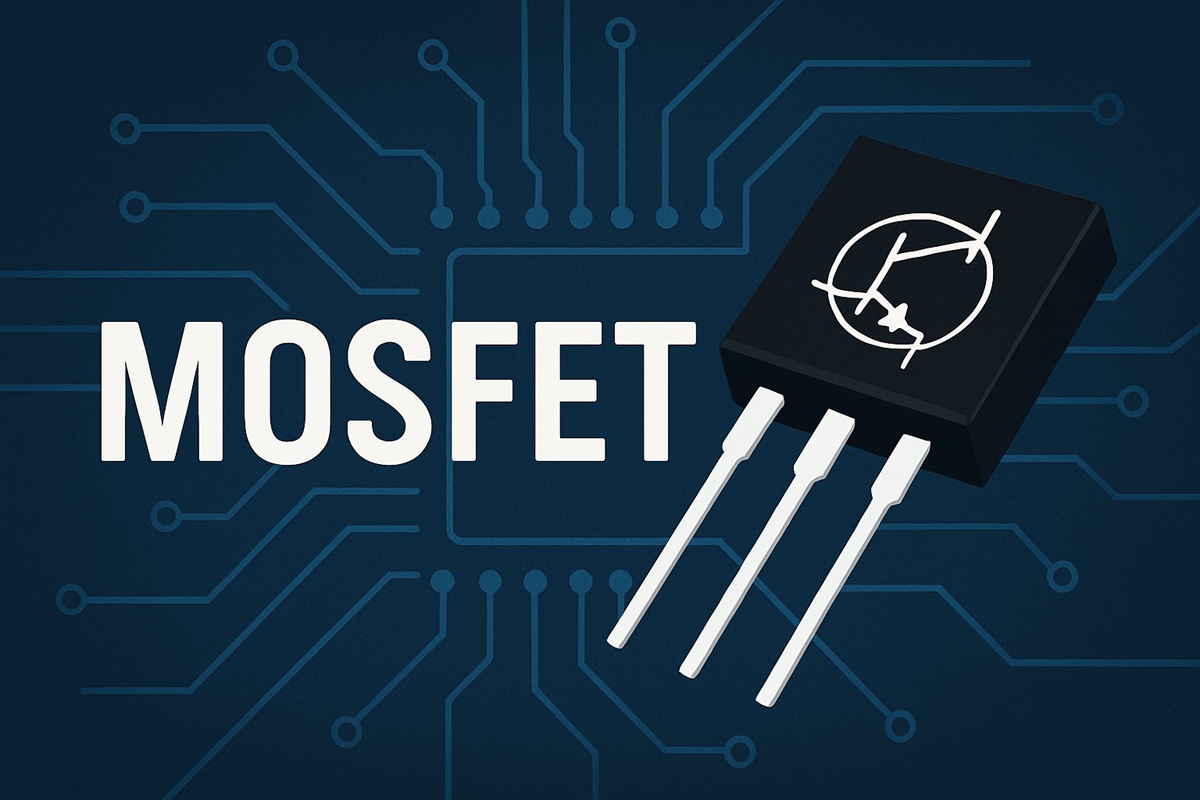
MOSFET vs. IGBT for Power Electronics

Introduction Power electronics are pivotal in efficiently converting, controlling, and conserving electric power across residential, commercial, and industrial applications. Employing solid-state electronics helps adjust motor speeds, maintain uninterrupted power flow, enable high-frequency power supplies, integrate renewable energy, and positively impact energy usage from electric vehicles to data centers and spacecraft systems to high-speed rail; power electronics touch every arena. At the epicenter of this technology are semiconductor-switching devices like diodes, MOSFETs, IGBTs, and thyristors that shape and regulate power flow. Two stalwarts dominate for medium to high power needs - the metal-oxide-semiconductor field effect transistor (MOSFET) and the insulated gate bipolar transistor (IGBT). Selecting a suitable device is crucial to optimize overall system performance. This article provides a comparative analysis of these two technologies to help design engineers make an informed choice. Understanding Power MOSFETsPower MOSFETs are specialized transistors designed to switch on/off rapidly, allowing precise and speedy power transfer control. They can transition between cut-off and saturation modes in nanoseconds. This swift switching capability stems from their unique insulated gate structure, requiring minimal gate current to trigger state changes. Built-in body diodes facilitate the continuous conduction of load currents in either direction. Silicon has traditionally been the mainstream material, but new comprehensive bandgap materials like silicon carbide and gallium nitride promise significantly higher efficiency. With high breakdown strength, lower losses, and higher junction temperature capacity, these advanced materials drive a significant shift in power electronics. Exploring IGBT DevicesInsulated gate bipolar transistors (IGBTs) aim to combine the best attributes of power MOSFETs and bipolar junction transistors. They integrate the simple gate control of MOSFETs with the superior high current handling capacity of BJTs. A key feature enabling high collector current density is conductivity modulation, where electron and hole injection sustains current flow. However, this also slows down switching transients. The insulating layer blocks high voltages but leads to larger chip sizes. Modern IGBTs lower losses through innovations like trench gates, carrier lifetime control, and field stop layers. Advanced packaging technologies also boost power density and thermal performance. But slower switching speeds and conduction losses at low currents remain innate drawbacks. Comparing Key Application DomainsMOSFETs' ultrafast and controllable switching ability makes them perfect for switch mode power supplies (SMPS), Class D audio amplifiers, DC-DC converters, and lighting controls needing precise regulation. These applications demand fast dynamic response and low losses at moderate voltage and current levels.IGBTs, on the other hand, are extensively used in motor drives, uninterruptible power supplies (UPS), electric traction systems, wind turbines, HVDC transmission, and high power factor correction equipment. These applications require ruggedness to withstand network voltage fluctuations, high DC link voltages, and surge currents during motor commutation or load changes. IGBTs can reliably handle hundreds to thousands of amperes thanks to conductivity modulation but at the expense of switching speed. Analyzing Switching CharacteristicsMOSFETs can transition between on and off states extremely fast, within nanoseconds. This enables them to comfortably operate at frequencies in the MHz range for switch mode operations. However, their switching speeds are limited by charging and discharging intrinsic capacitances across drain, source, and gate terminals during the high di/dt and dv/dt transients.In contrast, IGBTs switch on and off much slower - in the range of microseconds to milliseconds, depending on load conditions. Their switching times are dictated by minority carrier injection and storage dynamics during turn-on and turn-off, respectively. The conductivity modulation mechanism in IGBTs that enables efficient high current operation also adds more delay during transients. Cost, complexity, and application-specific demands impact device selection, too. Analyzing Conduction LossesMOSFETs offer shallow conduction losses at nominal currents, enabling high efficiency. This stems from majority carrier transport through the drain-to-source channel unimpeded by minority charge storage effects. However, the drift component of on-state resistance limits efficiency at high currents due to velocity saturation.In contrast, IGBTs showcase deteriorating conduction losses at low currents but start outperforming MOSFETs above a few amperes current. This reversal occurs due to conductivity modulation wherein electron and hole injections sustain rising collector current density. IGBTs skip past velocity limits at high currents to achieve significantly higher efficiency. Rating on Voltage and Current MetricsLatest generation SiC MOSFETs boast blocking capabilities exceeding 1.7 kV, while GaN variants enable 1.2 kV switch-mode supplies. Commercial IGBT voltage ratings range from 1.2 kV to 1.7 kV presently. However, IGBT packages reliably exceed 1000 A without secondary breakdown concerns for conducting hundreds of amperes. MOSFETs lag on current density metrics presently. Sensitivity to High-TemperaturesIGBT performance depends significantly on temperature swings and self-heating, needing careful thermal management. MOSFETs show lower sensitivity thanks to the absence of conductivity modulation effects. But hotspots can still accelerate aging and degrade long-term MOSFET reliability over time. Cost Considerations Thanks to process maturity, MOSFET design and production costs have been considerably reduced, making them economical for low- and medium-power applications. However, large-area silicon IGBTs can be fabricated at lower costs to score over MOSFETs in high-voltage, high-current areas. Emerging devices like SiC MOSFETs and GaN transistors promise tremendous performance gains but remain expensive. Gazing into the FutureWith continual advances in device structure, doping profiles, and material quality, MOSFET and IGBT technologies are poised to realize higher efficiency, power density, and reliability metrics. Novel cooling techniques leveraging direct liquid immersion or integrated microchannel heat sinks are being explored to dissipate heat from smaller footprints. Clever gate driver techniques and modern packaging methods will help extract the full potential from both devices. Another active area is developing hybrid modules that combine IGBTs and SiC MOSFETs to leverage their complementary strengths for optimal overall performance. The future looks brighter with the increasing maturity of wide bandgap devices and greater systems-level integration! Making the Optimal ChoiceMOSFETs excel for applications demanding nimble and accurate load control, typically up to a few kilowatts. IGBTs are the bedrock where large voltage blocks and high surge current capacity warrant extra ruggedness. However, cost budget, cooling challenges, reliability requirements, and desired switching frequencies also guide decision-making. Designers must weigh tradeoffs between conduction losses, switching frequencies, thermal management complexity, and hardware overheads while selecting the optimal power semiconductor switch. Conclusion In the vast power electronics landscape, MOSFETs and IGBTs remain the primary switching devices for most applications. MOSFETs stand out in environments needing nimble and accurate switching control up to a few kilowatts. IGBTs are the bedrock for systems where large voltages and surge currents demand extra ruggedness. Device selection requires carefully weighing metrics like losses, operating frequency, cooling needs, and costs. With continual technological upgrades, these devices will continue transforming future power management solutions.
Allen On 2024-01-31   203
Power

Future Prospects of Smart Grids for Sustainable Energy Management

Overview: This article explores the opportunities and challenges of integrating clean technologies and information and communication technologies for efficient and sustainable energy management in smart grids.  Decarbonization has accelerated the fundamental shift in society toward clean technologies. Electrical energy will be a significant factor in the decarbonization process. Electrical energy is one of the most common forms of energy carriers and is seeing growing usage. Increasing electricity demand forces the expansion of the generation and transmission systems, requiring a significant amount of investment.  Power loss and reactive power flow in the transmission systems make the conventional, centralized structure of power systems less efficient. Distributed generations (DGs) have been incorporated into low- and medium-voltage distribution networks in order to increase system availability, efficiency, and cost-effectiveness. Furthermore, renewable-based distributed generation aids in the decarbonization of the electric energy sector.Evolution of Smart GridDistribution systems that have been powered up can function as a microgrid in the absence of the utility grid. A microgrid is an island-based distribution system that uses local distributed generation and energy storage to provide critical loads in island mode. Distribution systems with microgrid capabilities will have some benefits, such as increased productivity, dependability, accessibility, and power quality.  However, information and communication technologies (ICTs) are necessary for the optimal and reliable operation of various distributed generation and energy storage systems in microgrids. To operate modern energy distribution systems as efficiently and dependably as possible, the smart grid concept has been introduced. To operate and plan grid systems with irregular output and variable power sources, ICTs must be available at both the generation and transmission levels. These systems enable power systems to meet customer demands by intelligently monitoring, making decisions, and controlling contemporary power systems. In addition to incorporating DGs into distribution networks, large-scale renewable power plants like photovoltaic (PV) and wind energy systems have been widely installed in power systems, and the power grids are currently moving toward more fully renewable energy systems. Figure 1. Concept of a Distributed Power Generation System Source IEEE Access Along with efficiency, flexibility, and operability benefits, smart grid technologies also present new difficulties for the design and management of modern power systems. Restructuring the power grids to incorporate renewable energy sources, microgrid technologies, ICTs, and power electronics can result in these difficulties. Smart Grid’s Future DirectionsThe idea of smart grids has changed with the development of technology. In recent years, the smart grid's research and development have increased. As a result, the implementation of smart grids has changed from virtual to real-time. However, there are several situations in which action needs to be taken to turn it into a complete real-time network service.Big Data ManagementThe input of real-time data is a key factor in a smart grid. It serves as the backbone of the network's functioning. Power transmission, generation, transformation, and utilization data are being collected for reliable and efficient working. All decisions are made based on the information gathered. The collection and management of such a vast amount of real-time data is a significant problem.  To predict the demand for energy at various locations, the algorithms must use all the data gathered from the sensors and associated devices. To produce the best results, the algorithms must be optimized. One of the main study subjects in smart grid technology is IT infrastructure, data gathering, governance, data processing, and, most critically, data security.Investing in Smart Grid InfrastructureTo reduce carbon emissions, a number of countries have started implementing smart grid infrastructure. Many of them are engaged in projects designed to evaluate the feasibility of the network. The construction of the smart grid infrastructure has already started in nations including Australia, South Korea, and Japan. The initial investment, though, is the main concern. The ongoing maintenance of the entire network further raises the overall cost.  Therefore, before making an investment of this size in the infrastructure, a thorough financial report should be made. The price of smart grids in a few emerging nations is shown in Table 1. This will estimate the starting sum that a developing nation must invest in order to create smart grid infrastructure. Additionally, it will provide a general concept of the maintenance costs as well as any other extra expenses necessary to guarantee the network's efficient operation.Business Model RestructuringThe business model has undergone considerable adjustment as a result of the new smart grid's emergence. New technologies have altered consumer perceptions and created a network of distributed power sources. Consequently, business practices are evolving. It is necessary to implement new policies to benefit consumer communications. To integrate the load and the generated power, the utility business model should be put into practice at the distribution level.Modernization of the Energy Production SystemCustomer needs have evolved due to the smart grid's evolution. As a result, there are fluctuations in energy demand. To accommodate the demand response, the system's capacity should be raised. Additionally, the energy-producing systems must change their production policies to integrate into the smart grid network. In the smart grid network, cloud-based data management strategies are applied. The existing system needs to be upgraded and changed in order to establish IoE activities.  Cyber-physical power systems are the smart operation of future power systems, which include distributed generation, microgrids, and demand side management while utilizing information and communication technologies over the physical system. The ICTs are vulnerable to cyberattacks, data loss, and hardware failure. ICT malfunctions will reduce system performance and must be taken into account when planning a power system. Additionally, when operating power systems, cybersecurity must be taken into consideration because malicious intrusions from cyberattacks could result in a loss of power or energy. The network should incorporate security measures against cyberattacks.Summarizing the Key PointsThe paper highlights the importance of information and communication technologies in the optimal and reliable operation of distributed generation and energy storage systems in microgrids.The integration of information and communication technologies with power systems can lead to the development of cyber-physical power systems or smart grids.Smart grids enable power systems to meet customer demands by intelligently monitoring, making decisions, and controlling contemporary power systems.However, the adoption of clean technologies and information and communication technologies presents new challenges for the design and management of modern power systems.Smart grid technologies also present new difficulties for design and management but offer significant benefits such as flexibility, efficiency, operability, reliability, accessibility, and power quality. Reference(s)1.Peyghami, S., Palensky, P., & Blaabjerg, F. (2020). An Overview on the Reliability of Modern Power Electronic Based Power Systems. IEEE Open Journal of Power Electronics, 1, 34–50. https://doi.org/10.1109/ojpel.2020.29739262.Pal, R., Chavhan, S., Gupta, D., Khanna, A., Padmanaban, S., Khan, B., & Rodrigues, J. J. P. C. (2021, August 28). A comprehensive review on IoT‐based infrastructure for smart grid applications. IET Renewable Power Generation, 15(16), 3761–3776. https://doi.org/10.1049/rpg2.122723.Rafique, Z., Khalid, H. M., & Muyeen, S. M. (2020). Communication Systems in Distributed Generation: A Bibliographical Review and Frameworks. IEEE Access, 8, 207226–207239. https://doi.org/10.1109/access.2020.3037196   
Rakesh Kumar, Ph.D. On 2023-05-22   203
News Room

Omron Is Relaunching Its Full Range of MEMS Thermal Sensors in Europe These Days

 Omron Electronic Components has extended its non-contact MEMS thermal sensor range with a new narrow-field version specifically designed to provide accurate non-contact measurements of an objects’ surface temperature for industrial control, medical and building automation systems. Omron is relaunching its full range of MEMS thermal sensors in Europe, including wider field versions ideal for detecting room occupancy and similar applications.   The new Omron D6T-1A-02 is a super-sensitive infra-red (IR) temperature sensor that makes full use of proprietary Omron MEMS sensing technology. It can measure the surface temperature of an object between -40 up to +80°C in the target area with an accuracy of +/-1.5°C and a resolution of 0.06°C.  The device includes a state-of-the-art MEMS thermopile, a sensor ASIC (Application Specific Integrated Circuit) and a signal processing microprocessor in a tiny package of only 12.0mm x 11.6mm x 9.2mm. The D6T-1A-02 features a narrow field of view of 26.5 degrees square, allowing it to accurately assess the surface temperature of a specific object in this area. Features also include a digital I2C output which offers excellent noise immunity (measured as noise equivalent temperature difference) of 140mK. The Omron D6T thermal sensor is also ideal for building automation applications, measuring the temperature in a room, or detecting occupancy even when people are stationary. For these applications, Omron is offering versions with a wider field of view. These include a 1x1 device, the D6T-1A-01, with a field 58 degrees square. A 4x4 version and a 1x8 version are also available. These ultra-sensitive sensors are an outstanding alternative to pyroelectric sensors or PIR detectors in home automation, building automation, healthcare, security and industrial applications, which often fail to distinguish between an unoccupied space and a stationary person. While standard thermal sensors are only able to measure temperature at one contact point, the D6T range can measure the temperature of an entire area contactlessly. Signals generated by infrared rays are extremely weak. To achieve reliable detection, Omron has developed and manufactured every part of the new high sensitivity thermal sensor in-house, from the MEMS sensors to the ASICs and other application-specific parts. The technology behind Omron’s D6T thermal sensors combines a MEMS micro-mirror structure for efficient IR radiation detection with a high-performance silicon lens to focus the infrared rays onto its thermopiles. The ASIC then uses proprietary algorithms to make the necessary computations and convert sensor signals into digital I2C outputs. All components were developed in-house and are fabricated in Omron’s own MEMS facilities. Ref.KY66-G6SK-2-DC5KY66-G5LA-14-DC5
kynix On 2017-07-11   203
Sensor

Sensor provides stability for industrial and drone applications

The availability of the MMC5883MA 3 Axis Magnetic Sensor has been announced by MEMSIC. The newest member of MEMSIC’s Anisotropic Magneto Resistive (AMR) based Magnetic Sensor family, it provides the industry’s highest accuracy, lowest noise and lowest power consumption. All combined in an industry standard small LGA package, and addresses the ever-increasing demands of industrial and drone applications.Dr. Yang Zhao, MEMSIC’s Chairman, President and CEO said: “With more than 300 million units shipped, MEMSIC has a long history of success with its AMR magnetic sensor in a wide range of critical portable and wearable applications. Integrating innovative design architecture and optimised processes, MEMSIC’s new 3-Axis, ± 8 Gauss Full Scale Range (FSR) MMC5883MA provides a reliable, high performance solution for industrial and drone system design and development engineers who need to provide stability and direction sensing for their designs.”The MEMSIC MMC5883MA 3-Axis Magnetic Sensor provides 16-bit operation over a wide ± 8 Gauss operating range with linearity of ±0.2 % FSR, hysteresis of 0.2 % FSR and repeatability of 0.2 % FSR on each of its 3-axis. Its exceptionally high performance enables faster algorithms for hard and soft iron interference correction delivering more precise and faster heading determination. The small, low profile LGA package measures 3.0x3.0x1.0 mm. and operates over the -40 to +85°C temperature range from a supply voltage of 2.16-3.6V. It exhibits extremely low current consumption of only 20uA at seven samples per second data rate and extremely low noise level of only 0.4mGauss total RMS noise making it ideal for drone and industrial markets.The MC5883MA is complete system incorporating on-chip signal processing and an integrated I2C 400kHz FAST mode operation digital interface for direct connectivity to the system microprocessor.The MEMSIC MMC5883MA 3-Axis Magnetic Sensor is available immediately and in production now. Devices pre-mounted on prototyping boards can be purchased directly from MEMSIC. Designers can evaluate and log data using MEMSIC's Universal Evaluation Board.Reference:TLE4976-2KAH180-WG-7AH1801-WG-7  
kynix On 2016-12-08   203
Memory

Toshiba, SanDisk to mass produce high-power '3D' memory

Japan's Toshiba is teaming up with US chip giant SanDisk to produce a "3D" memory chip they hope will allow users to save up to 50 hours of ultra-high definition video.In a deal worth a reported 500 billion yen ($4.84 billion) the companies will build a factory to make flash memory consisting of several layers of semiconductors stacked together to give as much as a terabyte—1,000 gigabytes—of storage.That is around 16 times bigger than the largest 64-gigabyte Toshiba memory currently available in smart phones and tablet devices.Toshiba will demolish its existing plant in Japan to build a new facility that will house production apparatus using technologies from both firms and which the firms hope will start operating in 2016, a statement said."In about five years (from the planned start of the factory), we would like to produce one-terabyte products," said a Toshiba spokeswoman.The plan comes at a time of increasing competition among the world's technology firms to meet demand for ever-higher capacity memory chips for consumers increasingly using mobile devices such as smart phones, tablet computers and wearable gadgets.The spread of high-definition video, with so-called 4K screens at the leading edge, is boosting demand for computing memory to store content."Small, high-capacity memories can of course be applied to smartphones, but they could also be used for wearable devices," the Toshiba spokeswoman said.Manufacturers have traditionally competed with regular chips by trying to make the physical object smaller.Toshiba, along with major rivals such as Samsung, believe they are reaching the physical limit, and are shifting toward 3D memories, where layering—effectively a third dimension—is used to boost the capacity of objects the same size.Yasuo Naruke, Toshiba senior vice president, said in a statement: "Our determination to develop advanced technologies underlines our commitment to respond to continued demand (for) flash memory."SanDisk president and chief executive Sanjay Mehrotra said the plant "will advance our leadership in memory technology into the 3D... era". 
kynix On 2016-09-23   203

Kynix

Kynix was founded in 2008, specializing in the electronic components distribution business. We adhere to honesty and ethics as our business philosophy and have gradually established an excellent reputation and credibility in our international business. With the accurate quotation, excellent credit, reasonable price, reliable quality, fast delivery, and authentic service, we have won the praise of the majority of customers.

Follow us

Join our mailing list!

Be the first to know about new products, special offers, and more.

Kynix

  • How to purchase

  • Order
  • Search & Inquiry
  • Shipping & Tracking
  • Payment Methods
  • Contact Us

  • Tel: 00852-6915 1330
  • Email: info@kynix.com
  • Follow Us

authentication

Kynix

© 2008-2026 kynix.com all rights reserve.