The Kynix Blog
Stay Ahead with Expert Electronics Insights,
Industry Trends, and Innovative Tips
- Electronic Components
- News Room
- General electronic semiconductor
- Components Guide
- Sort by
- Robots
- Transmitters
- Capacitors
- IC Chips
- PCBs
- Connectors
- Amplifiers
- Memory
- LED
- Diodes
- Transistors
- Battery
- Oscillators
- Resistors
- Transceiver
- RFID
- FPGA
- Mosfets
- Sensor
- Motors, Solenoids, Driver Boards/Modules
- Relays
- Optoelectronics
- Power
- Transformer
- Fuse
- Thyristor
- potentiometer
- Development Boards
- RF/IF
- Semiconductor Information
- Sensors
- PCB
- transistor
Definition and OverviewIn the vast and intricate world of electronic devices, the rocker switch plays a pivotal role. These switches are not just components; they are the bridge between user intent and electronic action. Characterized by their distinct 'rocking' motion, rocker switches allow users to toggle between on and off states with a simple press. This design philosophy marries simplicity with functionality, offering an intuitive interface for controlling a myriad of electronic functions. The versatility of rocker switches makes them indispensable in a wide range of applications. Whether it’s the simple task of turning a light on or off, or the complex operation of controlling industrial machinery, these switches are up to the task. Their ease of operation is a key factor in their widespread adoption. Unlike other switch types that may require precise manipulation, rocker switches are designed for ease. This user-friendly design principle extends their applicability from the household consumer electronics we use daily, to the more demanding environments of industrial applications. This comprehensive guide aims to peel back the layers of the rocker switch, exploring its functionality, the various types available, and the criteria for choosing the right switch for specific applications. By understanding the foundational elements of rocker switches, users and engineers alike can make informed decisions, ensuring the optimal performance of their electronic devices. Varieties of Rocker SwitchesThe world of rocker switches is as diverse as it is complex. These switches are designed to cater to a broad spectrum of applications, each with its own set of requirements and challenges. At the most basic level, single-pole single-throw (SPST) rocker switches provide straightforward on-off functionality. This simplicity, however, belies the intricate design and engineering that ensures reliable operation under a variety of conditions. For applications requiring more nuanced control, double-pole double-throw (DPDT) switches offer the ability to manipulate multiple circuit paths simultaneously. This capability is crucial in applications where controlling multiple functions with a single switch is necessary, such as in complex machinery or multi-functional devices. Specialty rocker switches, such as those with built-in illumination, serve dual purposes. They not only act as functional switches but also provide visual feedback to the user. This feature is particularly useful in environments where lighting conditions may not be optimal, such as in automotive dashboards or industrial control panels. The illuminated rocker switch enhances usability, ensuring that users can easily identify the switch position even in low-light conditions. Understanding the different types of rocker switches is the first step in selecting the appropriate switch for a given application. Each switch type offers unique benefits and is designed to meet specific operational requirements. Whether it’s the simplicity of an SPST switch or the versatility of a DPDT switch, the variety of rocker switches available ensures that there is a solution for virtually any application. Operational Mechanisms ExplainedThe operation of a rocker switch is a marvel of mechanical and electrical engineering. At its core, the switch functions by altering the flow of electrical current through a circuit. This seemingly simple action involves a complex interplay of physical and electrical components, each meticulously designed to ensure reliable performance. When a rocker switch is toggled, it physically moves internal contacts to either complete or interrupt an electrical circuit. This action, which results from the user pressing one side of the switch, demonstrates the switch’s namesake "rocking" motion. The design of the switch ensures that this motion is both smooth and reliable, allowing for consistent operation over thousands of cycles. The materials used in the construction of rocker switches are selected for their durability and electrical conductivity. Contacts are typically made from metals that offer both low resistance and high durability, such as copper alloys, ensuring that the switch can withstand the electrical and mechanical stress of repeated use. The body of the switch, on the other hand, is often made from robust plastics or other non-conductive materials, providing a safe interface for the user while also protecting the internal components of the switch. The operational mechanism of a rocker switch is a testament to the intricate balance between mechanical reliability and electrical efficiency. This balance ensures that the switch not only performs its intended function but also does so in a way that is safe, reliable, and durable. Understanding the operational principles behind rocker switches is crucial for both designers and users, as it informs the selection process, ensuring that the chosen switch meets the specific needs of the application. Anatomy of Rocker SwitchesExploring the design and functionality of these switches unveils the sophistication behind their seemingly simple exteriors. Central to each switch is the actuator, a crucial interface that transforms user input into electrical action. This interaction is not merely mechanical but an integral part of the user experience, dictating the tactile feedback and overall responsiveness of the device. The actuator's design, therefore, is meticulously crafted to balance ease of use with precise control, ensuring that each activation is both intentional and satisfying. Beneath the surface, the internal mechanics of these switches reveal a complex assembly of components designed for durability and reliability. Terminals and contacts, the critical points of electrical connection, are engineered with precision to facilitate a seamless flow of electricity. These components are chosen for their conductive properties and resistance to wear, ensuring that the switch can handle repeated activations without faltering. The choice of materials, from copper alloys for contacts to robust plastics for the casing, reflects a commitment to longevity and performance. Criteria for Choosing the Right Rocker SwitchThe selection process for the ideal switch is nuanced, requiring a detailed assessment of several key factors. Electrical ratings, including the maximum current and voltage the switch can handle, are paramount. These specifications must align with the application's demands to prevent overload and ensure safe operation. Environmental considerations also weigh heavily in the decision-making process. The ability of a switch to withstand varying temperatures, humidity levels, and potential exposure to corrosive substances determines its suitability for challenging conditions. Moreover, the physical attributes of the switch, such as its size and how it integrates into a device, are critical. The dimensions must not only accommodate the available space but also align with the ergonomic and aesthetic requirements of the end product. The mounting style, whether it requires surface mounting or embedding within a panel, adds another layer of complexity to the selection criteria. In reflecting on the role of these switches in the landscape of electronic devices, their significance cannot be overstated. They represent a harmonious blend of mechanical simplicity and electrical complexity, providing a reliable method for controlling electronic circuits. Their adaptability to various applications, from household appliances to industrial machinery, underscores their versatility and enduring relevance. Final ThoughtsAs we delve deeper into the anatomy, operational mechanisms, and criteria for selecting these switches, their innovative potential becomes increasingly apparent. The evolution of technology promises to expand their capabilities further, introducing new designs, materials, and functionalities. This ongoing development ensures that they will continue to meet the demands of future applications, remaining a cornerstone of electronic device design. Through careful consideration of their design, functionality, and application requirements, these switches stand as a testament to the ingenuity and precision of modern engineering. Their continued evolution and adaptability to new challenges affirm their place in the ever-changing world of technology, making them indispensable in both current and future electronic innovations. FAQsWhat is a rocker switch?A rocker switch is an electrical component that allows users to toggle between on and off states with a simple rocking motion, serving as a bridge between user input and electronic action. What are the main types of rocker switches?Rocker switches come in various types, including single-pole single-throw (SPST) for basic on-off functionality, double-pole double-throw (DPDT) for controlling multiple circuit paths, and specialty switches with built-in illumination for visual feedback. How does a rocker switch work?When toggled, a rocker switch physically moves internal contacts to either complete or interrupt an electrical circuit, demonstrating its characteristic rocking motion. This action is smooth and reliable, ensuring consistent operation over many cycles. What are the key components of a rocker switch?The key components include the actuator, which transforms user input into electrical action, terminals and contacts for electrical connection, and materials such as copper alloys for conductivity and robust plastics for durability. What factors should be considered when choosing a rocker switch?Important factors include electrical ratings (maximum current and voltage), environmental considerations (temperature, humidity, exposure to corrosive substances), physical attributes (size, mounting style), and compatibility with the application's demands. Why are rocker switches important in electronic devices?Rocker switches offer a harmonious blend of mechanical simplicity and electrical complexity, providing a reliable method for controlling electronic circuits. Their adaptability to various applications underscores their versatility and enduring relevance in electronic device design.
Allen On 2024-02-29
The sensor offers a five-fold increase in proximity detection over previous-generation devices. The sensor’s integrated long-distance proximity sensor, ambient light sensor, and 940nm infrared-emitting diode (IRED) eliminate the need for additional light barriers and optical alignment of the IR emitter and photo diode.The device’s small outline saves space and gives design engineers greater flexibility in where and how they locate the sensor.A 16-bit, high-resolution ambient light sensor offers excellent sensing capabilities with sufficient selections to fulfill most applications whether a dark or high-transparency lens design.The devices offer individual programmable high- and low-threshold interrupt features to allow designers to best utilise resources and power on the microcontroller.For the 8-bit proximity-sensing function, VCNL4100 has a built-in intelligent cancelation scheme that eliminates background light issues. The device’s smart persistence scheme prevents false judgment of proximity sensing due to ambient light noise.It provides temperature compensation of -40 to +85 degrees Celsius to keep the output stable under changing temperature.Designers can easily operate proximity and ambient light sensor functions via the device’s I2C (SMBus-compatible) interface protocol.The device operates on a supply voltage range of 2.5V to 3.6V in a lead-free, RoHS-compliant 8.0 × 3.0 × 1.8mm package.Reference:T141AM61STMPE1208SQTRQT1101-ISG
kynix On 2016-12-23
Random-access memory, or RAM, is where computers like to store the data they're working on. A processor can retrieve data from RAM tens of thousands of times more rapidly than it can from the computer's disk drive.But in the age of big data, data sets are often much too large to fit in a single computer's RAM. The data describing a single human genome would take up the RAM of somewhere between 40 and 100 typical computers.Flash memory—the type of memory used by most portable devices—could provide an alternative to conventional RAM for big-data applications. It's about a tenth as expensive, and it consumes about a tenth as much power.The problem is that it's also a tenth as fast. But at the International Symposium on Computer Architecture in June, MIT researchers presented a new system that, for several common big-data applications, should make servers using flash memory as efficient as those using conventional RAM, while preserving their power and cost savings.The researchers also presented experimental evidence showing that, if the servers executing a distributed computation have to go to disk for data even 5 percent of the time, their performance falls to a level that's comparable with flash, anyway.In other words, even without the researchers' new techniques for accelerating data retrieval from flash memory, 40 servers with 10 terabytes' worth of RAM couldn't handle a 10.5-terabyte computation any better than 20 servers with 20 terabytes' worth of flash memory, which would consume only a fraction as much power."This is not a replacement for DRAM [dynamic RAM] or anything like that," says Arvind, the Johnson Professor of Computer Science and Engineering at MIT, whose group performed the new work. "But there may be many applications that can take advantage of this new style of architecture. Which companies recognize: Everybody's experimenting with different aspects of flash. We're just trying to establish another point in the design space."Joining Arvind on the new paper are Sang Woo Jun and Ming Liu, MIT graduate students in computer science and engineering and joint first authors; their fellow grad student Shuotao Xu; Sungjin Lee, a postdoc in Arvind's group; Myron King and Jamey Hicks, who did their PhDs with Arvind and were researchers at Quanta Computer when the new system was developed; and one of their colleagues from Quanta, John Ankcorn—who is also an MIT alumnus.Outsourced computationThe researchers were able to make a network of flash-based servers competitive with a network of RAM-based servers by moving a little computational power off of the servers and onto the chips that control the USB flash drives. By preprocessing some of the data on the flash drives before passing it back to the servers, those chips can make distributed computation much more efficient. And since the preprocessing algorithms are wired into the chips, they dispense with the computational overhead associated with running an operating system, maintaining a file system, and the like.With hardware contributed by some of their sponsors—Quanta, Samsung, and Xilinx—the researchers built a prototype network of 20 servers. Each server was connected to a field-programmable gate array, or FPGA, a kind of chip that can be reprogrammed to mimic different types of electrical circuits. Each FPGA, in turn, was connected to two half-terabyte—or 500-gigabyte—flash chips and to the two FPGAs nearest it in the server rack.Because the FPGAs were connected to each other, they created a very fast network that allowed any server to retrieve data from any flash drive. They also controlled the flash drives, which is no simple task: The controllers that come with modern commercial flash drives have as many as eight different processors and a gigabyte of working memory.Finally, the FPGAs also executed the algorithms that preprocessed the data stored on the flash drives. The researchers tested three such algorithms, geared to three popular big-data applications. One is image search, or trying to find matches for a sample image in a huge database. Another is an implementation of Google's PageRank algorithm, which assesses the importance of different Web pages that meet the same search criteria. And the third is an application called Memcached, which big, database-driven websites use to store frequently accessed information.Chameleon clustersFPGAs are about one-tenth as fast as purpose-built chips with hardwired circuits, but they're much faster than central processing units using software to perform the same computations. Ordinarily, either they're used to prototype new designs, or they're used in niche products whose sales volumes are too small to warrant the high cost of manufacturing purpose-built chips.But the MIT and Quanta researchers' design suggests a new use for FPGAs: A host of applications could benefit from accelerators like the three the researchers designed. And since FPGAs are reprogrammable, they could be loaded with different accelerators, depending on the application. That could lead to distributed processing systems that lose little versatility while providing major savings in energy and cost."Many big-data applications require real-time or fast responses," says Jihong Kim, a professor of computer science and engineering at Seoul National University. "For such applications, BlueDBM"—the MIT and Quanta researchers' system—"is an appealing solution."
kynix On 2016-10-05
Today, more and more people prefer lead crystal batteries over lead acid batteries. This is because of the unparalleled advantage that they offer in comparison. Some of them are – Longer Battery Life Acid batteries come in varied designs suitable for different applications. Some come as Cyclic Batteries which are designed to cycle, but others are so designed that that can give out high currents for short duration of time. The applications make the designs differ. A typical acid battery can charge and discharge for an average of about 300-350 cycles. In contrast, if they are replaced by lead-crystal batteries and keep the other conditions same, the output would be about 700-800 cycles. Thus lead- to crystal batteries show almost double performance and have a longer life of about 7 to 10 years which is highly cost effective and better alternative. Shelf Life Compared to acid ones, lead-crystal batteries discharge much slower when fully charged and are either stored or transported. These batteries can be immediately put to use even after as long in storage conditions as two years. They need not be charged like the acid ones require. The 2V series retains 99.9% of the capacity even though they have not been used for over 2 months. This makes the logistics much simpler as one is freed from the responsibility of cycling the batteries in stock to be charged every couple of months. The High Rate Discharge Lead crystal batteries have special technology which facilitates high-rate discharge characteristics. Compared to the acid varieties which work optimally at discharge rates of only 3C, the lead crystal battery discharge can work optimally even at discharge rates of 10C. Excellent Performance in Terms of Charge The time taken by a lead crystal battery is only 20% of the time required by the old normal lad batteries. This improves the battery efficiency and maintenance dramatically. Depth of Discharge The lead crystal battery can be easily restored to a full rated capacity with ease even after it has been discharged to 0 Volt which may not be possible with the acid ones. There is a high probability that the acid ones may die and not recover under the circumstances. Thus the usable battery capacity of a lead crystal battery is much higher. Low Temperature Resistance The crystal ones lead batteries can function to satisfaction in a temperature range of -40 to +50 degrees Celsius. They exhibit more 85 % of its rated capacity even at minus 40 degrees Celsius where the acid ones have shown a sharp decline in ability to discharge. Green Manufactured from new materials, new processes and new formulations, lead crystal batteries are more environmentally friendly and pollution free. They do not ooze mist or emit harmful gases, unlike the acid batteries.
kynix On 2016-11-11
Inside a secretive AI nonprofit backed by Elon Musk and other Silicon Valley figures, a handful of robots designed to help out in warehouses are gradually learning how to do useful household chores.OpenAI, which was created to do basic AI research, is reprogramming robots developed by Fetch Robotics, a company that supplies warehouse automation hardware. Researchers at OpenAI are equipping the robots with software that lets them train themselves through trial and error.The effort reflects a bet that innovations in software and machine learning, rather than breakthroughs in hardware, are the way to give robotics remarkable new capabilities. Fetch makes a range of robots for warehouses, including systems that follow workers around a building, carrying items dropped into a basket. OpenAI is using a system that features a mobile base but also 3-D depth sensors, a 2-D laser scanner, and a robotic arm with seven degrees of freedom.In April, OpenAI recruited Pieter Abbeel, a professor at the University of California, Berkeley, and a leading expert on robot learning. Abbeel has shown how robots can use a machine-learning approach called deep reinforcement learning to acquire completely new skills that would be hard to program by hand, such as folding towels or retrieving items from a refrigerator. Google DeepMind, an AI subsidiary based in the U.K., uses this technique to get computers to play computer games at a superhuman level (see “Google’s AI Masters Space Invaders”).Abbeel’s robots learn tasks from scratch, using a neural network that receives sensor input and controls physical movement. The network adjusts its parameters automatically as it inches closer to its goal. A robot might try thousands of grips, for instance, in the process of learning how to hold a certain object.“If this goal can be achieved, then there will be economic and industrial benefits,” says Marc Deisenroth, an expert on reinforcement learning at Imperial College London. “Imagine a Roomba not only cleaning your floor but also doing the dishes, ironing the shirts, cleaning the windows, preparing breakfast.”Deisenroth says using off-the-shelf robots could drive costs down. “Currently, the software seems to be the bottleneck,” he adds. “However, independent of this, better hardware could also lead to substantial improvements.” Soft manipulators and elastic feet similar to a monkey’s feet are concepts that researchers have started working on, he says.Some manufacturers, including the Japanese company Fanuc, are testing reinforcement learning as a way to train industrial robots quickly in new tasks such as learning to grasp unfamiliar objects. When many robots work in parallel, the training time required is reduced accordingly. Robot researchers at Google are testing similar learning techniques.“Moving away from having to program robots by hand by endowing robots to learn autonomously is a key element for the future of robotics,” says Jens Kober, an expert on robot learning at Delft University of Technology in the Netherlands. Kober says having robots share the information they have learned will be crucial.While robots such as those made by Fetch are finding their way into many factories and warehouses, domestic robot helpers remain the stuff of science fiction. Performing seemingly simple tasks like washing dishes or folding laundry in a messy home setting is incredibly hard for a machine. A robot programmed the conventional way can easily be thrown off by an unfamiliar object or a slight variation in lighting.OpenAI confirmed that it is working with the robots from Fetch, but it declined to comment further. Melonee Wise, the company’s founder, couldn’t be reached for comment (see “Innovators Under 35: Melonee Wise”).OpenAI was created by Musk and a handful of well-known (and well-heeled) Silicon Valley entrepreneurs, including investor Peter Thiel, Y Combinator president Sam Altman, and the incubator’s cofounder Jessica Livingston. The nonprofit’s backers have committed $1 billion in funding to the project, and it is being led by Ilya Sutskever, a prominent AI researcher who left Google to join the project, and Greg Brockman, an early employee at the high-profile digital payment company Stripe.While OpenAI has committed to making the technology it develops publicly available, it could certainly benefit companies backed by Musk and Thiel, as well as those emerging from Y Combinator.
kynix On 2016-10-14
Housed in a compact 2.5x3.0x0.95mm3 package, the BMX160 has been announced by Bosch Sensortec as the world’s smallest 9-axis motion sensor. The device is suited for space- and power-constrained applications such as smartphones, smart watches, fitness trackers, smart jewelry (e.g. rings, necklaces) as well as AR/VR devices.By combining Bosch Sensortec’s advanced accelerometer, gyroscope and geomagnetic sensor technologies, the BMX160 is able to meet the increasingly more stringent low-power requirements demanded by wearable devices. Bosch's low-power sensor technology makes this the standout 9­-axis inertial sensor on the market, reducing power consumption below 1.5mA.Jeanne Forget, Vice President Marketing, Bosch Sensortec, commented: “By combining Bosch Sensortec’s advanced sensor technologies into a single compact package, the BMX160 sets new industry benchmarks for high performance, tiny footprint and low power consumption. This device finally overcomes today’s placement constraints in smartphones and directly addresses the demands of wearable devices, where PCB space and low power consumption are at an even greater premium.”Enabling wearable applicationsThe BMX160 sensor enables Android wearable applications relying on sensor data such as device orientation, magnetic heading or the gravity vector. Moreover, the sensor supports applications such as 3D indoor mapping and smartphone optimised VR applications (e.g. cardboard VR). The sensor can be used in conjunction with the Bosch Sensortec BSX sensor data fusion software library to further optimise performance.The single-package BMX160 effectively replaces the present mainstream two-component workaround solution, i.e. combination of a 6-axis IMU with a 3-axis geomagnetic sensor. This innovative 9-axis motion sensor provides the placement flexibility necessary for overcoming current limitations on positioning of the magnetic sensor. Pin- and register-compatibility with Bosch Sensortec’s industry-standard 6-axis BMI160 IMU simplifies the task of upgrading designs.Built-in power management unitThe BMX160 has a built-in power management unit and ultra-low power background application features. This enables the power-hungry application processor to remain in sleep mode much longer, for example when counting steps, which further contributes to extending battery recharge intervals. The integrated step counter function and the Android compatible significant motion detector only consume 30µA each.The accelerometer, gyroscope and magnetic technology in the BMX160 have been optimised for low offset, low noise and best temperature stability. Bosch Sensortec gyroscope technology offers an extremely low drift, which is a key requirement for an accurate real-time user experience, especially in AR & VR applications.Reference:KY45-EKMB1203111KY45-AMN41122KY45-EKMB1101112
kynix On 2016-11-16
Join our mailing list!
Be the first to know about new products, special offers, and more.
Feature Posts
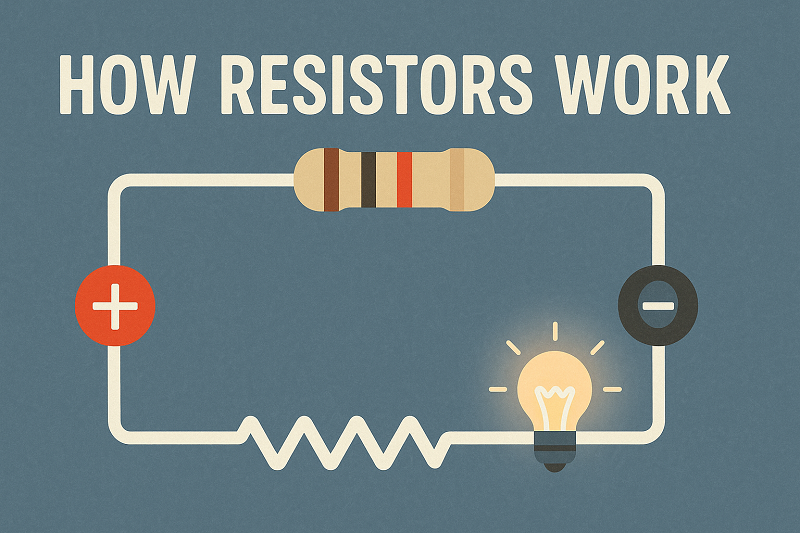
How Resistors Work: From Basic Principles to Advanced Applications2025-07-30
DC Switching Regulators: Principles, Selection, and Applications2025-05-30
FPGA vs CPLD: In-depth Analysis of Architecture, Performance and Application2025-05-07
MOSFET Technology: Essential Guide to Working Principles & Applications2025-05-04
SMD Resistor: Types, Applications, and Selection Guide2025-04-30