Phone

    00852-6915 1330

The Kynix Blog

Stay Ahead with Expert Electronics Insights,
Industry Trends, and Innovative Tips

Resistors

How to Read the Value of SMD Resistor? Example Explained

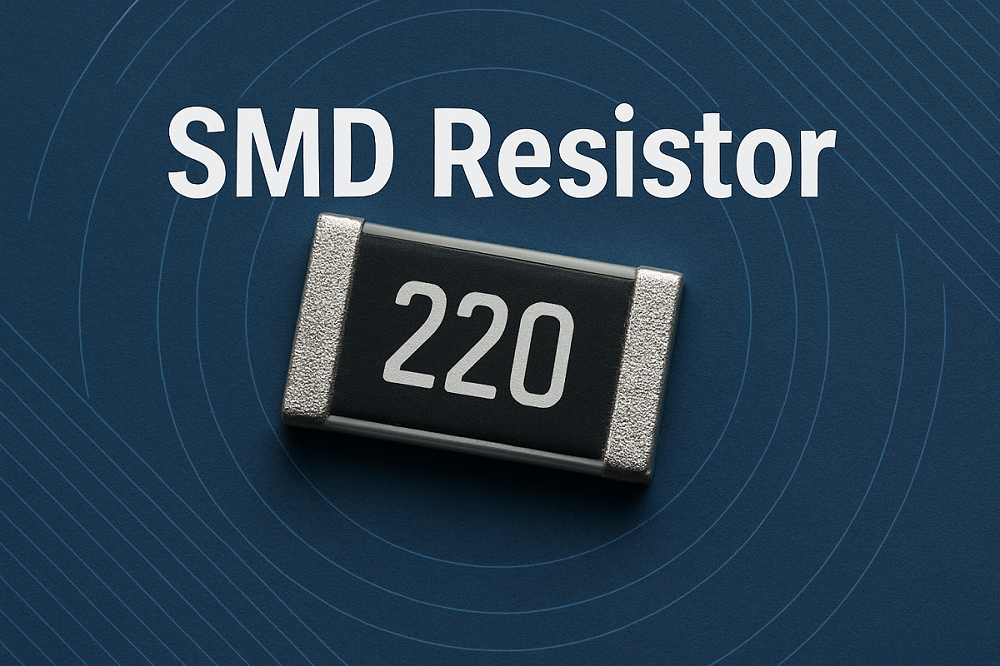
2026 Executive Summary: Reading SMD Resistor CodesHow do you read SMD resistor codes? For standard 3-digit codes, the first two numbers are significant digits, and the third is the multiplier (10^x). For 4-digit codes (precision), the first three are significant. The EIA-96 system uses a two-digit code and a letter multiplier. This authoritative guide covers all calculation methods, updated for 2026 industry standards.What are SMD Resistors? (2026 Overview)SMD Resistor, also known as a Chip Resistor, is a surface-mount passive component essential for modern high-density electronics. Manufactured by sintering metal powder and glass glaze on a ceramic substrate, these components offer superior resistance to humidity, high temperatures, and vibration compared to legacy through-hole parts. As of 2026, they are the industry standard for everything from AI hardware to smartphones. While different resistors feature varied specifications, the critical question remains: how are these microscopic resistance values marked and decoded? Figure 1. Structure of SMD ResistorsⅠ How to Read Resistor Markings: 4 Key MethodsTo master resistor identification, one must understand the four global standards used to denote resistance values. These methods are governed by IEC 60062 standards:1. Direct Marking MethodThis method prints the actual numbers and unit symbols directly on the resistor surface. The allowable error (tolerance) is expressed as a percentage. If no deviation is marked, the standard tolerance is typically ±20%.2. Text Symbol MethodThis approach uses a combination of Arabic numerals and text symbols to indicate the nominal resistance and tolerance. The number preceding the symbol represents the integer value, while the number following represents the decimal. Tolerance characters are standardized: D (±0.5%), F (±1%), G (±2%), J (±5%), K (±10%), M (±20%).3. Digital Method (Most Common for SMD)This method uses a 3-digit or 4-digit code. Read from left to right, the initial digits represent the significant figures (effective values), and the final digit is the exponent (multiplier), indicating the number of zeros to add. The unit is always Ohms (Ω).4. Color Code Marking MethodWhile rare on modern SMDs (except MELF packages), color bands are the standard for through-hole resistors. The bands represent values and multipliers:Black (0), Brown (1), Red (2), Orange (3), Yellow (4)Green (5), Blue (6), Violet (7), Gray (8), White (9)Tolerance: Gold (±5%), Silver (±10%), Colorless (±20%)Figure 2. Universal Resistor Color Code DiagramReading Tip: For a four-band resistor, the last band (usually gold/silver) is the tolerance. The first two bands are digits, and the third is the multiplier. For five-band precision resistors, the first three are digits, the fourth is the multiplier, and the fifth is the tolerance. Ⅱ Calculating SMD Resistor Values (Step-by-Step)2.1 Understanding Character Code MarkingsVideo: SMD Resistor Coding ExplainedMarking chip resistors requires a compact system due to the component's microscopic size. While large packages may use full numbers, 0603, 0805, and 1206 packages use coded systems. Here is the 2026 standard breakdown for decoding these values:The 3-Digit System (Standard Tolerance ±5%):1. The first and second digits represent the significant resistance figures.2. The third digit is the multiplier (10^x).Decoding Guide by Third Digit:• Ends in 0: No extra zeros. Example: 100 = 10 Ω.• Ends in 1: Add one zero (x10). Example: 101 = 100 Ω.• Ends in 2: Add two zeros (x100). Example: 102 = 1,000 Ω (1 kΩ).• Ends in 3: Add three zeros (x1,000). Example: 103 = 10,000 Ω (10 kΩ).• Ends in 4: Add four zeros. Example: 104 = 100 kΩ.• Ends in 5: Add five zeros. Example: 105 = 1 MΩ.• Ends in 6: Add six zeros. Example: 106 = 10 MΩ.The 4-Digit System (Precision Tolerance ±1%):For higher precision, three significant digits are used. Example: 1001 means 100 + one zero = 1000 Ω (1 kΩ).Note: Ultra-small packages like 01005, 0201, and 0402 are physically too small for markings. These must be measured with a multimeter or tracked via reel tape labeling.2.2 Real-World Calculation ExamplesCase 1: 3-Digit Code (±5% Tolerance)This uses two significant digits followed by a multiplier.Calculation: 153 → 15 followed by 3 zeros → 15,000 Ω = 15 kΩDecimal Values: "R" represents the decimal point. Code 6R8 → 6.8 ΩCase 2: 4-Digit Code (±1% Tolerance)Common on packages like 0805, 1206, and 2512. The first three digits are significant.Calculation: 2372 → 237 followed by 2 zeros → 23,700 Ω = 23.7 kΩDecimal Values: 3R24 → 3.24 ΩCase 3: EIA-96 System (The "Cryptic" Code)Used for 1% tolerance resistors on small 0603 packages where 4 digits won't fit. This system uses a two-digit code (referencing a lookup table) and a letter multiplier.Format: [Code] [Letter]Example Multipliers: Y=0.01, X=0.1, A=1, B=10, C=100, D=1000, E=10000.E-96 Series Standard Resistance Lookup Table (Partial)ValueCodeValueCodeValueCode100011471721533102021501822134105031541922635107041582023236110051622123737113061652224338115071692324939118081742425540121091782526141124101822626742127111872727443130121912828044133131962928745137142003029446140152053130147143162103230948 ValueCodeValueCodeValueCode316494646568181324504756669882332514876771583340524996873284348535116975085357545237076886365555367178787374565497280688383575627382589392585767484590402595907586681412606047688792422616197790993432626347893194442636497995395453646658097696EIA-96 Calculation Examples:Code 29B: Lookup "29" in table → Value 196.Multiplier "B" → x10.Result: 196 × 10 = 1.96 kΩCode 10X: Lookup "10" in table → Value 124.Multiplier "X" → x0.1.Result: 124 × 0.1 = 12.4 ΩCase 4: The Underlined Code (Special 0603 Case)Sometimes you see a standard 3-digit code with a line under it on an 0603 package. This usually indicates the manufacturer uses the E-24 series values (loose tolerance) rather than E-96, but the calculation is standard.122 = 12 × 100 = 1.2 kΩ680 = 68 × 1 = 68 Ω (Note: 680 does not mean 680 ohms here, it means 68 and zero extra zeros). Ⅲ How to Identify Damaged SMD Resistor Values?When a resistor is burned or the marking is unreadable, use these four forensic engineering methods to deduce the value:1. Parallel Circuit ComparisonPCB designs, especially in power supplies and audio amplifiers, often use symmetrical channels. • Example: In an LCD backlight driver, if the resistor in Channel A is burnt, check the corresponding position in Channel B. Often R17 = R51, or R23 = R48. Measure the intact sibling component to find the value.2. Circuit Context Analysis (Pull-Up/Pull-Down)For Microcontroller (MCU) circuits, resistors connected to GPIO pins are typically "pull-up" or "pull-down" resistors used to stabilize logic levels.• Common Values: 3.3kΩ, 4.7kΩ, 10kΩ.• Deduction: If the resistor connects a data line to VCC or GND, replacing it with a 10kΩ resistor is a safe starting point for testing.3. Reference Similar SchematicsIf the exact schematic is unavailable, search for schematics of devices using the same main IC. Manufacturers often use the "Reference Design" provided by the chipmaker, meaning the peripheral resistor values will be identical across different brands.4. The Potentiometer Test (Advanced)If all else fails, trace the circuit diagram. Temporarily solder a high-value potentiometer (variable resistor) in place of the damaged part. Power on the device and slowly adjust the resistance while monitoring voltage levels until the circuit functions correctly. Remove the potentiometer, measure its set resistance, and replace it with the closest standard fixed resistor.  Ⅳ Top SMD Resistor Manufacturers (2026 Updated)Reliability is paramount in 2026 electronics. The following brands are currently recognized as Tier-1 manufacturers for automotive, industrial, and consumer electronics:YAGEO: Global leader in chip resistors (acquired KEMET).Vishay: Known for high-precision, military-grade foil resistors.Panasonic: Industry standard for high-reliability automotive parts.KOA Speer: Major supplier for automotive and industrial markets.Bourns: Famous for circuit protection and resistors.TE Connectivity: Specialist in harsh environment resistors.Other Notable Brands: ROHM, Ohmite, Welwyn, TT Electronics, UNI-ROYAL (Uniohm). ⅴ Frequently Asked Questions (FAQ)1. What is an SMD resistor used for?SMD (Surface Mount Device) resistors limit current, divide voltage, and stabilize signal lines in compact electronic circuits. They are essential for miniaturizing devices like smartphones, wearables, and IoT sensors where traditional through-hole components would be too bulky. 2. How do I calculate the value of a 3-digit SMD resistor?Use the formula: [1st Digit][2nd Digit] x 10^[3rd Digit]. For example, "103" means 10 x 10^3 (1000) = 10,000 Ohms or 10kΩ. 3. What does "R" mean in a resistor code like 4R7?The letter "R" represents the decimal point. It is used when the resistance value is too small to use a multiplier code. Therefore, 4R7 equals 4.7 Ohms. 4. What is the difference between 103 and 1002 markings?Both equal 10kΩ, but the marking indicates tolerance. "103" (3-digit) typically indicates ±5% tolerance. "1002" (4-digit) indicates higher precision, typically ±1% tolerance. 5. How do I read the cryptic "01A" or "29B" codes?These are EIA-96 codes for 1% precision resistors on small 0603 parts. You cannot read them directly; you must use an EIA-96 lookup table. The number refers to a value code, and the letter is the multiplier. 6. Why do some SMD resistors have no markings?Resistors in package sizes 0402, 0201, and 01005 are physically too small to print legible text. To identify these, you must measure them with a multimeter or refer to the manufacturer's reel tape packaging. 7. What does SMD stand for?SMD stands for Surface Mounted Device. It refers to the component itself. SMT (Surface Mount Technology) refers to the manufacturing process of placing these components onto a PCB. 8. What materials are SMD resistors made of?Most SMD resistors are "Thick Film" or "Thin Film" types. They consist of a ceramic substrate (alumina) coated with a resistive paste (metal oxides and glass). This is fired in a kiln, laser-trimmed to the exact value, and then coated with a protective layer.{ "@context": "https://schema.org", "@type": "Article", "mainEntityOfPage": { "@type": "WebPage", "@id": "https://www.kynix.com/Blog/How-to-Read-the-Value-of-SMD-Resistor-Example-Explained.html" }, "headline": "How to Read SMD Resistor Codes: The 2026 Guide to 3-Digit, 4-Digit & EIA-96 Markings", "image": "https://www.kynix.com/editor_u/image/20211027/2021102711243403.jpg", "author": { "@type": "Organization", "name": "Kynix Electronics" }, "publisher": { "@type": "Organization", "name": "Kynix Electronics", "logo": { "@type": "ImageObject", "url": "https://www.kynix.com/logo.png" } }, "datePublished": "2021-10-27", "dateModified": "2026-01-08", "description": "Learn how to calculate SMD resistor values using 3-digit, 4-digit, and EIA-96 codes. Includes updated 2026 lookup tables and troubleshooting steps for damaged components.", "articleBody": "SMD Resistor, called Chip Resistor, is one type of resistors..."}{ "@context": "https://schema.org", "@type": "FAQPage", "mainEntity": [{ "@type": "Question", "name": "What is an SMD resistor used for?", "acceptedAnswer": { "@type": "Answer", "text": "SMD (Surface Mount Device) resistors limit current, divide voltage, and stabilize signal lines in compact electronic circuits like smartphones and IoT devices." } }, { "@type": "Question", "name": "How do I calculate the value of a 3-digit SMD resistor?", "acceptedAnswer": { "@type": "Answer", "text": "Use the formula: [1st Digit][2nd Digit] x 10^[3rd Digit]. For example, 103 means 10 x 1000 = 10,000 Ohms (10kΩ)." } }, { "@type": "Question", "name": "What does 'R' mean in a resistor code like 4R7?", "acceptedAnswer": { "@type": "Answer", "text": "The letter 'R' acts as a decimal point. 4R7 represents 4.7 Ohms." } }, { "@type": "Question", "name": "How do I read EIA-96 codes like 01A?", "acceptedAnswer": { "@type": "Answer", "text": "EIA-96 codes require a lookup table. The number represents a significant value, and the letter represents a multiplier. For '01A', 01 is 100 and A is x1, resulting in 100 Ohms." } }]}{ "@context": "https://schema.org", "@type": "HowTo", "name": "How to Read a 3-Digit SMD Resistor Code", "description": "Step-by-step guide to calculating resistance from standard 3-digit markings found on most chip resistors.", "step": [{ "@type": "HowToStep", "name": "Identify the Significant Digits", "text": "Read the first two numbers on the resistor. These are your significant digits (e.g., in '103', the significant digits are '10')." }, { "@type": "HowToStep", "name": "Identify the Multiplier", "text": "Read the third number. This indicates the power of 10 to multiply by (or how many zeros to add). In '103', the multiplier is 3 (10^3 or 1000)." }, { "@type": "HowToStep", "name": "Calculate the Result", "text": "Multiply the significant digits by the multiplier. 10 x 1000 = 10,000 Ohms (10kΩ)." }]}
Karty On 2021-10-27   2848
Resistors

What is a NAND Gate?

Executive Summary: The NAND Gate in 2026Core Definition: A NAND (Not-AND) gate is a universal digital logic gate that outputs FALSE (0) only when all inputs are TRUE (1). For all other input combinations, it outputs TRUE (1).Key Takeaway: As a "Universal Gate," NAND logic allows engineers to build any other logic gate (AND, OR, NOT) using only NAND components. While discrete ICs (like the 7400 series) are vital for education and signal repair, NAND technology architecture is the foundational basis for modern non-volatile flash memory used in SSDs and USB drives in 2026.What is a NAND Gate? (2026 Definition)A NAND gate is a digital logic gate that produces a low output (0) only if all its inputs are true (1); otherwise, it produces a high output (1). Fundamentally, the NAND gate functions as the inverse of an AND gate, creating a circuit by connecting an AND gate directly to a NOT gate. Like standard AND gates, a NAND gate can accept multiple input probes but delivers a single binary output. The logical NAND operation is the backbone of modern digital electronics. NAND gates (along with NOR gates) are classified as universal gates. This designation means they can implement any Boolean function or logic circuit without requiring any other type of gate—a critical concept in computer architecture and chip design in 2026. Truth Table Summary: When both inputs are logic LOW, the output is HIGH. If either input is logic LOW, the output is HIGH. The output is LOW only when both inputs are HIGH. Visual Explanation: NAND Logic Explained Video: What is a NAND Gate?Video Description:A concise explanation of NAND gate functionality. It demonstrates how inverting the output of an AND gate through a NOT gate creates the NAND operation. This video visually breaks down the "Not-AND" logic essential for students and engineers. NAND Gate Pinout & Specifications (CMOS/TTL)CMOS Series ConfigurationThe industry-standard 4000 series CMOS IC is the CD4011, which houses four independent, two-input NAND gates. This component remains a staple in 2026 for low-power logic applications.Figure: Internal Diagram of the Quad 2-Input NAND Gates in a CMOS Type 4011 Integrated Circuit. Market Availability & ManufacturersThese logic devices are manufactured by major semiconductor leaders including Texas Instruments, Nexperia, and onsemi (formerly Fairchild). They are widely available in Through-Hole (DIP) for prototyping and Surface Mount (SOIC/TSSOP) for production. Standard variations include: CMOS Series (Low Power):4011: Quad 2-input NAND gate4023: Triple 3-input NAND gate4012: Dual 4-input NAND gate4068: Mono 8-input NAND gate TTL Series (High Speed):7400: Quad 2-input NAND gate (The classic "7400" chip)7410: Triple 3-input NAND gate7420: Dual 4-input NAND gate7430: Mono 8-input NAND gate Real-World Applications of NAND Logic1. Digital Burglar Alarm SystemThe burglar alarm circuit utilizes a NAND gate to monitor security states. Inputs are connected to an LDR (Light Dependent Resistor) and an alarm switch. When the switch is activated (closed) and the LDR detects a specific light state, the inputs shift to logic LOW. Since a NAND gate outputs HIGH when any input is LOW, the buzzer triggers, sounding the alarm. 2. Freezer Temperature WarningThis circuit monitors temperature using a thermistor. When the freezer is COLD, the thermistor resistance is HIGH, keeping the NAND input HIGH. Because the NAND gate is wired as an inverter, the output remains LOW (Silent). If the temperature rises (warm), resistance drops, pulling the input voltage down. Once it crosses the logic threshold (LOW), the NAND output flips HIGH, activating the warning buzzer. 3. Automatic Night-Time Watering SystemThis automated gardening system ensures watering only occurs when two specific conditions are met simultaneously: it is dark (detected by LDR) and the soil is dry (detected by thermistor/moisture probe). The NAND gate acts as the decision-maker; only when input conditions signal "Dark" and "Dry" does the gate trigger the relay to activate the water pump. 4. Light Activated Theft AlarmThis security circuit uses a latching mechanism. In position A, the system is disarmed. When switched to position B (Armed), any brief flash of light—such as a burglar's flashlight—striking the LDR triggers the NAND logic. Due to the feedback loop (latch), the alarm stays ON even if the light disappears, ensuring the intruder cannot simply hide the light to silence the alarm. Why is the NAND Gate called a "Universal Gate"?The NAND Gate possesses a unique property known as Functional Completeness. This means a NAND Gate alone can substitute for all other logic gates (AND, OR, NOT, XOR). Theoretically, an entire microprocessor, from simple adders to complex CPUs, can be designed exclusively using NAND gates. This universality significantly streamlines manufacturing, as fabrication plants can focus on optimizing a single gate architecture to build complex systems. How To: Build Other Gates with NANDHow To Make a NOT gate from NAND gatesA NOT gate (Inverter) requires only one input. To create this using a 2-input NAND gate, you simply join the two input terminals together. When the combined input is 1, the NAND sees (1,1) and outputs 0. When the input is 0, the NAND sees (0,0) and outputs 1.  How To Make an AND gate from NAND gatesSince a NAND gate is logically a "NOT-AND," inverting the output again cancels the negation. Therefore, adding a NOT gate (made from a NAND, as shown above) to the output of a NAND gate results in a standard AND gate.  Advantages and Disadvantages of NAND LogicAdvantages (Pros):Cost Efficiency: NAND gates are basic building blocks, making them extremely cheap to manufacture in bulk.Durability: Modern NAND ICs offer high endurance and thermal stability (-40℃ to +125℃).Storage Density (NAND Flash): While different from discrete gates, the NAND architecture allows for high-density data storage, powering 2026's SSDs, USB drives, and tablets.Universality: Simplifies inventory; if you have enough NAND gates, you can build any logic circuit. Disadvantages (Cons):Complexity in Design: Implementing simple functions (like OR) using only NAND gates requires more transistors/gates than using a dedicated OR gate, potentially increasing circuit footprint on a PCB.Latency: Chaining multiple NAND gates to emulate other functions introduces slight propagation delays compared to using the native gate type. Component Spotlight: 74LVC1G00DescriptionThe 74LVC1G00 is a high-performance, single 2-input NAND gate widely used in 2026 electronics. Its inputs are voltage-tolerant, allowing them to be driven from either 3.3 V or 5 V devices. This makes the chip an excellent voltage translator in mixed-voltage environments (e.g., interfacing a 3.3V microcontroller with 5V sensors). It features Schmitt-trigger action, ensuring reliability even with slow input signals. Key Features and Benefits (2026 Standards)Voltage Range: Operates from 1.65 V to 5.5 V, compatible with modern low-power IoT devices.Tolerance: Overvoltage tolerant inputs up to 5.5 V.Noise Immunity: High resistance to electromagnetic interference.Power Efficiency: Ultra-low CMOS power dissipation.Protection: IOFF circuitry prevents damaging backflow current during power-down.Drive Strength: ±24 mA output drive at 3.0 V.Compliance: Meets JEDEC standards (JESD8-7 through JESD36).ESD Protection: Robust protection exceeding 2000 V (HBM).Temp Range: Specified for harsh environments (-40℃ to +125℃). Functional Diagram   Frequently Asked Questions (FAQ)What is the difference between NAND and NOR gates?Both are "Universal Gates," meaning they can create any other logic gate. A NAND gate (Not-AND) outputs LOW only when all inputs are HIGH. Conversely, a NOR gate (Not-OR) outputs LOW if any input is HIGH. NAND is generally preferred in manufacturing for its superior efficiency in CMOS fabrication. How is the NAND gate symbol drawn?The standard NAND gate symbol resembles an AND gate (flat back, curved front) with a small circle or "bubble" at the output. This bubble represents the inversion (NOT) function. The Boolean expression is A.B = Q with an overline (bar) above "A.B" to signify negation. Why is the NAND gate called a Universal Gate?It is called "Universal" because you can construct AND, OR, NOT, and XOR gates using combinations of NAND gates only. This allows engineers to design entire complex processors using a single type of logic block, simplifying the supply chain and manufacturing process. What does NAND stand for?NAND is short for "Not AND". It describes the gate's function: it performs an AND operation followed immediately by a NOT operation (inversion). Why are NAND and NOR gates used more than AND/OR?In semiconductor manufacturing (specifically CMOS technology), NAND and NOR gates require fewer transistors and occupy less silicon area than AND or OR gates. They are faster, consume less power, and are cheaper to fabricate, making them the preferred choice for modern chip design in 2026. { "@context": "https://schema.org", "@graph": [ { "@type": "Article", "headline": "What is a NAND Gate? Definition, Pinout, and Applications (2026 Guide)", "datePublished": "2022-05-11", "dateModified": "2026-01-08", "description": "A comprehensive guide to NAND Gates in 2026. Learn about NAND logic, pinouts (7400/4000 series), universal gate theory, and real-world applications.", "image": "https://www.apogeeweb.net/upload/image/20220511/2022051117044839.jpg", "author": { "@type": "Organization", "name": "ApogeeWeb" } }, { "@type": "FAQPage", "mainEntity": [ { "@type": "Question", "name": "What is the difference between NAND and NOR gates?", "acceptedAnswer": { "@type": "Answer", "text": "Both are Universal Gates. NAND (Not-AND) outputs LOW only when all inputs are HIGH. NOR (Not-OR) outputs LOW if any input is HIGH. NAND is generally preferred in CMOS fabrication." } }, { "@type": "Question", "name": "How is the NAND gate symbol drawn?", "acceptedAnswer": { "@type": "Answer", "text": "The symbol resembles an AND gate with a small circle (bubble) at the output, representing inversion. The Boolean expression is A.B with an overline." } }, { "@type": "Question", "name": "Why is the NAND gate called a Universal Gate?", "acceptedAnswer": { "@type": "Answer", "text": "It is called Universal because combinations of NAND gates can recreate the function of any other gate (AND, OR, NOT, XOR), allowing complex circuits to be built from a single gate type." } }, { "@type": "Question", "name": "What does NAND stand for?", "acceptedAnswer": { "@type": "Answer", "text": "NAND stands for 'Not AND'. It signifies that the gate performs an AND operation followed by a NOT (inversion) operation." } } ] }, { "@type": "HowTo", "name": "How to create a NOT Gate from a NAND Gate", "step": [ { "@type": "HowToStep", "text": "Identify the two input terminals of your 2-input NAND gate.", "image": "https://www.apogeeweb.net/upload/image/20220511/2022051117212888.jpg" }, { "@type": "HowToStep", "text": "Connect (short) the two input terminals together so they receive the same signal.", "image": "https://www.apogeeweb.net/upload/image/20220511/2022051117212888.jpg" }, { "@type": "HowToStep", "text": "Apply your signal. Logic 1 becomes Logic 0, and Logic 0 becomes Logic 1." } ] } ]}
Daisy On 2022-05-11   3362
Resistors

9 Symptoms Of A Bad Map Sensor

2026 Executive Summary: The MAP SensorThe Manifold Absolute Pressure (MAP) sensor is a critical component in modern internal combustion and hybrid engines. It measures air pressure inside the intake manifold to calculate air density and determine the precise fuel mass required for combustion. Failure leads to poor fuel economy, rough idling, and failed emissions tests.Key Data Points (2026):Lifespan: Typically 80,000 to 100,000 miles.Replacement Cost: $50–$250 (Part) + $100–$200 (Labor).Primary Codes: P0106, P0107, P0108.Why is the MAP Sensor Important in 2026?The powertrain control module (PCM) relies on the Manifold Absolute Pressure (MAP) sensor to monitor intake manifold pressure instantaneously. Because pressure is inversely related to vacuum, the PCM utilizes the MAP sensor input to calculate engine vacuum and load with high precision. In modern 2026 vehicle architectures, including hybrids, this data controls fuel injection pulse width, ignition timing, and EGR flow.This comprehensive guide details the diagnostic power of the MAP sensor, updated for 2026 maintenance standards.Video: Testing a MAP Sensor with modern diagnostic tools.Ⅰ What is a MAP Sensor?A MAP (Manifold Absolute Pressure) sensor is an electronic device that calculates air density by measuring the pressure variance inside the intake manifold. The Engine Control Unit (ECU) uses this real-time data to adjust the air-fuel mixture to the ideal stoichiometric ratio (14.7:1 for gas engines) and optimize ignition timing. This ensures the engine operates efficiently, minimizing emissions and maximizing power output.Ⅱ What is the Main Function of a MAP Sensor?The primary function of the MAP sensor is to provide the PCM with instantaneous manifold pressure data to calculate engine load. Specifically, it allows the computer to decide exactly how much fuel to inject into the cylinders. Furthermore, it retards or advances ignition timing to prevent "spark knock" (detonation), protecting internal engine components from severe damage.Ⅲ How Does A MAP Sensor Work (Technical Breakdown)Figure: Piezoresistive element operation within the sensor.The MAP sensor functions by converting intake air pressure changes into a voltage signal recognizable by the ECU. Modern sensors utilize a technology called piezoresistivity.The Mechanism: Inside the sensor housing lies a sealed vacuum chamber covered by a flexible silicon chip (diaphragm).Engine Off: When the engine is off, the pressure inside the manifold equals atmospheric pressure. This baseline helps the ECU determine altitude/air density.Engine Idle: When the engine starts, the pistons create a vacuum, lowering the pressure. The silicon chip flexes, altering its electrical resistance.Acceleration: When the throttle opens, air rushes in, increasing pressure (reducing vacuum). The chip flexes upward, resistance drops, and the output voltage signal to the ECU rises.The ECU processes this voltage spike (typically 0.5V to 4.5V range) to immediately enrich the fuel mixture for acceleration.Ⅳ Why is the MAP Sensor Critical for Fuel Economy?The MAP sensor ensures that the engine does not waste fuel or run too lean (which causes overheating). By providing "Total Mass Air Flow" calculations indirectly, it allows the vehicle to adapt to changing environments—such as driving from sea level to a high-altitude mountain pass—without driver intervention.Ⅴ 9 Common Bad MAP Sensor Symptoms (2026 Update)Diagnosing a failing sensor early prevents catalytic converter damage. Always start by scanning for Diagnostic Trouble Codes (DTCs).1. Check Engine Light (DTC P0106 - P0109)The most reliable indicator. Common codes include P0106 (Range/Performance), P0107 (Low Input), and P0108 (High Input). Note: A vacuum leak can trick the sensor into triggering these codes even if the sensor itself is healthy.2. Decreased Engine PowerIf the ECU cannot read load, it defaults to a "safe mode," retarding timing and reducing fuel, making the car feel sluggish—especially on inclines.3. Hard StartingWithout an atmospheric pressure reading at key-on, the ECU may inject too little or too much fuel for startup.4. Poor Fuel EconomyThe ECU may default to a "rich" mixture to protect the engine, causing a noticeable drop in MPG (often 10-20% reduction).5. Rough IdleFluctuating RPMs while stopped are common. The engine may hunt for a steady idle as the ECU struggles to compensate for missing pressure data.6. Engine MisfiresLean mixtures cause "lean pops," while rich mixtures foul spark plugs. Both result in misfires that shake the vehicle.7. Rich Fuel Smell from ExhaustIf the sensor reads high pressure erroneously, the ECU dumps excess fuel. This unburned fuel exits the tailpipe, creating a strong gasoline odor and potentially ruining the catalytic converter.8. SurgingYou may feel the car speed up or slow down unexpectedly while maintaining a steady throttle position.9. Failed Emission TestsHigh NOx (from running lean) or high HC/CO (from running rich) will cause an immediate failure in state inspections.Ⅵ How to Replace a MAP Sensor (Step-by-Step)Replacing a MAP sensor is typically a Level 1 DIY repair achievable in 15 minutes.Safety First: Disconnect the negative battery terminal to reset the ECU and prevent shorts.Locate: Find the sensor on the intake manifold (usually top or side) or connected via a vacuum hose near the firewall.Disconnect: Unclip the electrical harness. If there is a locking tab, slide it back first.Remove: Unscrew the retaining bolts (usually T20 Torx or 10mm) or carefully pull the sensor if it is held by friction/O-rings.Install: Lubricate the O-ring of the new sensor with a drop of clean oil, push it in, secure bolts, and reconnect the harness.Ⅶ Diagnostic Workflow: Is it the Sensor or Wiring?Before purchasing parts, verify the failure:1. Electrical CheckInspect the connector for corrosion or bent pins. Wiggle the wires while the engine idles; if the idle changes, you have a wiring short or open circuit, not a bad sensor.2. Vacuum Hose CheckIf your sensor connects via a hose, check for cracks. A $2 hose replacement often fixes "Bad Sensor" codes. Ensure the intake port is free of carbon buildup.3. Voltage TestWith the key ON (engine off), a healthy sensor reads atmospheric pressure (approx 4.5V or 100kPa). Upon starting, voltage should drop to approx 1.0V-1.5V. If it stays stuck, replace the sensor.Ⅷ Can You Clean a MAP Sensor?Yes, but with caution. Sensors blocked by carbon or blow-by oil can be restored.Remove Sensor: Carefully extract the sensor from the manifold.Select Cleaner: Use a dedicated Electronic Parts Cleaner or MAF Sensor Cleaner. Do not use Brake Cleaner, as it can melt the plastic housing and destroy the membrane.Spray: Hold the sensor with the port facing down. Spray the cleaner gently into the port.NO TOUCHING: Never insert a cotton swab, screwdriver, or compressed air into the sensor port. The silicon chip is thinner than a human hair and will break.Dry: Allow it to air dry completely (about 10 minutes) before reinstalling.If cleaning does not clear the error code, the piezoresistive electronics have failed and the unit must be replaced.Ⅸ MAP vs. MAF: What is the Difference?Most 2026 vehicles use both, but they function differently.MAP (Manifold Absolute Pressure): Measures Pressure (Air Density). Located on the manifold. Better for estimating load on turbocharged engines.MAF (Mass Air Flow): Measures Air Volume/Mass. Located on the intake tube before the throttle body. More precise for fuel tuning but sensitive to vacuum leaks.FeatureMAP SensorMAF SensorReliabilityHigh. Not affected by air leaks before the sensor.Sensitive. Any leak after the sensor throws off readings.PrecisionCalculated Load (Indirect).Actual Flow (Direct). More accurate for MPG.Ⅹ How Much Does MAP Sensor Replacement Cost in 2026?Prices have adjusted for the 2026 market. Replacing a MAP sensor remains an affordable repair relative to the damage ignoring it causes.DIY Cost: $40 to $150 for the part (Aftermarket vs. OEM).Professional Repair: $150 to $400 total.Note: Professional labor rates in 2026 average $120–$180 per hour. Since this is a quick job, shops often charge a minimum 1-hour diagnostic/labor fee.Ⅺ Frequently Asked Questions (FAQ)1. Do I need to upgrade my MAP sensor for tuning?Yes, only if adding a turbocharger. Stock sensors typically read up to 1 Bar (atmospheric). Boosted engines require 2-Bar or 3-Bar sensors to read positive pressure. You will need a "Plug-and-Play" adapter and an ECU retune to scale the new voltage map.2. Does a bad MAP sensor always throw a code?Not always. A sensor can be "lazy"—reading slowly or slightly off-spec—without triggering a hard fault code immediately. However, you will likely see "Pending Codes" on an OBD2 scanner before the check engine light turns on.3. Is it safe to drive with a bad MAP sensor?You can drive short distances in an emergency, but it is not recommended. The car may stall at intersections, suffer from severely reduced power ("Limp Mode"), and dump unburned fuel into the exhaust, which can destroy your catalytic converter—a repair costing over $1,000.4. Can a bad MAP sensor cause a misfire?Yes. If the sensor reports higher pressure than actual, the ECU injects too much fuel, fouling the spark plugs and causing misfires. Conversely, a low reading causes a lean misfire.5. Why does a bad MAP sensor prevent the car from starting?The ECU uses the MAP sensor reading before the engine cranks to determine barometric pressure. If this initial reading is dead, the ECU cannot calculate the initial fuel prime, leading to a "crank, no start" condition.6. How long do MAP sensors last?Modern sensors are designed for the life of the engine but realistically fail between 80,000 and 100,000 miles due to heat cycles and carbon contamination from the intake manifold.7. Will a bad MAP sensor trigger Limp Mode?Yes. Because the MAP sensor is critical for load calculation, losing its signal forces the ECU into "Open Loop" or Limp Mode to protect the engine, significantly restricting RPM and speed.{ "@context": "https://schema.org", "@type": "Article", "headline": "The Ultimate Guide to MAP Sensors: Symptoms, Function & Replacement (2026)", "datePublished": "2022-05-16", "dateModified": "2026-01-08", "author": { "@type": "Organization", "name": "ApogeeWeb Tech Team" }, "mainEntity": [ { "@type": "FAQPage", "mainEntity": [ { "@type": "Question", "name": "What is a MAP Sensor?", "acceptedAnswer": { "@type": "Answer", "text": "A Manifold Absolute Pressure (MAP) sensor is an electronic component that measures the pressure inside the intake manifold to help the engine control unit (ECU) calculate air density and determine the correct fuel injection rate." } }, { "@type": "Question", "name": "What are the symptoms of a bad MAP sensor?", "acceptedAnswer": { "@type": "Answer", "text": "Common symptoms include a Check Engine Light (codes P0106-P0109), poor fuel economy, rough idling, hard starting, engine misfires, and a smell of gas from the exhaust." } }, { "@type": "Question", "name": "Can you clean a MAP sensor?", "acceptedAnswer": { "@type": "Answer", "text": "Yes, you can clean a MAP sensor using specialized electronic parts cleaner. However, do not touch the internal sensor element with any physical object, as it is fragile." } }, { "@type": "Question", "name": "How much does it cost to replace a MAP sensor in 2026?", "acceptedAnswer": { "@type": "Answer", "text": "In 2026, the part typically costs between $40 and $150. If you hire a professional, expect to pay an additional $100 to $200 in labor, bringing the total to $150–$350." } } ] }, { "@type": "HowTo", "name": "How to Clean a MAP Sensor", "step": [ { "@type": "HowToStep", "name": "Locate and Remove Sensor", "text": "Disconnect the negative battery terminal, locate the MAP sensor on the intake manifold, unplug the connector, and remove the screws." }, { "@type": "HowToStep", "name": "Inspect Sensor", "text": "Check for carbon buildup or oily residue on the sensor port." }, { "@type": "HowToStep", "name": "Apply Cleaner", "text": "Spray Electronic Parts Cleaner or MAF Cleaner into the sensor port. Do not use brake cleaner or touch the element." }, { "@type": "HowToStep", "name": "Dry and Reinstall", "text": "Shake out excess fluid gently and let it air dry for 10 minutes before reinstalling." } ] } ]}
Victoria On 2022-05-16   4039
Transistors

The Best Tutorial for Phototransistor

Executive Summary: What is a Phototransistor?A phototransistor is a light-sensitive semiconductor device that converts incident light into electric current while providing internal gain amplification. Unlike simple photodiodes, phototransistors utilize a bipolar junction structure (NPN or PNP) to amplify the signal, making them highly effective for optical switching, object detection, and encoding systems in modern 2026 electronics.Ⅰ Introduction to PhototransistorsThe phototransistor is a specialized semiconductor device engineered to detect light levels and modulate the current flowing between the emitter and collector based on the photon intensity it receives.While both phototransistors and photodiodes serve as optical sensors, the phototransistor distinguishes itself through high sensitivity attributed to the internal gain of its bipolar transistor architecture. As of 2026, this intrinsic amplification makes phototransistors the preferred choice for applications requiring robust signal detection without complex external amplification circuitry.Ⅱ Video Tutorial: How Phototransistors WorkVisual learners can understand the practical operation of light detection in the following tutorial.Phototransistor Tutorial Phototransistor Video Description:A comprehensive tutorial demonstrating how to utilize phototransistors for precise light detection in circuit design.  Ⅲ What Is a Phototransistor?A phototransistor is an electronic switching and current amplification component that operates by converting photon energy into electrical signals. When light strikes the exposed base-collector junction, a reverse current flows proportional to the luminance intensity.Widely used to convert light pulses into digital electrical signals, these components are powered by light interactions rather than solely electrical bias at the base. They offer high gain and low cost, making them ubiquitous in 2026 consumer electronics. Figure 1: Phototransistor SymbolFunctionally, phototransistors share similarities with photoresistors (LDRs), but with a key distinction: phototransistors generate current and voltage through the photovoltaic effect and amplification, whereas LDRs only change resistance.Transistors with the base terminal exposed are chemically doped to maximize light sensitivity. Photons striking the depletion layer generate electron-hole pairs, activating the transistor just as a base current would in a standard BJT. Silicon-based photosensors typically respond to visible and near-infrared radiation (approx. 400nm to 1100nm). Ⅳ How are Phototransistors Constructed?The phototransistor's structure is specifically optimized for photo-applications by maximizing the area of the base-collector junction. While ordinary bipolar transistors exhibit some photosensitivity, phototransistors feature significantly larger base and collector areas to capture maximum light flux.Figure 2: Construction of a PhototransistorⅤ Semiconductor Material EvolutionHistorical phototransistors utilized a homo-junction structure, fabricated entirely from germanium or silicon. In contrast, modern 2026 phototransistors often employ type III-V semiconductor materials, such as gallium arsenide (GaAs), to target specific wavelengths and increase efficiency.Key structural variations include:NPN Topology: The most popular configuration due to the higher mobility of electrons compared to holes.Heterostructures: Utilizing different materials on either side of the PN junction to enhance conversion efficiency.Mesa Structure: A common physical layout for optimized light absorption.Schottky Junctions: Occasionally used for the collector to improve switching speeds.To ensure optimal sensitivity, the emitter contact is frequently offset, preventing it from blocking light from reaching the active region. Ⅵ How Does a Phototransistor Work?A phototransistor operates by using light to control the flow of current, effectively replacing the base current of a standard transistor with photon energy.Biasing: The collector is biased positively relative to the emitter (in NPN), creating a reverse-biased Base-Collector (B-C) junction.Injection: Light strikes the B-C junction, generating electron-hole pairs.Amplification: The movement of these carriers constitutes a base current, which the transistor amplifies by its gain factor (hFE).Typically, the physical base terminal is left unconnected (floating), as the device is controlled entirely by incident light. Ⅶ Key Electrical CharacteristicsSince phototransistors are essentially Bipolar NPN Transistors with an exposed junction, their V-I characteristics resemble a standard BJT family of curves, but with Light Intensity (mW/cm²) replacing Base Current (IB).Dark Current: When no light is present, a minuscule leakage current flows from collector to emitter. In high-precision applications, minimizing this Dark Current is crucial.Light Current: As light intensity increases, the base current rises, triggering the amplification process. Figure 3: Reverse Bias Configuration The collector current characteristics curve below demonstrates the linear relationship between light intensity and output current in the active region.Figure 4: Collector Current vs. Irradiance Ⅷ Selection Criteria & PropertiesWhen selecting a component for 2026 designs, engineers must evaluate specific properties to ensure the device matches the optical environment.Critical Datasheet Properties:Peak Wavelength: The specific color of light (e.g., 850nm IR vs. 560nm Visible) the device is most sensitive to.Linearity: How accurately the output follows the input light intensity.Sensitivity: The ratio of output current to incident light power.Response Time: The rise and fall time, which determines the maximum data rate (typically slower than photodiodes).Acceptance Angle: The field of view from which the sensor can detect light. Ⅸ Common Types: BJT vs. FETPhototransistors are primarily categorized by their internal transistor architecture:BJT Phototransistor: The standard type. In darkness, it leaks only ~100 nA. Under illumination, it can conduct up to 50mA. This high current handling capability distinguishes it from photodiodes.Photo-FET (Field Effect Transistor): Utilizes light to generate a gate voltage that controls the drain-source current. Photo-FETs offer extremely high input impedance and are more sensitive to weak light signals, though they are less common in general switching applications. Ⅹ Practical Circuit Examples (2026 Applications)The primary goal of phototransistor circuits is to generate a usable output voltage from light-induced current. Unlike photodiodes which often require Transimpedance Amplifiers (TIA), phototransistors have built-in gain, allowing for simpler circuit designs.Common Configurations:Common-Emitter (Inverting): Output voltage drops as light increases.Common-Collector (Non-Inverting): Output voltage rises as light increases.Figure 5: Basic Amplifier Configurations 10.1 Step-by-Step Circuit Implementations 1. Light Operated Relay (Automatic Day Switch)Mechanism: When light strikes phototransistor Q1, it conducts, supplying base current to the driver transistor Q2. Q2 then activates the mechanical relay, turning on the connected load. 2. Darkness Operated Relay (Night Light)Mechanism: By inverting the logic, the relay activates only when light is absent. In darkness, the phototransistor turns off (high resistance), allowing the bias resistor to trigger Q2. 3. Light Interruption Alarm (Security System)Mechanism: This circuit functions as a tripwire. Under normal conditions (laser/light hitting sensor), the phototransistor pulls the SCR gate LOW (off). When the beam is broken by an intruder, the gate voltage rises, latching the SCR and sounding the alarm until manually reset. Ⅺ Datasheet Specifications to WatchTo ensure system reliability, consult the following parameters in manufacturer datasheets:Collector Current (IC): Maximum current the device can handle (typically 1mA - 50mA).Dark Current (ID): Leakage current in total darkness (lower is better for precision).Peak Wavelength (λp): The wavelength of maximum sensitivity.VCE(sat): Collector-Emitter saturation voltage.Rise/Fall Time (tr/tf): Critical for optical data transmission applications.Power Dissipation (Ptot): Thermal limits of the package. ⅻ Pros and Cons AnalysisSelecting the right optical sensor requires balancing sensitivity, speed, and cost.AdvantagesDisadvantagesHigh Gain: Produces higher current output than photodiodes, reducing the need for external amplifiers.Limited Voltage: Cannot withstand high voltages compared to Thyristors or Triacs.Cost-Effective: Inexpensive to manufacture and integrate into ICs.Slower Speed: Slower response time (lower bandwidth) compared to PIN photodiodes.Simplicity: Can drive small relays or logic gates directly in simple circuits.Temperature Sensitivity: Dark current increases significantly with temperature fluctuations. XIII Modern Applications in 2026Due to their versatility, phototransistors are integral to many modern technologies:Optocouplers (Optoisolators): Protecting low-voltage logic circuits from high-voltage spikes in power supplies.Optical Encoders: Used in robotics and motors to detect position and speed.Object Detection: Proximity sensors in smartphones and automated manufacturing lines.Safety Systems: Smoke detectors and light curtain barriers for industrial machinery.Remote Control Receivers: IR detection for consumer electronics (though often integrated with demodulators). XIV Comparison: Photodiode vs. PhototransistorWhile both detect light, their use cases differ based on speed and sensitivity needs.FeaturePhotodiodePhototransistorOutputLow Current (µA)High Current (mA) - AmplifiedResponse SpeedVery Fast (Nanoseconds)Moderate (Microseconds)ApplicationsFiber Optics, High-Speed DataRemote Controls, Light Switches, EncodersNoiseLow NoiseHigher Noise levels XV Frequently Asked Questions1. What type of device is a phototransistor?A phototransistor is a bipolar semiconductor device. It functions as a transistor where the base current is generated by incident photons striking the exposed semiconductor junction, rather than an electrical connection.2. What is the main difference between a standard transistor and a phototransistor?Physically, the primary difference is the packaging. A phototransistor has a transparent lens or window to allow light to reach the junction, and it often lacks an external base pin. Electrically, it is controlled by light intensity rather than input current.3. Is a phototransistor considered a sensor?Yes, it is a discrete photosensor. It detects the presence and intensity of light and converts it into a measurable electrical signal.4. How do you test if a phototransistor is working?You can test it using a multimeter or a simple circuit:Connect the phototransistor in series with a resistor and LED to a power source (checking polarity).Expose the sensor to light; the LED should brighten.Cover the sensor; the LED should dim or turn off.5. Which is better: Photodiode or Phototransistor?Neither is universally "better"; it depends on the application. For high-speed data (like fiber optics), a photodiode is superior. For switching and sensing without extra amplifiers, a phototransistor is more efficient due to its internal gain.{ "@context": "https://schema.org", "@graph": [ { "@type": "Article", "headline": "Phototransistors: The Ultimate 2026 Guide", "datePublished": "2021-12-02", "dateModified": "2026-01-07", "description": "A comprehensive guide to phototransistors, covering construction, working principles, circuit diagrams, and 2026 applications.", "image": "https://www.kynix.com/editor_u/image/20211202/2021120216390176.jpg", "author": { "@type": "Organization", "name": "Kynix Electronics" } }, { "@type": "FAQPage", "mainEntity": [ { "@type": "Question", "name": "What type of device is a phototransistor?", "acceptedAnswer": { "@type": "Answer", "text": "A phototransistor is a bipolar semiconductor device where the base current is generated by incident photons striking the exposed junction." } }, { "@type": "Question", "name": "What is the difference between a transistor and a phototransistor?", "acceptedAnswer": { "@type": "Answer", "text": "The main difference is that a phototransistor has an exposed optical window and is controlled by light intensity, whereas a standard transistor is controlled by electrical current at the base pin." } }, { "@type": "Question", "name": "Is a phototransistor a sensor?", "acceptedAnswer": { "@type": "Answer", "text": "Yes, a phototransistor is a discrete photosensor that converts light intensity into an electrical signal." } }, { "@type": "Question", "name": "Which is better: Photodiode or Phototransistor?", "acceptedAnswer": { "@type": "Answer", "text": "Photodiodes are better for high-speed data applications, while phototransistors are better for switching and sensing applications requiring higher sensitivity and gain." } } ] }, { "@type": "HowTo", "name": "How to Build a Simple Light Interruption Alarm", "step": [ { "@type": "HowToStep", "name": "Setup the Phototransistor", "text": "Connect the phototransistor to a pull-down resistor to create a voltage divider." }, { "@type": "HowToStep", "name": "Connect the SCR", "text": "Connect the output of the phototransistor junction to the Gate of an SCR (Silicon Controlled Rectifier)." }, { "@type": "HowToStep", "name": "Align the Light Source", "text": "Point a laser or light beam directly at the phototransistor. This keeps the SCR gate low (Off)." }, { "@type": "HowToStep", "name": "Trigger the Alarm", "text": "Interrupt the light beam. The phototransistor turns off, voltage spikes at the SCR gate, latching the alarm on." } ] } ]}
Lydia On 2021-12-02   1440
Resistors

What is a Proximity Sensor?

Executive Summary: Proximity Sensors in 2026What is a proximity sensor? A non-contact device that detects the presence or distance of an object using electromagnetic fields, light, or sound waves. Essential for Industry 4.0 automation, robotics, and consumer electronics.Key Types: Inductive (Metals), Capacitive (Non-metals/Liquids), Ultrasonic (Distance/Clear objects), Photoelectric (Long-range), and IR (Short-range).2026 Trends: Integration with IO-Link for predictive maintenance, miniaturized MEMS technology, and AI-driven signal processing for higher accuracy in harsh environments.Ⅰ What is a Proximity Sensor? (2026 Overview)A proximity sensor is a non-contact electronic instrument that detects the presence, proximity, or exact distance of an object without physical contact. In the 2026 landscape of industrial automation, these sensors serve as the "eyes" of machines, ensuring precise control in manufacturing, robotics, and smart devices.While there are many types of proximity sensors, they share a common operational principle: they transmit an electromagnetic field, electrostatic field, or beam of light, and analyze the reflection or field disruption to confirm if an object (the target) is approaching, leaving, or present. The maximum detection limit is defined as the "rated range." Modern smart sensors allow this range to be dynamically adjusted via software protocols like IO-Link. Proximity sensors are renowned for high reliability and zero mechanical wear, as the lack of physical contact prevents component fatigue, giving them a functional lifespan often exceeding 100,000 hours in industrial settings. The five primary categories utilized in 2026 include:Inductive: For ferrous and non-ferrous metals.Capacitive: For liquids, plastics, and powders through barriers.Ultrasonic: For sound-based distance measurement.Photoelectric: For long-range light detection.Hall Effect: For magnetic field detection. Ⅱ How Does a Proximity Sensor Function?Proximity sensors work by emitting a specific field or signal (electromagnetic, electrostatic, or acoustic) and measuring changes in the return signal caused by a target object.2.1 Inductive Sensor PrincipleInductive sensors generate an electromagnetic field via an internal oscillator. When a conductive metal object enters this field, eddy currents are induced in the target, causing a dampening of the oscillation amplitude. The sensor detects this energy loss to trigger a switch.2.2 Capacitive Sensor PrincipleCapacitive sensors function as an open capacitor. They generate an electrostatic field between the sensing electrode and the ground. When any object (metal, water, plastic) enters this field, the capacitance increases, changing the oscillation frequency. Once this frequency crosses a DC voltage threshold, the sensor activates. Ⅲ Detailed Types of Proximity SensorsChoosing the right sensor depends on the target material and environment. Below is the breakdown of the industry standards for 2026.3.1 Inductive Proximity Sensor (Metal Detection)Best for: Harsh industrial environments, detecting machine parts, gears, and cams. Inductive sensors remain the backbone of heavy industry. They utilize a coil-wound oscillator to create a high-frequency magnetic field. They are robust, impervious to oil, dirt, and water (often rated IP67/IP69K), and rely on the principle of induction (Faraday's Law).  Key Characteristics:Target: Metals only (Iron, Steel, Aluminum, Copper).Range: Short (typically 1mm to 60mm).Speed: High switching frequency (up to 5 kHz), ideal for counting rotating gears.Ferrous vs. Non-Ferrous: Detection distance is greatest for ferrous metals (iron) and reduced for non-magnetic metals (aluminum) unless "Factor 1" sensors are used. 3.2 Capacitive Proximity Sensor (Versatile Detection)Best for: Level detection through container walls, detecting plastics, liquids, and granulars. Unlike inductive sensors, capacitive units detect changes in dielectric constant, allowing them to sense virtually any material. They contain two charging plates (internal and external/sensing face). When a target approaches, it alters the dielectric capacity, triggering the switch. Pros & Cons:See-Through Ability: Can detect water inside a plastic tank or powder inside a glass tube.Speed: Slower than inductive (10 to 50 Hz).Sensitivity: Can be adjusted to ignore thin container walls while detecting the contents. 3.3 Ultrasonic Proximity Sensor (Sound Waves)  Best for: Transparent objects (glass, clear plastic), long distances, and difficult lighting conditions. Ultrasonic sensors utilize echolocation—similar to bats or dolphins. A piezoelectric transducer emits a high-frequency sound pulse (chirp) and measures the "Time of Flight" (ToF) for the echo to return. Advantages in 2026:Color Immunity: Unlike optical sensors, color or transparency does not affect accuracy.Distance: Capable of detecting objects several meters away.Blind Spots: While effective, they have a "dead zone" immediately in front of the sensor face.  Limitations: Performance can be impacted by air turbulence, foam on liquids, or extreme temperature fluctuations (which alter the speed of sound), though modern units include temperature compensation. 3.4 IR Proximity Sensor (Infrared) Best for: Short-range detection, security systems, and mobile devices. IR sensors emit a beam of infrared light. If an object is present, the light reflects back to a photodetector at a specific angle (triangulation). These are cost-effective but can be confused by ambient sunlight or dark surfaces that absorb light rather than reflect it. 3.5 Photoelectric Sensor (Optical)Best for: Long-range detection, packaging lines, and logistics.  Photoelectric sensors use a light transmitter (LED or Laser) and a receiver. They are modulated to specific frequencies to avoid interference from ambient light.  Three Key Configurations:Through-Beam: Emitter and receiver are separate. Detects when the beam is broken. Longest range (up to 50m+).Retroreflective: Emitter and receiver in one unit; requires a reflector. Medium range.Diffuse: Light reflects off the object itself. Short range, but easy to install. Ⅳ Key Applications in Industry 4.0  By 2026, proximity sensors are integral to the Industrial Internet of Things (IIoT):Automotive & EV Manufacturing: Inductive sensors detect chassis positioning and gear rotation speeds with extreme precision.Food & Beverage: Capacitive sensors monitor liquid levels in bottles and grain levels in silos through sight glass.Logistics & Warehousing: Photoelectric sensors trigger conveyor belts and size parcels for automated sorting.Smart Electronics: Mobile phones use proximity sensors (often IR or Time-of-Flight/LiDAR) to disable touchscreens during calls or for facial recognition.Vibration Monitoring: Analog proximity sensors measure shaft runout and vibration in large turbines to predict maintenance needs.  Ⅴ Buyer's Guide: How to Choose a Proximity SensorSelecting the correct sensor requires analyzing the target material, environmental constraints, and required range. Use this 2026 decision matrix: Selection CriteriaKey ConsiderationsRecommended Sensor TechnologyTarget Material• Is the object Metal?• Is it Non-Metal (Plastic, Liquid, Wood)?• Is it Transparent (Glass, Clear Film)?• Metal: Inductive (Best reliability)• Non-Metal/Liquids: Capacitive• Transparent: UltrasonicEnvironment• Is it dirty, oily, or dusty?• Are there extreme temperatures?• Is washdown required (IP69K)?• Dirty/Oily: Inductive or Capacitive (Excellent immunity)• Clean/Dry: Photoelectric or IR• Avoid in Dust/Smoke: Optical sensorsSensing Range• Very Close (<50mm)• Medium Range (50mm - 2m)• Long Range (>2m)• Close: Inductive / Capacitive• Medium: Diffuse Photoelectric / Ultrasonic• Long: Through-beam Photoelectric / LiDAR  Ⅵ Frequently Asked Questions (FAQ)1. What does a proximity sensor do in simple terms?It detects if an object is nearby without touching it. This triggers an action, like stopping a machine for safety, counting items on a conveyor, or turning off your phone screen when you hold it to your ear. 2. Which sensor detects plastic or water?Capacitive proximity sensors are the industry standard for detecting non-metallic objects like plastic, glass, wood, and liquids (water, oil, chemicals). 3. Can inductive sensors detect aluminum?Yes, but with reduced range compared to ferrous metals like iron or steel. However, modern "Factor 1" inductive sensors can detect aluminum and steel at the same distance. 4. What is the typical range of a proximity sensor?Inductive and Capacitive sensors typically work between 1mm and 60mm. Ultrasonic sensors can measure up to several meters, and Photoelectric sensors can reach 50+ meters in through-beam configurations. 5. Are ultrasonic sensors affected by color?No. Since they use sound waves, ultrasonic sensors are color-blind. They are ideal for detecting clear glass, black plastic, or highly reflective surfaces that confuse optical sensors. 6. What is the difference between NPN and PNP sensors?This refers to the output transistor type. PNP sensors switch the positive voltage to the output (common in Europe/USA), while NPN switches the negative/ground (common in Asia). 7. How accurate are modern proximity sensors?High-end inductive sensors in 2026 offer repeatability down to 0.001mm (1 micron), making them suitable for precision CNC machining and quality control.{ "@context": "https://schema.org", "@type": "Article", "headline": "Proximity Sensors Explained: Types, Principles, and Applications (2026 Guide)", "datePublished": "2021-04-14", "dateModified": "2026-01-07", "description": "A comprehensive guide to proximity sensors in 2026. Learn about Inductive, Capacitive, Ultrasonic, and Photoelectric sensors, their working principles, and how to choose the right one for industrial automation.", "articleBody": "What is a Proximity Sensor? A proximity sensor is a non-contact electronic instrument that detects the presence, proximity, or exact distance of an object without physical contact...", "mainEntity": { "@type": "FAQPage", "mainEntity": [ { "@type": "Question", "name": "What does a proximity sensor do?", "acceptedAnswer": { "@type": "Answer", "text": "A proximity sensor detects the presence or absence of an object without physical contact. It emits an electromagnetic field, light, or sound and measures the reflection or disruption to trigger a signal. Common uses include industrial automation, safety systems, and mobile phone screen control." } }, { "@type": "Question", "name": "How do I choose between inductive and capacitive sensors?", "acceptedAnswer": { "@type": "Answer", "text": "Choose an **Inductive Sensor** if you need to detect **metal** targets in dirty environments (oil/dust). Choose a **Capacitive Sensor** if you need to detect **non-metallic** objects like plastic, wood, or liquids, or if you need to see through a non-metallic container wall." } }, { "@type": "Question", "name": "What are the limitations of ultrasonic sensors?", "acceptedAnswer": { "@type": "Answer", "text": "Ultrasonic sensors can be affected by extreme air temperature changes (affecting the speed of sound), air turbulence, and soft sound-absorbing materials (like foam or cloth). They also cannot work in a vacuum." } }, { "@type": "Question", "name": "What is the sensing range of a proximity sensor?", "acceptedAnswer": { "@type": "Answer", "text": "Ranges vary by type. Inductive and Capacitive sensors usually detect between 1mm to 60mm. Ultrasonic sensors range from a few centimeters to several meters. Photoelectric sensors can detect objects up to 50 meters away or more." } } ] }}
Ivy On 2021-04-14   6607
Resistors

What is a C Battery?

Executive Summary: The 2026 Guide to C BatteriesCore Definition: The C battery (R14) is a dry cell power source measuring 50mm x 26.2mm, essential for medium-drain devices like flashlights, musical instruments, and toys.2026 Market Standard: While standard 1.5V Alkaline batteries remain common, the industry has shifted toward USB-C Rechargeable Lithium-Ion C batteries (1.5V regulated) and high-capacity NiMH cells (up to 6000 mAh) for sustainability and cost-efficiency.Quick Verdict: For emergency kits, choose Alkaline (10-year shelf life). For frequent use, choose NiMH or Li-ion Rechargeable (500+ cycles).Ⅰ What defines a C Battery in 2026?A C battery (technically designated as the R14 battery) is a cylindrical dry cell battery engineered to power medium-drain electronics requiring a balance of capacity and physical durability, such as tactical flashlights and musical instruments. Physically, a C battery maintains strict industry dimensions of 50 mm (1.97 in) in length and 26.2 mm (1.03 in) in diameter. The specific voltage and runtime capacity of a C-size  battery depend heavily on the internal chemistry and the discharge circumstances  of the device. The standard rated voltage is 1.5 volts. In 2026, premium Alkaline C batteries boast capacities up to 8,350 mAh, whereas modern rechargeable NiMH C batteries typically range between 5,000 and 6,000 mAh. Older Zinc-carbon C batteries (approx. 3,800 mAh) are rarely recommended today due to poor longevity. The C battery size, similar to the larger D battery, has been a global standard since the 1920s. Despite the dominance of AA, AAA, and miniaturized N sizes, the C cell remains critical for optics and audio equipment.  Under current ANSI battery nomenclature, the C battery is formally marked "14," while in IEC standards, it is designated "R14" (Zinc) or "LR14" (Alkaline). Ⅱ Which C Battery Chemistry is Right for You?C batteries are broadly classified into two categories: primary (single-use) and secondary (rechargeable). Both C battery types offer distinct benefits depending on usage frequency; for example, emergency radios benefit from primary cells, while daily-use toys require rechargeable options to save money over one another. It is critical to grasp the distinctions and choose the finest sorts of C batteries for your specific 2026 application. 2.1 C-Size Primary Battery (Disposable)The C-size primary battery is designed for single use and must be recycled after depletion. The operational lifespan of this disposable battery is dictated by chemistry and external usage variables like temperature. Common 2026 chemistries include Alkaline, Lithium Manganese Dioxide (LiMnO2), Lithium Sulfuryl Chloride, Lithium Thionyl Chloride (Li-SOCl2), and legacy Carbon Zinc. While exotic chemistries like Lithium Poly-carbon Monofluoride exist for specialized industrial use, Alkaline remains the consumer standard. Alkaline (LR14)Due to its cost-efficiency and shelf stability, the Alkaline C battery remains the most popular primary battery globally. It is ubiquitous in retail, from big-box stores to local battery wholesalers. The nominal voltage of the Alkaline C cell is 1.5V. Modern Alkaline batteries now feature improved seals, offering a 10-year shelf life with significantly reduced risk of leakage compared to pre-2020 models. Primary Lithium (Industrial)Primary Lithium C batteries (often Li-SOCl2) are non-disposable industrial cells designed for extreme longevity. These typically operate at 3.6 volts with high mAh ratings (approx. 8500 mAh). Note: These are not direct replacements for 1.5V Alkaline cells in standard household devices due to the higher voltage. Key features of Primary Lithium C cells in 2026: - Superior shelf life (up to 20 years for some industrial models)- Extreme temperature tolerance (-55°C to +85°C)- Higher initial cost compared to alkaline- Zero leakage risk under normal conditions 2.2 Rechargeable C Battery optionsModern rechargeable C batteries utilize advanced chemistries like Nickel Metal Hydride (NiMH) and newer 1.5V regulated Lithium-ion. While legacy NiCd (nickel cadmium) cells are largely phased out due to environmental regulations, they still exist in specific industrial chains. Rechargeable options are financially superior for most people because a single cell can replace up to 1,000 disposable ones. Most C-size rechargeables in 2026 are sold as "Ready to Use" (low self-discharge). The most significant innovation in recent years is the USB-C Rechargeable Lithium C battery, which outputs a constant 1.5V but charges via a USB cable directly into the cell, eliminating the need for bulky proprietary chargers. Standard rechargeable types include: Rechargeable Lithium-Ion (1.5V Regulated)Unlike raw lithium-ion cells (3.7V), these consumer-grade Rechargeable Lithium C batteries contain a step-down circuit to output a constant 1.5V. This makes them perfectly compatible with toys and radios. They maintain peak voltage until depletion, unlike alkaline cells which sag over time. They are lighter but more expensive. Nickel Cadmium (NiCd) - LegacyNickel Cadmium is an older rechargeable battery chemistry notorious for the "memory effect" and environmental toxicity (Cadmium). It offers low energy density. However, specific industries still use NiCd batteries for their ability to deliver high discharge currents in extreme cold. For general consumers in 2026, these are obsolete. Nickel Metal Hydride (NiMH) - StandardThe dominant rechargeable battery standard for C cells is Nickel Metal Hydride (NiMH). It offers 2-3x the capacity of NiCd and contains no toxic heavy metals. High-quality NiMH C batteries in 2026 feature a cycle life of 500 to 2000 charges. While the nominal voltage is 1.2V, the discharge curve is flat, allowing them to power 1.5V devices effectively. The energy density of modern NiMH is approximately 300 Wh/L. Ⅲ How Do Voltage Variations Affect Performance?Voltage represents the electrical pressure or strength of the battery. Different batteries sharing the "C" physical dimensions can have vastly different voltages, which can damage electronics if mismatched. 3.1 Standard 1.5V C BatteryThis is the standard consumer voltage for Alkaline and Zinc-Carbon C cells. Devices labeled "C Battery" without further specification require this voltage. Typical Applications:- Portable Radios (DAB/FM)- Motorized Toys- Wall Clocks- LED Remotes- Musical Keyboards 3.2 3V C-Size (Lithium)C-sized batteries with 3V are rare in consumer goods but found in industrial automation. Often, users confuse "C size" with "CR2" or "CR123A" which are 3V lithium cells but differ in dimensions. Always check the label.  Typical Applications:- Smart utility metering (Gas/Water)- Mining safety equipment- Remote tank level monitoring- Petrochemical sensors 3.3 3.6V C Battery (Li-SOCl2)These are high-energy-density Lithium Thionyl Chloride batteries. They are strictly for professional use. Putting a 3.6V battery into a device built for 1.5V will likely burn out the circuit immediately. Typical Applications:- Industrial IoT Sensors- Oceanographic Buoys- Military Electronics- Precision Measuring Equipment- Automatic Meter Reading (AMR) Ⅳ C Cell vs. 26500 Battery: Can They Be Interchanged?While C cell batteries and 26500 batteries appear visually identical, they are chemically distinct. Both are cylindrical batteries used in flashlights and musical instruments, but the "26500" designation usually refers to a specific Lithium-Ion rechargeable cell. Key Dimensions:C cell: 50.0 mm height x 26.2 mm diameter.26500 battery: 50.0 mm height x 26.0 mm diameter (approx). Because the physical size is nearly identical, a 26500 can physically fit into a C slot. However, the voltage difference is the danger. A standard C is 1.5V. A raw 26500 Li-ion is 3.7V to 4.2V. Common labels for C equivalents include MN1400, MX1400, LR14, R14, and E93. 4.1 Rechargeable 26500 (Lithium-Ion)Rechargeable lithium 26500 batteries utilize chemistries like IMR (LiMn2O4), INR (LiNiMnCoO2), or IFR (LiFePO4). Their nominal voltage is typically 3.7V (or 3.2V for LiFePO4). Inserting a 3.7V 26500 battery into a 1.5V device (like a toy) will likely cause permanent damage due to over-voltage. However, high-end LED flashlights are often designed to accept either standard C cells (with lower brightness) or 26500 Li-ion cells (for maximum output) using internal regulation drivers. Note: Always check the device manual. Only gadgets that explicitly state support for 3.7V Li-ion input should use raw 26500 cells. 4.2 Comparative Specs: Primary C vs. 26500Zinc-Carbon C (1.5V): Low capacity (3.0 - 4.0 Ah). Best for low-drain, cheap devices. Short shelf life. Alkaline C (1.5V): High capacity (6.0 - 8.3 Ah). The 2026 standard for home usage. Excellent shelf life (10 years). Lithium Thionyl Chloride 26500 (3.6V): Industrial use only. Low self-discharge (1% per year), massive energy density (8.0 - 10.0 Ah), but unable to handle high-current spikes (high internal resistance). Ⅴ Understanding Battery Codes: C vs. C2/C4/C8Consumers often encounter confusing labels like C2 or C4. It is vital to clarify that "C" is the only standard ANSI battery size in this list. The others generally refer to packs, different form factors, or discharge ratings. Standard C Battery: The single 1.5V dry cell battery (50mm x 26.2mm) discussed throughout this guide. "C2" Designation: This is often a misnomer for CR2 batteries (shorter, fat lithium batteries for cameras, 3 Volts) or a reference to a 2-cell C-pack. If a device asks for a "C2" battery, verify if it implies a 3V Lithium CR2 or a specific battery pack. Do not force a standard C cell into a CR2 slot. C4 and C8 (C-Ratings): In the context of rechargeable lithium batteries, "C" can also refer to the "C-Rate" (Discharge Rate). A 1C battery discharges its full capacity in 1 hour. A C4 (4C) or C8 (8C) rating indicates high-performance batteries capable of discharging 4 to 8 times faster than standard, ideal for high-drain devices like drones or powerful LED throwers. Always check if the "C" refers to the Size (physical dimensions) or the Rate (performance capability). Ⅵ How to Choose the Best C Batteries in 2026Critical Selection Criteria1. Capacity (mAh)Capacity, measured in milliamp-hours (mAh), dictates runtime. For 2026 standards, look for Alkaline C batteries rated near 8,000 mAh. For rechargeables, a good NiMH C cell should offer at least 5,000 mAh. Be wary of cheap adapters that allow you to put an AA battery inside a C-shell; these will have much lower capacity (approx 2,000 mAh) and will die 4x faster. 2. Battery ChemistryAlkaline is best for low-to-medium drain devices like remotes and clocks. NiMH Rechargeables are best for high-drain devices like motorized toys or daily-use flashlights to save cost. Lithium Primary (3.6V) is strictly for industrial sensors. 3. Shelf LifeIf buying for emergency preparedness (prepping), shelf life is king. Modern premium Alkaline batteries offer a 10-year shelf life. Primary Lithium batteries can last 15-20 years in storage. Rechargeable NiMH batteries, however, will self-discharge over 6-12 months if left unused, though "Low Self Discharge" (LSD) models mitigate this. Ⅶ ConclusionC batteries remain a vital power source in 2026, bridging the gap between the compact AA and the heavy-duty D cell. Whether you choose single-use Alkaline for your emergency kit or modern USB-rechargeable Li-ion for your electronics, understanding the voltage and chemistry differences is key to device safety. Always verify the voltage requirements of your device—specifically checking if it requires 1.5V (Standard) or can handle 3.7V (Lithium)—to prevent damage. Proper recycling of all battery types remains a critical environmental responsibility. By selecting the correct chemistry for your specific application—high drain vs. low drain—you ensure optimal performance and cost savings in the long run. Ⅷ Frequently Asked Questions About C Battery1. What devices typically require C batteries?The C battery (R14) acts as a heavy-duty power source for medium-drain applications. It is standard in Maglite-style flashlights, portable "boombox" radios, musical instruments (keyboards/guitar pedals), and motorized children's toys. 2.What does the "C-Rating" mean in lithium batteries?The Battery C Rating refers to the speed of discharge, not the size. A 1C rating means the battery can be fully discharged in one hour. A 10C rating implies the battery can release its energy 10 times faster, providing massive power bursts for drones or power tools. 3. Can you use C batteries in place of D batteries?Yes, in an emergency. Since C and D batteries are both 1.5V and have the same length (roughly), you can use a plastic converter shell (spacer) to fit a C battery into a D slot. The device will run, but for a shorter time due to the C battery's lower capacity compared to a D cell. 4. What is the main difference between AA, AAA, C, and D sizes?The primary difference is Capacity (fuel tank size), not voltage. AAA, AA, C, and D alkaline batteries are all 1.5 Volts. However, a D cell holds roughly 12,000-18,000 mAh, a C cell holds ~8,000 mAh, and an AA holds ~2,500 mAh. Larger batteries deliver the same voltage for much longer. 5. Do C batteries have more energy than AA batteries?Yes. While they share the same 1.5V "pressure," the C battery has a much larger chemical reservoir. A typical Alkaline C battery (approx 8,200 mAh) holds roughly 3 to 4 times the energy of a standard AA battery (approx 2,500 mAh). { "@context": "https://schema.org", "@type": "Article", "headline": "The Ultimate Guide to C Batteries (R14): Types, Voltage & Uses in 2026", "datePublished": "2019-10-15", "dateModified": "2026-01-07", "description": "Everything you need to know about C Batteries (R14) in 2026. Compare Alkaline vs. Lithium vs. NiMH, understand voltage differences, and find the best battery for your devices.", "mainEntity": { "@type": "FAQPage", "mainEntity": [ { "@type": "Question", "name": "What are C batteries used for?", "acceptedAnswer": { "@type": "Answer", "text": "C batteries (R14) are commonly used in medium-drain applications such as flashlights, musical instruments, portable radios, and motorized toys requiring reliable, long-lasting power." } }, { "@type": "Question", "name": "What is the difference between C battery sizes and 26500 batteries?", "acceptedAnswer": { "@type": "Answer", "text": "While similar in size (50mm height), standard C batteries are 1.5V, whereas 26500 batteries are typically 3.7V Lithium-Ion. They are not interchangeable unless the device explicitly supports both voltages." } }, { "@type": "Question", "name": "How many mAh is a C battery?", "acceptedAnswer": { "@type": "Answer", "text": "A standard Alkaline C battery typically offers around 8,000 to 8,350 mAh. Rechargeable NiMH C batteries usually range from 5,000 to 6,000 mAh." } }, { "@type": "Question", "name": "Can I replace D batteries with C batteries?", "acceptedAnswer": { "@type": "Answer", "text": "Yes, by using a plastic spacer/adapter. Since both are 1.5V, the device will function, but the runtime will be significantly shorter because C batteries have lower capacity than D batteries." } } ] }}
Lydia On 2022-04-27   6298

Kynix

Kynix was founded in 2008, specializing in the electronic components distribution business. We adhere to honesty and ethics as our business philosophy and have gradually established an excellent reputation and credibility in our international business. With the accurate quotation, excellent credit, reasonable price, reliable quality, fast delivery, and authentic service, we have won the praise of the majority of customers.

Follow us

Join our mailing list!

Be the first to know about new products, special offers, and more.

Kynix

  • How to purchase

  • Order
  • Search & Inquiry
  • Shipping & Tracking
  • Payment Methods
  • Contact Us

  • Tel: 00852-6915 1330
  • Email: info@kynix.com
  • Follow Us

authentication

Kynix

© 2008-2026 kynix.com all rights reserved.