The Kynix Blog
Stay Ahead with Expert Electronics Insights,
Industry Trends, and Innovative Tips
- Electronic Components
- News Room
- General electronic semiconductor
- Components Guide
- Sort by
- Robots
- Transmitters
- Capacitors
- IC Chips
- PCBs
- Connectors
- Amplifiers
- Memory
- LED
- Diodes
- Transistors
- Battery
- Oscillators
- Resistors
- Transceiver
- RFID
- FPGA
- Mosfets
- Sensor
- Motors, Solenoids, Driver Boards/Modules
- Relays
- Optoelectronics
- Power
- Transformer
- Fuse
- Thyristor
- potentiometer
- Development Boards
- RF/IF
- Semiconductor Information
- PCB
- transistor
A Semiconductor is an element which is intermediate of conductor and an insulator. Semi-conductor is kind of material that contains electrical conductivity value between a conductor and an insulator such as copper or glass. Semi-conductors are the base of modern electronics. Semi-conductors are responsible for the computer Technology and its formation, which began in the mid of 20th century and still continuing.Semiconductor devices or electronic circuit components made from a material that is neither a good conductor nor a good insulator (called semiconductor). These devices have found wide applications because of their reliability, compactness, and very low cost. Semi-conductor systems or components are actually electronic components that take advantage of the electronic properties of the semi-conductor materials such as germanium, silicon and gallium arsenide. With the invention of the semiconductor devices have replaced most of the most of the vacuum tube applications. A semiconductor device is manufactured as either single discrete device or as integrated circuits. The integrated circuits include a few number to few million devices interconnected to a single semiconductor substrate. The cause why the semiconductor equipments are used in developing most devices is that the behavior of a semiconductor can easily be controlled by adding impurities which is or else called as doping. Transmission in a semi conductor occurs by free electrons which on the whole are called as the charge carriers.Semiconductors have massive impact on our society. Semiconductors mostly presents at the heart of microprocessor chips as well as transistors. Anything that's automated or uses radio waves depends on semiconductors. Today's mostly semiconductor chips and transistors are created with silicon. We may have heard words like "Silicon Valley" and the "silicon economy," and that's why -- silicon is the heart of any electronic device.A list of Semiconductor Components and devices includes Gunn diode, Avalanche diode, Light-emitting diode, PIN diode, IMPATT diode, DIAC, Schottky diode, Diode, Laser diode, Photocell, Tunnel diode, Solar cell, VCSEL, VECSEL and Zener diode are two terminal devices. The three terminal devices includes Darlington transistor, Bipolar transistor, Field effect transistor, IGBT, GTO, (Switched Gate Commuted Thyristor),SCR (Silicon Controlled Rectifier), SGCT, Thyristor, TRIAC, Unijunction transistor. The four terminal devices contains Hall Effect sensor (magnetic field sensor), Microprocessor, Multi-terminal devices comprises of Charge-coupled device (CCD), Read-only memory (ROM), Random Access Memory (RAM), and the list goes on.Written by David John
kynix On 2016-08-12
Silicon memory chips come in two broad types: volatile memory, such as computer RAM that loses data when the power is turned off, and nonvolatile flash technologies that store information even after we shut off our smartphones.In general, volatile memory is much faster than nonvolatile storage, so engineers often balance speed and retention when picking the best memory for the task. That's why slower flash is used for permanent storage. Speedy RAM, on the other hand, works with processors to store data during computations because it operates at speeds measured in nanoseconds, or billionths of a second.Now Stanford-led research shows that an emerging memory technology, based on a new class of semiconductor materials, could deliver the best of both worlds, storing data permanently while allowing certain operations to occur up to a thousand times faster than today's memory devices. The new approach may also be more energy efficient."This work is fundamental but promising," said Aaron Lindenberg, an associate professor of materials science and engineering at Stanford and of photon science at the SLAC National Accelerator Laboratory. "A thousandfold increase in speed coupled with lower energy use suggests a path toward future memory technologies that could far outperform anything previously demonstrated."Lindenberg led a 19-member team, including researchers at SLAC, who detailed their experiments in Physical Review Letters.Their findings provide new insights into the experimental technology of phase-change memory.Entering a new phaseToday memory chips are commonly based on silicon technologies that efficiently switch electron flows on and off, representing the ones and zeroes that drive digital software. But researchers continue searching for new materials and processes that use less energy and require less space than silicon solutions.Phase-change memory is one possible next-generation technology. Scientists have known for some time that certain materials have flexible atomic structures that offer interesting electronic possibilities.For instance, phase-change materials can exist in two different atomic structures, each of which has a different electronic state. A crystalline, or ordered, atomic structure, permits the flow of electrons, while an amorphous, or disordered, structure inhibits electron flows.Researchers have developed ways to flip-flop the structural and electronic states of these materials – changing their phase from one to zero and back again – by applying short bursts of heat, supplied electrically or optically.Phase-change materials are attractive as a memory technology because they retain whichever electronic state conforms to their structure. Once their atoms flip or flop to form a one or a zero, the material stores that data until another energy jolt causes it to change. This ability to retain stored data makes phase-change memory nonvolatile just like the silicon-based flash memory in smartphones.But permanent storage is only one desired attribute. A next-generation memory technology also needs to perform certain operations faster than today's chips. By using extremely precise measurements and instrumentation, the researchers sought to demonstrate the speed and energy potential of phase-change technology – and what they found was encouraging."Nobody had ever been able to investigate these processes on such fast time-scales before," Lindenberg said.A faster phaseThe new research focused on the unimaginably brief interval when an amorphous structure began to switch to crystalline, when a digital zero became a digital one. This intermediate phase – where the charge flows through the amorphous structure like in a crystal – is known as "amorphous on."In the presence of a sophisticated detection system, the Stanford researchers jolted a small sample of amorphous material with an electrical field comparable in strength to a lightning strike. Their instrumentation detected that the amorphous-on state – initiating the flip from zero to one – occurred less than a picosecond after they applied the jolt.To comprehend the brevity of a picosecond, it's roughly the time it would take for a beam of light, traveling at 186,000 miles per second, to pass through two pieces of paper.Showing that phase-change materials can be transformed from zero to one by a picosecond excitation suggests that this emerging technology could store data many times faster than silicon RAM for tasks that require memory and processors to work together to perform computations.Space is always a consideration in design, and previous experiments have shown that phase-change technology has the potential to pack more data in less space, giving it a favorable storage density.Taking energy into account, researchers say the electrical field that triggered the phase change was of such a brief duration that it points toward a storage process that could become more efficient than today's silicon-based technologies.Finally, although this experiment did not establish precisely how much time would be required to completely flip an atomic arrangement from amorphous to crystalline or back, these results suggest that phase-change materials could perform superfast memory chores and permanent storage – depending on how long the thermal excitation is engineered to stay inside the material.Much work remains to turn this discovery into functioning memory systems. Nonetheless, attaining such speed using a low-energy switching technique on a material that can store more information in less space suggests that phase-change technology has the potential to revolutionize data storage."A new technology which demonstrate a thousandfold advantage over incumbent technologies is compelling," Lindenberg said. "I think we've shown that phase change deserves further attention.Written by Tom Abate
kynix On 2016-08-11
Hirose has developed a hybrid power and signal board-to-board connector that features high-speed transmission capability up to 8 Gbps and a highly reliable floating contact mechanism that simplifies assembly. The FX23 Series is designed for a wide range of high-speed applications including medical devices, office imaging equipment, measurement equipment, industrial computer systems, automotive navigation and audio systems, broadcast equipment, base station transceivers, industrial machinery and more.A member of Hirose's FunctionMAX family of high-speed board-to-board connectors, the 0.5mm pitch FX23 Series connector supports high-speed applications with a specialized contact structure that utilizes a ground contact between adjacent differential pairs to reduce crosstalk. In addition, this contact structure provides superior impedance matching, even with short rise times.The connector's floating design offers a degree of play between the contacts during mating, allowing the board-to-board connector to absorb alignment errors up to ± 0.6mm in X and Y axis directions. By self-centering in both the X and Y directions, the floating structure eliminates mechanical stress at the SMT leads. This unique floating contact structure is particularly convenient when mating multiple connectors on the same printed circuit board, saving significant assembly time and costs.The hybrid power and signal connector has two built-in power contacts located on each side of the FX23 Series connector housing that provide a power rating of 3 Amps per pin. The hybrid structure also reduces the number of pins required, saving space. Available in right angle and parallel versions, the FX23 Series is offered in 20, 40, 60, 80, 100 and 120 positions. Source from Power Electronics
kynix On 2016-08-11
LCD stands for “liquid crystal display” and technically, both LED and LCD TVs are liquid crystal displays. The basic technology is the same in that both television types have two layers of polarized glass through which the liquid crystals both block and pass light. So really, LED TVs are a subset of LCD TVs.LED, which stands for “light emitting diodes,” differs from general LCD TVs in that LCDs use fluorescent lights while LEDs use those light emitting diodes. Also, the placement of the lights on an LED TV can differ. The fluorescent lights in an LCD TV are always behind the screen. On an LED TV, the light emitting diodes can be placed either behind the screen or around its edges. The difference in lights and in lighting placement has generally meant that LED TVs can be thinner than LCDs, although this is starting to change. It has also meant that LED TVs run with greater energy efficiency and can provide a clearer, better picture than the general LCD TVs.Source: BY HOWSTUFFWORKS.COM CONTRIBUTORS
kynix On 2016-08-11
Learn how to reduce your electricity bill by using the latest kind of energy monitorIn today’s data-centric, energy-conscious age, seeking to reduce your electricity bill and greenhouse gas emissions is quite common. But if you’re trying to decide which device to switch to an energy-efficient mode, how can you figure out which uses the most energy? Trying to compare products’ energy use labels is often fruitless and overly complex, as those actual figures vary depending on how old a product is and how your local climate fares, among other things. However, thanks to MIT’s research and software, a much easier method for determining how much power each device uses is approaching.While developing devices to screen electricity use is not new, MIT’s plans of a stamp-sized energy monitor have some ideal advantages. Involving no complicated installation, the process doesn’t require disconnected wires, and you don’t have to be overly careful when placing sensors over an incoming power line. The system is designed as self-calibrating and processes comprehensive information about voltage and current patterns. Such detailed readings allow one to differentiate every kind of light, motor, and device in the home to determine when certain products are used.MIT’s system is also arranged so that all of this specific information remains within the home and does not run at risk of someone else accessing your power. The research team is also developing customized apps that could provide in-depth analysis of a user’s specific power-related needs. These apps could help the entire system become even more useful, as tests of it have proven successful. Testing has also shown when heating is excessive, as seen with an installation at a military base where large tents were heated during the day despite usually being empty at that time.“For a long time, the premise has been that if we could get access to better information [about energy use], we would be able to create some significant savings,” said Steven Leeb, MIT professor of Electrical Engineering and one of the research paper’s authors. The required information has grown more attainable as the years go by, firstly needing the skill to supervise changes in voltages and current without disabling main power lines to a home or connecting each appliance to a monitoring device. Systems that previously tried to use wireless sensors for determining faint magnetic and electric fields had dubious performance because fields would cancel out each other. MIT found a solution by applying an array of five offset sensors and a calibration system that determines the strongest sensor signal.With this sensor system in place, MIT researchers then had to find a way to analyze data flooding in from the sensors. Because every energy appliance has different performing speeds and voltage variances, a database of these differences is key to understanding products. MIT was able to develop such a catalog of appliances’ “signatures,” then having to display the data in a decipherable way. The team created an interface that permits users to “zoom in” on time segments and explore things such as when a fridge turns on and how often a water heater switches on and off.MIT plans to develop the system commercially, only pricing it at about $25 to $30 per home. As the device is a non-contact sensor, someone could even install it without any outside help. William Singleton, an engineer at the U.S. Army Fort Devens Base Camp Integration Laboratory who wasn’t involved in the experiments, said the system is “an excellent example of how theoretical scientific and mathematical principles can be brought to bear on real world, practical, problem-solving applications. Significant potential savings in fuel, water, and equipment maintenance can be realized.”Source:TechXplore , New Atlas By Kristen Perrone
kynix On 2016-08-08
MUNICH—The next generation of mobile radio networks, called AA, will offer the platform for innovative applications requiring extreme short latency times and / or high data rates up to 10 Gbps. Fraunhofer IAF (Freiburg, Germany) has developed one of the building blocks required to roll out AA networks: An integrated circuit for power amplifier transistor implemented in gallium nitride technology. The specific structures on the chip enable base station designers to run the device at relatively high voltages which translates into higher transmitting power than usual. In the related project Flex5Gware, Fraunhofer IAF is already testing prototypes of the device at frequencies to 6 GHz. In such applications, the energy demand depends on the transmission bandwidth. Every bit transmitted requires a certain, constant amount of energy, explains Quay. Since AA will allow 200 times higher bandwidths compared to today’s commercial mobile radio infrastructure, it is necessary to significantly improve the energy efficiency of semiconductor components used for the transmission of 5G high-bandwidth signals. The power amplifier of the Fraunhofer IAF transmits at a frequency of 5.8 gigahertz. These frequency is needed for the new 5G mobile radio standard. The centrally placed gallium nitride (GaN) semi-conductor circuits are the central part of the packaged power amplifier. (Photo & caption: Fraunhofer IAF) Beyond innovative semiconductors, the scientists also are using measures like highly directional antennas to increase the energy efficiency. Being a by-product of metal processing Gallium is widely available. The success of white and blue LEDs which also contain GaN contributed significantly to make the production of GaN as affordable as it is today. The result is that today the energy savings a GaN device can achieve throughout its operating life time exceed the higher manufacturing cost of such devices in comparison to silicon.
kynix On 2016-08-08
Join our mailing list!
Be the first to know about new products, special offers, and more.
Feature Posts
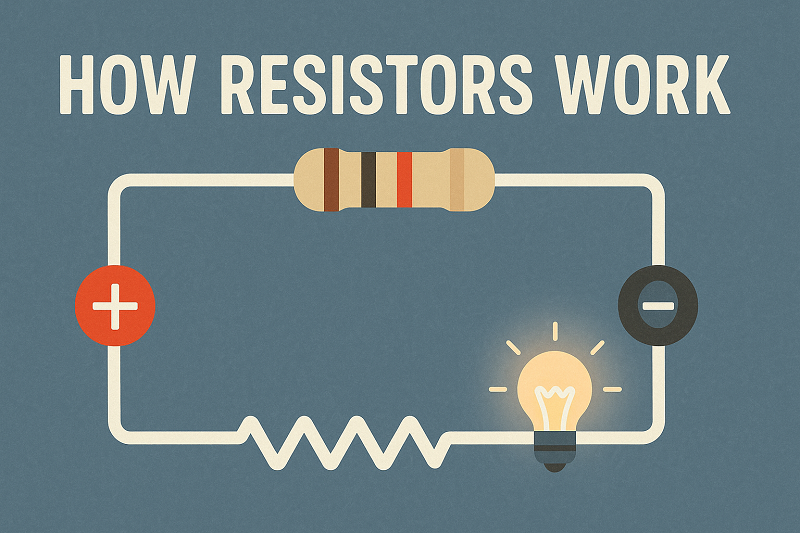
How Resistors Work: From Basic Principles to Advanced Applications2025-07-30
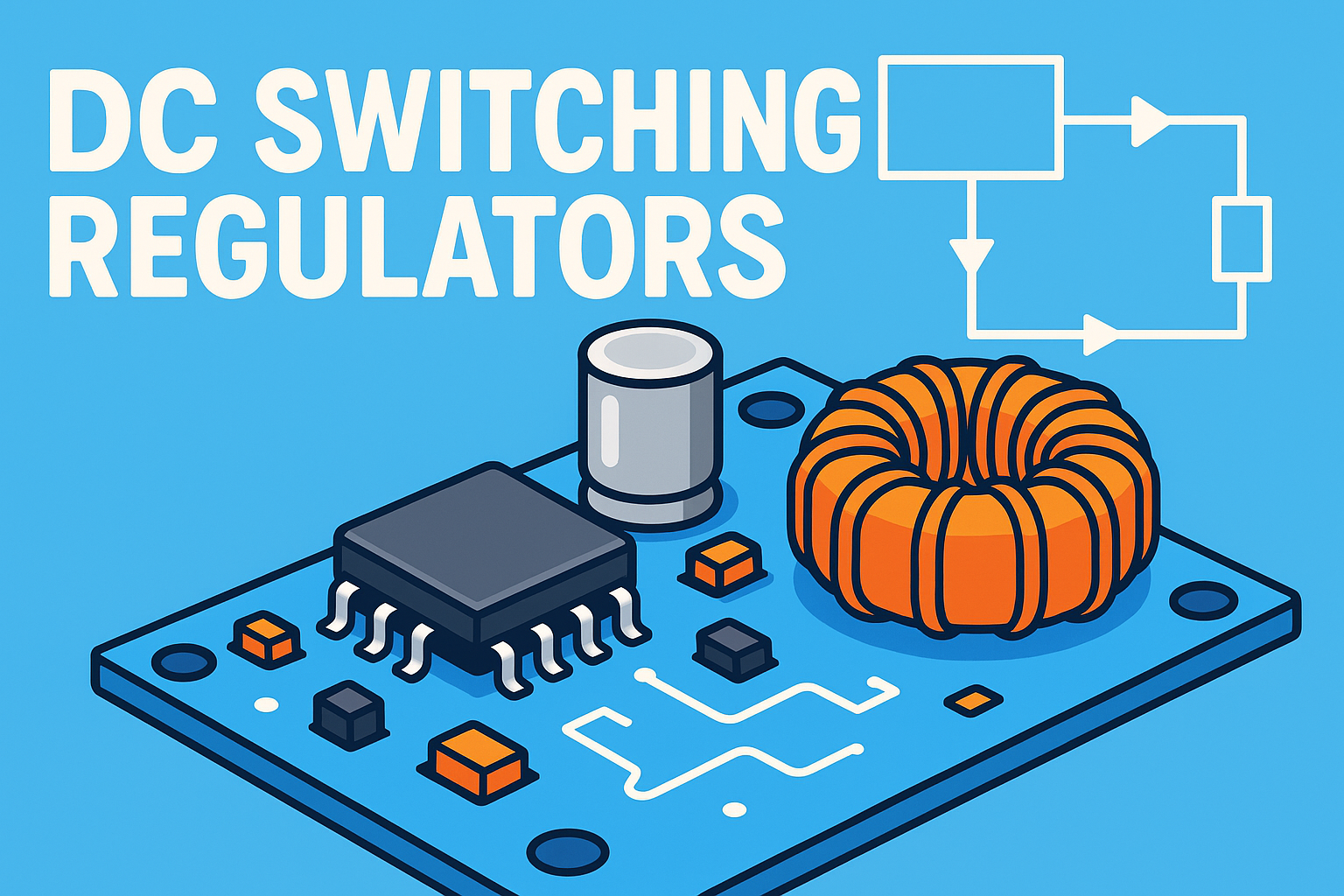
DC Switching Regulators: Principles, Selection, and Applications2025-05-30
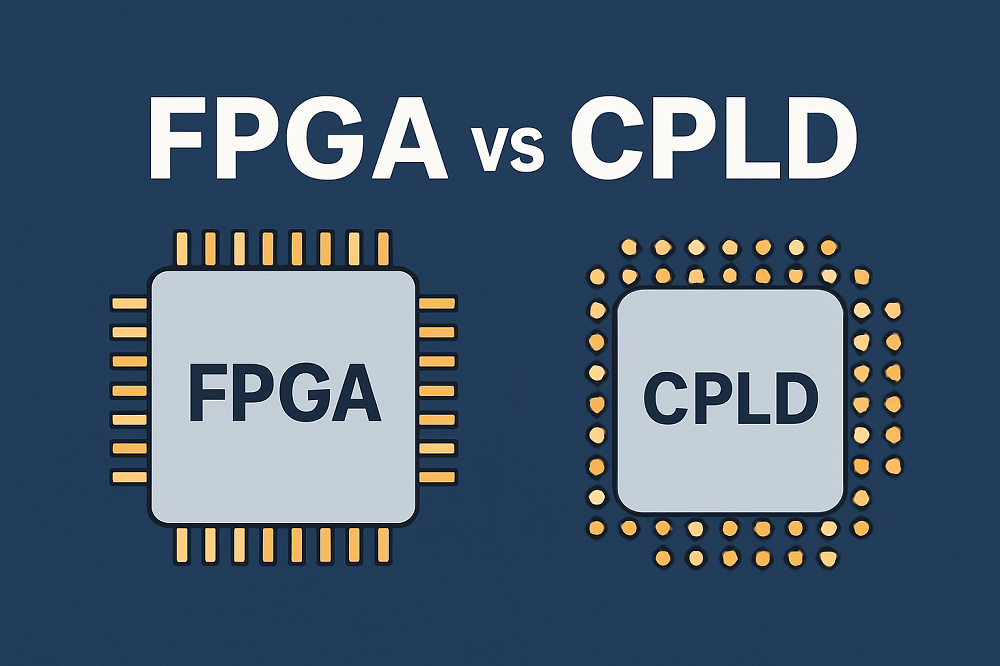
FPGA vs CPLD: In-depth Analysis of Architecture, Performance and Application2025-05-07
MOSFET Technology: Essential Guide to Working Principles & Applications2025-05-04
SMD Resistor: Types, Applications, and Selection Guide2025-04-30