The Kynix Blog - News Room
Stay Ahead with Expert Electronics Insights,
Industry Trends, and Innovative Tips
- Electronic Components
- News Room
- General electronic semiconductor
- Components Guide
- Sort by
- Robots
- Transmitters
- Capacitors
- IC Chips
- PCBs
- Connectors
- Amplifiers
- Memory
- LED
- Diodes
- Transistors
- Battery
- Oscillators
- Resistors
- Transceiver
- RFID
- FPGA
- Mosfets
- Sensor
- Motors, Solenoids, Driver Boards/Modules
- Relays
- Optoelectronics
- Power
- Transformer
- Fuse
- Thyristor
- potentiometer
- Development Boards
- RF/IF
- Semiconductor Information
- PCB
- transistor
As an exhibitor of the KES, Kynix send the warm congratulations on the successful 2017 Korea Electronic Show . What is KES Korea Electronics Show is 4 day event held from 17 October to 20th October 2017 at the COEX Korea Exhibition Center in Seoul, Korea. The participants are availed with ample of networking opportunities which help them to increase their revenue count as well aid them to create a strong footage in the domestic as well as in the international market. Korea Electronics Show is the perfect place where the attendees can come in contact with the manufacturers and exporters and discuss about the various business related issues. Various designer and purpose of lighting products are displayed so that the demands of the customers are completely fulfilled. Preview KES has always been walking along with the 51 years history of the Korean electronic industry and the most important threshold to the international markets. As an Asian IT show pilgrimage,KES has strong connections especially with Asian Pacific IT shows in Japan, Hong Kong, Taiwan, and China, the buyers from North Ameriaca,Europe,and Middle East tend to schedule every October. Held in COEX Hall A, Hall B,World Trade Center Seoul,Seoul, South Korea,KES ended its 48th exhibition successfully. With a scale over 1500 booths representing 500 companies ( including 100 overseas), 2017 KES show attracted over 70,000 visitors including 4,000 from foreign country. Under the theme--Where the Creative Things are, there are more well-known exhibitors such as UNION SEIMITSU CO., LTD.; SILICONE VALLEY CO., LTD.; SANYO DENKI (THAILAND) CO.,LTD.;MORNSUN took part in KES. What‘s more, KES has a lot of partners from home and abroad like CEAC,CCPIT,CECC,HQEW(China),TEEMA(Taiwan),JESA,AEECC(Asia Electronics Exhibition Cooperate Conference), Messe Berlin(Germany), CEA(U.S.A), RATEK(Russia), CMAI, TEMA(India), VEIA(Vietnam),etc. Greetings The Korean Electronic Show literally shows the modern and future electronic and IT industry of Korea from the perspective of industry and suggests the direction in which the industry will head towards. It is a specialized exhibition of electronics and IT which is a feast of cutting edge technology that leads global trends. Especially this year we constructed a theme hall with cutting edge technology and renovation goods that will lead our future and the latest trends and 3D printing, Broadcast Tech Korea, stage, masterpiece miniature exhibition medical device fusion hall etc. that can attract the attention of visitors. Not only it is exhibiting products, but also visitors and buyers will be able to discuss and experience technology in the experience hall and technology exchange hall under the name of “the Forum where Culture and Technology Meet.”KES try their best to make this event participatory by planning a ‘Story Tour’ that provide visitors with various spectacles with a story-telling based tour so that buyer and vistors can participate. Kynix Situations It is kynix’s honor to witness KES’s great success. In the KES, there are KES not only provided one-stop market place provision of global companies and a variety of 800 other companies of components,distributions,software,etc,but also the provision of a strong network between participating companies and buyers, and exchange forum. There are about 600 exibitors in KES. As one of the partners of KES,Kynix gained great benefits from it. Over 10 thousand visitors from all the world saw kynix’s stand and asked about electronic semiconductors every day between exhibition period. What's more pleasurable, we made cooperations with over 60 partners in the exhibition including Sumsung and LG. Thanks for KES, kynix won a lot of new partners and opened up kynix’s world market at the same time. Thanks for KES, kynix won a lot of new partners and opened up kynix’s world market at the same time . Congratulate on the successful 2017 Korea Electronic Show again!
kynix On 2017-10-24
Nowadays,almost all the focus in transportation is on self-driving ars with more and more similar initiatives with google car.Trucks, however, could also benefit from extra automation and connectivity to enable preventive maintenance, improve safety, efficiency and cost. Might we therefore one day soon see trucks on our roads with no driver in the front seat? Jörg Rüger's comment “Not for at least 10 years; I don’t think the public would accept it,” argued Jörg Rüger, president of commercial vehicle and off-road at Bosch Mobility. “If we’re talking autonomous driving for trucks, we’re talking about motorways, not inter-urban traffic. For that, it’s not realistic from today’s point of view because when the truck leaves the motorway, it would need someone to take over.” This is because the current level of technology doesn’t provide for this degree of autonomy – yet. While Europe is in the driver’s seat when it comes to standards for increasing road safety, legislation is lagging behind the level of sophisticated solutions being developed – solutions which could lead to fully autonomous trucks. Legislation is currently being written for stop and go control systems and turn assist systems, which Rüger believes will appear in the next couple of years. Dr Thomas Dieckmann's comment “WABCO has developed its own urban turning assist collision avoidance system,” said Dr Thomas Dieckmann, leader of advanced development at WABCO. “OnCity is a single-sensor solution and the first to use LiDAR (light imaging, detection and ranging) technology.” LiDAR measures distances by illuminating a target with a pulsed laser light and measuring the reflected pulses. “The system alerts the driver visually and acoustically to a potential collision, both right before and during a turning manoeuvre,” Dr Dieckmann added. “In the future, it will be able to apply the brake autonomously to prevent collisions, should the driver fail to take corrective action.” The next level up in terms of automation – though only currently envisioned on motorways – is platoons: convoys of trucks linked and controlled electronically through short range vehicle-to-vehicle communications. Led by the front vehicle, this communication, coupled with technologies such as forward collision avoidance systems, enables the trucks to accelerate or brake simultaneously and to follow each other more closely. Potential benefits include: better fuel economy due to reduced air resistance; reduced congestion; fewer collisions; and less pressure for drivers, who could, instead of driving, plan routes, process shipping documents or simply take a break. Several trial platoon runs have been conducted in Europe – including the European Truck Platooning Challenge – but legislation is still wanting. “Platooning needs legislation to allow trucks to drive at a distance of eight to 10m, much closer together than it is currently legal,” Rüger explained, pictured left, “and to allow drivers to be on standby. “There will eventually be mixed platoons and that needs a standardised protocol. The expectation is to see these platoons on the road between 2023 and 2025.” Not everyone is keen on the idea however. The Road Haulage Association believes platooning is not feasible. Rod McKenzie's comment “Causing queues for vehicles trying to join and leave the motorway will simply create even more congestion,” cautioned Rod McKenzie. “Of course, the auto-pilot facility has the ability to remove human error and mistake – but what happens if the engine goes wrong?” As drivers won’t be concentrating on the road, they might not be able to react as quickly when there’s a system failure, for example. Another downside is that systems could potentially be hacked. How to resolve these issues To resolve these issues, Volvo Trucks is concentrating on improving human machine interaction to ensure good usability. “We provide training and methods for continuous improvements along with supporting tools to assist planning and driving,” said Michael Gudmunds, product manager, soft products. While the practicality of platoons is open to debate, commercial vehicles are already benefitting from increased connectivity and automation. “Commercial vehicles can already upload data into the cloud and download automated software updates,” said Rüger. “Infotainment is becoming more connected with smartphone integration, voice control and a Bluetooth hands-free system. Navigation systems are being used to optimise engine use and fuel consumption by providing the driver with road and environment mapping information in advance.” Real-time information about road conditions – such as the presence of black ice – can be shared between trucks via data collected by the sensors, then processed and stored in the cloud and retransmitted. Legislation for advanced emergency braking systems (AEBS) and lane departure warning (LDW) has been in place since 2015. Commercial vehicle technology supplier WABCO offers an LDW system called OnLane, which detects road markings and vehicle position, and warn the driver of imminent lane departure via visual, audible and haptic signals. The camera-based solution can distinguish between a deliberate lane change and an unintentional drift by identifying the driver’s turn signal usage.Lane keeping support takes LDW one step further by not only warning the driver but also, if no action is taken, by taking steps to ensure the vehicle stays in its lane. Volvo Trucks’ Dynamic Steering – which combines conventional hydraulic power steering with an electric motor fitted to the steering gear (pictured below) – also provides lane keeping support. The electrical control unit processes data from multiple sensors and controls the motor at 2000Hz to work out the truck’s direction and the driver’s intentions. A principle called ‘torque overlay’ corrects unintentional steering movements to keep the truck dead on course. Some trucks are already ‘smart’, benefitting from advancements in automation and connectivity, and companies are more than eager to take these capabilities to a higher level. Conclusion But there is a long path to full autonomy and, as Ruger says: “A 40tonne autonomous truck frightens people.” Autonomous commercial vehicles therefore will not appear tomorrow. “Development will be steady,” Dr Dieckmann concluded. “We will see an increase in partial automation, then further developments in the areas of manoeuvring and highway driving.”
kynix On 2017-10-12
Have you heard of Silicon carbide power devices yet? Researchers are rolling out a new manufacturing process and chip design for silicon carbide (SiC) power devices, which can be used to more efficiently regulate power in technologies that use electronics. The process -- called PRESiCE -- was developed to make it easier for companies to enter the SiC marketplace and develop new products.(Silicon carbide power devices, like the one shown here, are more efficient than their silicon counterparts.)"PRESiCE will allow more companies to get into the SiC market, because they won't have to initially develop their own design and manufacturing process for power devices -- an expensive, time-consuming engineering effort," says Jay Baliga, Distinguished University Professor of Electrical and Computer Engineering at NC State and lead author of a paper on PRESiCE that will be presented later this month. "The companies can instead use the PRESiCE technology to develop their own products. That's good for the companies, good for consumers, and good for U.S. manufacturing." Power devices consist of a diode and transistor, and are used to regulate the flow of power in electrical devices. For decades, electronics have used silicon-based power devices. In recent years, however, some companies have begun using SiC power devices, which have two key advantages. First, SiC power devices are more efficient, because SiC transistors lose less power. Conventional silicon transistors lose 10 percent of their energy to waste heat. SiC transistors lose only 7 percent. This is not only more efficient, but means that product designers need to do less to address cooling for the devices. Second, SiC devices can also switch at a higher frequency. That means electronics incorporating SiC devices can have smaller capacitors and inductors -- allowing designers to create smaller, lighter electronic products. But there's a problem. Up to this point, companies that have developed manufacturing processes for creating SiC power devices have kept their processes proprietary -- making it difficult for other companies to get into the field. This has limited the participation of other companies and kept the cost of SiC devices high. The NC State researchers developed PRESiCE to address this bottleneck, with the goal of lowering the barrier of entry to the field for companies and increasing innovation. The PRESiCE team worked with a Texas-based foundry called X-Fab to implement the manufacturing process and have now qualified it -- showing that it has the high yield and tight statistical distribution of electrical properties for SiC power devices necessary to make them attractive to industry. "If more companies get involved in manufacturing SiC power devices, it will increase the volume of production at the foundry, significantly driving down costs," Baliga says. Right now, SiC devices cost about five times more than silicon power devices. "Our goal is to get it down to 1.5 times the cost of silicon devices," Baliga says. "Hopefully that will begin the 'virtuous cycle': lower cost will lead to higher use; higher use leads to greater production volume; greater production volume further reduces cost, and so on. And consumers are getting a better, more energy-efficient product." The researchers have already licensed the PRESiCE process and chip design to one company, and are in talks with several others. "I conceived the development of wide bandgap semiconductor (SiC) power devices in 1979 and have been promoting the technology for more than three decades," Baliga says. "Now, I feel privileged to have created PRESiCE as the nation's technology for manufacturing SiC power devices to generate high-paying jobs in the U.S. We're optimistic that our technology can expedite the commercialization of SiC devices and contribute to a competitive manufacturing sector here in the U.S.," Baliga says. The paper, "PRESiCE: PRocess Engineered for manufacturing SiC Electronic-devices," will be presented at the International Conference on Silicon Carbide and Related Materials, being held Sept. 17-22 in Washington, D.C. The paper is co-authored by W. Sung, now at State University of New York Polytechnic Institute; K. Han and J. Harmon, who are Ph.D. students at NC State; and A. Tucker and S. Syed, who are undergraduates at NC State. The work was supported by PowerAmerica, the Department of Energy-funded manufacturing innovation institute that focuses on boosting manufacturing of wide bandgap semiconductor-based power electronics. ref.KY56-PZTA06KY41-SL12T1G
kynix On 2017-10-09
A team of University of Wisconsin-Madison engineers has created the most functional flexible transistor in the world -- and with it, a fast, simple and inexpensive fabrication process that's easily scalable to the commercial level. It's an advance that could open the door to an increasingly interconnected world, enabling manufacturers to add "smart," wireless capabilities to any number of large or small products or objects -- like wearable sensors and computers for people and animals -- that curve, bend, stretch and move. Transistors are ubiquitous building blocks of modern electronics. The UW-Madison group's advance is a twist on a two-decade-old industry standard: a BiCMOS (bipolar complementary metal oxide semiconductor) thin-film transistor, which combines two very different technologies -- and speed, high current and low power dissipation in the form of heat and wasted energy -- all on one surface. As a result, these "mixed-signal" devices (with both analog and digital capabilities) deliver both brains and brawn and are the chip of choice for many of today's portable electronic devices, including cellphones. "The industry standard is very good," says Zhenqiang (Jack) Ma, the Lynn H. Matthias Professor and Vilas Distinguished Achievement Professor in electrical and computer engineering at UW-Madison. "Now we can do the same things with our transistor -- but it can bend." Ma is a world leader in high-frequency flexible electronics. He and his collaborators described their advance in the inaugural issue of the journal Flexible Electronics. Making traditional BiCMOS flexible electronics is difficult, in part because the process takes several months and requires a multitude of delicate, high-temperature steps. Even a minor variation in temperature at any point could ruin all of the previous steps. Ma and his collaborators fabricated their flexible electronics on a single-crystal silicon nanomembrane on a single bendable piece of plastic. The secret to their success is their unique process, which eliminates many steps and slashes both the time and cost of fabricating the transistors. "In industry, they need to finish these in three months," he says. "We finished it in a week." He says his group's much simpler high-temperature process can scale to industry-level production right away. "The key is that parameters are important," he says. "One high-temperature step fixes everything -- like glue. Now, we have more powerful mixed-signal tools. Basically, the idea is for flexible electronics to expand with this. The platform is getting bigger." Ref.KY56-2SA1860KY45-EKMC1601113
kynix On 2017-09-29
(2017 Korea Electronic Show) From October 17th to 20th, the Korea Electronic Show(KES) will be held in Seoul,Korea. As an exhibitor of the exhibiton, Kynix Semiconductor sincerely invites you to visit this exhibition. It is believed that you can have a better understanding of our company and we can form a stabler partnership.Following are some information about the Korea Electronic Show(KES). OverviewKorea Electronics Show (KES) has always been walking along with the 51 years history of the Korean electronic industry and the most important threshold to the international markets.Having strong connections especially with Asian Pacific IT shows in Japan, Hong Kong, Taiwan, and China, the buyers from North America, Europe, and Middle East tend to schedule every October as an Asian IT show pilgrimage. Exhibit areas:Electronics Parts & Materials; 3D Convergence & 3D Printing; Software & Mobile Apps; IT ConvergenceTheme:Where the Creative Things are!Venue: COEX Hall A, Hall B,World Trade Center Seoul,Seoul, South KoreaScale:1,500 booths representing 500 companies (including 100 overseas)Visitors:70,000(4,000 foreign)Date:October 17(Tue.)-20(Fri.),2017Well-known Exhibitors:UNION SEIMITSU CO., LTD.;SILICONE VALLEY CO., LTD.;SANYO DENKI (THAILAND) CO.,LTD.;MORNSUN.etcGlobal Partners:CEAC, CCPIT, CECC, HQEW(China), TEEMA(Taiwan), JESA, JMA(Japan), HKTDC(Hong Kong), AEECC(Asia Electronics Exhibition Cooperate Conference), Messe Berlin(Germany), CEA(U.S.A), RATEK(Russia), CMAI, TEMA(India), VEIA(Vietnam)Our Booth Number:E450 Floor Plan About Kynix Kynix Semiconductor has founded for 10 years since 2008. These 10 years have witnessed our company's trials of becoming a better and better distributor and supplier in electronic components industry. In 2009, our company established the International Sales Department and became members of TBF and HKInventory. In 2010, we established cooperative relationships with accredited testing organizations like CECCLab, White Horse Lab, AAA...In 2013, we established a strategic partnership with dozens of well-known electronic components manufacturers including TI.In 2015,we reached an electronic components supply strategic partnership with Foxconn.Also ,our B2B trading platform was launched officially,whose members have exceeded 15,000 in 2017. Recently, our partners in electronics field have increased to 700. Our Advantages 1. Strong operation system2. Good warehouse management3. Cooperation with advanced international testing companies4. Cooperation with international high standard logistics companies like UPS, DHL, TNT, FedEx5. Competitive supply from SumSung / Micron / BroadCom / Freescale / Atmel / Cypress and etc... After-sales ServicesGurantee1.Each product from Kynix has been given a warranty period of 1 YEAR .During this period , we could provide free technical maintenance if there are any problems about our products.2.If you find quality problems about our products after receiving them , you could test them and apply for unconditional refund if it can be proved.But it's just on this premise that the product is not used and the packing is not damaged . Commitment to QualityKynix has always been laying emphasis on the quality of its products and maintaining a sound cooperative relation with electronic components manufacturers since its founding. It has been conducting quality-monitoring system following the rigid rules in terms of the quality of the product, delivery, and it's after-sales service. It is claimed by Kynix that all products sold are 100% authentic. Each product has been tested carefully before being sent to the customer. It is our aim to be responsible for our customers and make them satisfactory. ContactIf you have any questions, please contact us through our emails! Hope the exhibition finishes perfectly! We will be there and waiting for your coming!
kynix On 2017-09-19
“For the living room, a sensual green with temperature and motion sensors.” In the future, you may be able to order that or something similar for your smart home. Sometime soon, new types of sensors could become a reality on your four walls.Science or fiction? More and more often, we find ourselves having to answer that question with science. That also applies to tiny new sensors that—hidden in wall paint—could make smart homes even smarter. On the one hand, they would have to be very, very small, and on the other, they would have to work without a battery. Researchers at the University of Eindhoven have already found an elegant solution. Their tiny temperature sensor gets its energy from the same radio waves that it uses to transmit its measuring results. First it receives radio waves from a special router via an antenna and stores it as energy. Starting at a certain energy level, it then measures the temperature and sends the results to the router. And it does so at exactly the same frequency that was chosen in advance for the measured temperature value. The router then uses the information to calculate the actual temperature. The walls have earsThe range of the tiny sensor, which measures just two square millimeters in size and weighs just 1.6 milligrams, is limited to 2.5 centimeters. But researchers hope to reach one meter during the next year. They are aiming for up to five meters in the future. Because the sensor also works under a coat of paint, pavement or concrete, there are only a few restrictions to its applications. For example, in smart homes or production environments, it could be “painted” onto the building’s walls with paint. And not just as a “thermometer”. The technology can also be used for sensors that measure motion, light and moisture. Right now the sensor stems from a 65-nm CMOS process. Produced in mass, the cost of production should come in at around 30 cents. Ref.KY45-LM35DTKY45-AMB2402
kynix On 2017-09-14
Join our mailing list!
Be the first to know about new products, special offers, and more.
Feature Posts
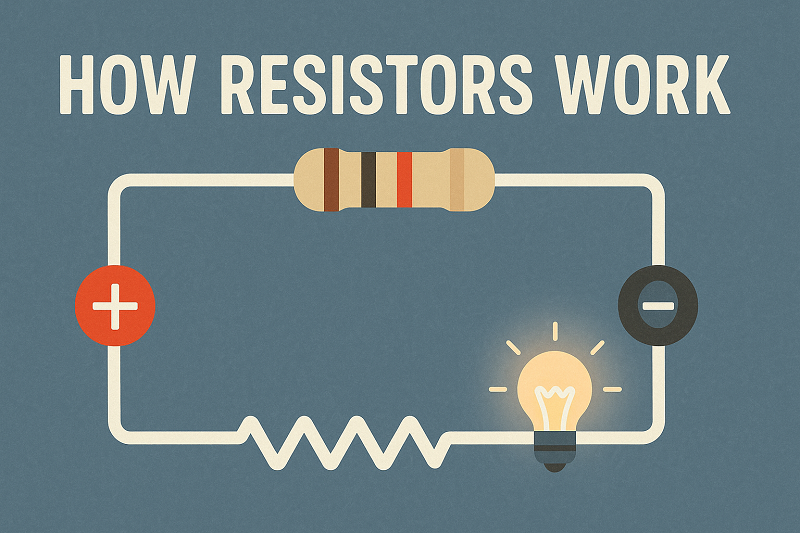
How Resistors Work: From Basic Principles to Advanced Applications2025-07-30
DC Switching Regulators: Principles, Selection, and Applications2025-05-30
FPGA vs CPLD: In-depth Analysis of Architecture, Performance and Application2025-05-07
MOSFET Technology: Essential Guide to Working Principles & Applications2025-05-04
SMD Resistor: Types, Applications, and Selection Guide2025-04-30