The Kynix Blog - Transmitters
Stay Ahead with Expert Electronics Insights,
Industry Trends, and Innovative Tips
- Electronic Components
- News Room
- General electronic semiconductor
- Components Guide
- Sort by
- Robots
- Transmitters
- Capacitors
- IC Chips
- PCBs
- Connectors
- Amplifiers
- Memory
- LED
- Diodes
- Transistors
- Battery
- Oscillators
- Resistors
- Transceiver
- RFID
- FPGA
- Mosfets
- Sensor
- Motors, Solenoids, Driver Boards/Modules
- Relays
- Optoelectronics
- Power
- Transformer
- Fuse
- Thyristor
- potentiometer
- Development Boards
- RF/IF
- Semiconductor Information
- PCB
- transistor
Today,I would like to introduce a kine do remote controller built using PT2262,IC PT2272-M4 from PRINCETON and MAX485 from MAXIM. This is a four channel two core twisted pair remote controller. The PT2262 is an enconder( transmitter) whic PT2272-M4 is a decoduer (receiver) and MAX485 works as bridge for twisted pair communication between PT2262 and PT2272-M4.4 Channel 2 core twisted pair remote controller built using PT2262. When any of SW1-SW4 (S1-S4) tact switches is pressed, power is applied to encoder IC and RS485 IC, the encoder starts scanning Jumper J1-J8 and transmitting the status of the 8 bits address and data serially. The decoder IC receives the data from MAX485 and compares it two times with J1-J8 address jumpers, also provides outputs high and at same time VT (Valid Transmission) LED goes On, if the data is Valid and address of Transmitter and Receiver are same. It is important to have same jumper settings J1-J8 at transmitter and receiver to pair both. Let me talk this remote controller in several parts. PT2262--encoder PT2262 is a remote control encoder paired with PT2272 utilizing CMOS technology. It encodes data and address pins into a serial coded waveform. Circuit uses 8 bits of tri-state address pins providing up to 6561 address codes, thereby, drastically reducing any code collision and unauthorized code scanning possibilities. PT2262 encodes the code address and data set into special waveform and outputs it to the DOUT when TE is pulled to low. The wave fed to RS485 IC for transmission. The transmitted RS485 IC data receive by receiver side of RS485 and PT2272 decode the waveform and set the corresponding output pin high. Thus completing a remote control encoding and decoding function. PT2272-M4--decoder PT2272 decodes the waveform received and fed in to the DIN pin. The waveform is decoded into code word that contains the address, data and sync bits. The decoded address bits are compared with the address set at the address input pins. If both address match for 2 consecutive code words, PT2272 drives the data output pins whose corresponding data bits is the decoded to be a 1 bit, and (2) the VT output — to high state. VT (Valid Transmitter) When PT2272 receive a transmission code word, it initially checks whether this is a valid transmission. For a transmission to be valid, (1) it must be complete code word, and (2) the address bits must match the address setting at the address pins. After two consecutive valid transmissions, PT2272 (1) drives the data pins according to the data bits received, and (2) raises VT to high state. Features Wide Range of Operation Voltage 5V to 12V TransmitterSupply 5V DC ReceiverOn Board Data Transmission LEDSingle Resistor Oscillator4 Momentary Outputs4 Outputs TTL LevelAddress setting 3 states HIGH, LOW, And FLOATING)Remote provides 6561 addressable combinations by setting up J1-J8 to High, Low, and Floating.On Board Power and Valid Transmission LEDS ReceiverTwisted Pair RS485 Communication Between Transmitter and ReceiverCMOS TechnologyLow Power ConsumptionIt Can transmit data over 1000 Meters cableVery High Noise ImmunityUp to 8 Tri-State Code Address Pins ApplicationGarage Door ControllerHome SecurityAutomation SystemRemote Control for Industrial Use NOTE J1 to J8 Jumper provided at Bottom layer of the PCB to set the address pins high. Top side of the PCB has Jumpers. Close them to set the address pins low for J1 to J8.
kynix On 2017-10-18

At this year's Consumer Electronics Show in Las Vegas, the big theme was the "Internet of things"—the idea that everything in the human environment, from kitchen appliances to industrial equipment, could be equipped with sensors and processors that can exchange data, helping with maintenance and the coordination of tasks.Realizing that vision, however, requires transmitters that are powerful enough to broadcast to devices dozens of yards away but energy-efficient enough to last for months—or even to harvest energy from heat or mechanical vibrations."A key challenge is designing these circuits with extremely low standby power, because most of these devices are just sitting idling, waiting for some event to trigger a communication," explains Anantha Chandrakasan, the Joseph F. and Nancy P. Keithley Professor in Electrical Engineering at MIT. "When it's on, you want to be as efficient as possible, and when it's off, you want to really cut off the off-state power, the leakage power."This week, at the Institute of Electrical and Electronics Engineers' International Solid-State Circuits Conference, Chandrakasan's group will present a new transmitter design that reduces off-state leakage 100-fold. At the same time, it provides adequate power for Bluetooth transmission, or for the even longer-range 802.15.4 wireless-communication protocol."The trick is that we borrow techniques that we use to reduce the leakage power in digital circuits," Chandrakasan explains. The basic element of a digital circuit is a transistor, in which two electrical leads are connected by a semiconducting material, such as silicon. In their native states, semiconductors are not particularly good conductors. But in a transistor, the semiconductor has a second wire sitting on top of it, which runs perpendicularly to the electrical leads. Sending a positive charge through this wire—known as the gate—draws electrons toward it. The concentration of electrons creates a bridge that current can cross between the leads.But while semiconductors are not naturally very good conductors, neither are they perfect insulators. Even when no charge is applied to the gate, some current still leaks across the transistor. It's not much, but over time, it can make a big difference in the battery life of a device that spends most of its time sitting idle.Going negativeChandrakasan—along with Arun Paidimarri, an MIT graduate student in electrical engineering and computer science and first author on the paper, and Nathan Ickes, a research scientist in Chandrakasan's lab—reduces the leakage by applying a negative charge to the gate when the transmitter is idle. That drives electrons away from the electrical leads, making the semiconductor a much better insulator.Of course, that strategy works only if generating the negative charge consumes less energy than the circuit would otherwise lose to leakage. In tests conducted on a prototype chip fabricated through the Taiwan Semiconductor Manufacturing Company's research program, the MIT researchers found that their circuit spent only 20 picowatts of power to save 10,000 picowatts in leakage.To generate the negative charge efficiently, the MIT researchers use a circuit known as a charge pump, which is a small network of capacitors—electronic components that can store charge—and switches. When the charge pump is exposed to the voltage that drives the chip, charge builds up in one of the capacitors. Throwing one of the switches connects the positive end of the capacitor to the ground, causing a current to flow out the other end. This process is repeated over and over. The only real power drain comes from throwing the switch, which happens about 15 times a second.Turned onTo make the transmitter more efficient when it's active, the researchers adopted techniques that have long been a feature of work in Chandrakasan's group. Ordinarily, the frequency at which a transmitter can broadcast is a function of its voltage. But the MIT researchers decomposed the problem of generating an electromagnetic signal into discrete steps, only some of which require higher voltages. For those steps, the circuit uses capacitors and inductors to increase voltage locally. That keeps the overall voltage of the circuit down, while still enabling high-frequency transmissions.What those efficiencies mean for battery life depends on how frequently the transmitter is operational. But if it can get away with broadcasting only every hour or so, the researchers' circuit can reduce power consumption 100-fold."Ultralow leakage energy is critical for future sensor nodes that need the transmitter to be on only a very small percentage of time," says Baher Haroun, director of the Embedded Processing Systems Labs at Texas Instruments, which helped fund the MIT researchers' work. "Working with Anantha's research team on ultralow-power circuit and system ideas has always been beneficial to TI. We learn from his team's novel approaches and depth of understanding of the ultralow-power methods that apply to multiple functions, from digital to radio frequency."
kynix On 2016-09-26
Join our mailing list!
Be the first to know about new products, special offers, and more.
Feature Posts
How Resistors Work: From Basic Principles to Advanced Applications2025-07-30
DC Switching Regulators: Principles, Selection, and Applications2025-05-30
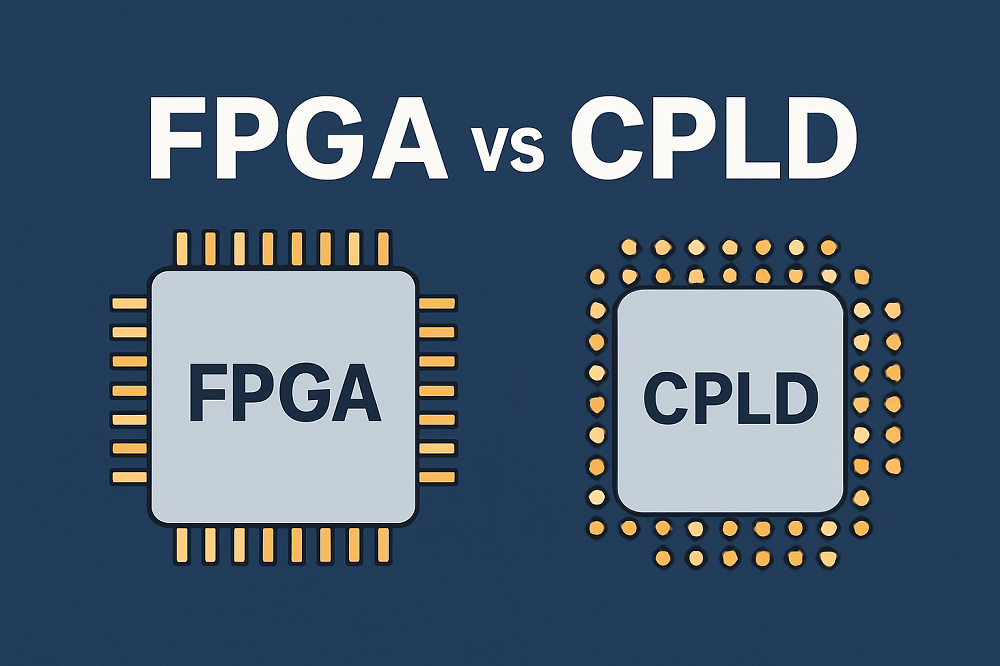
FPGA vs CPLD: In-depth Analysis of Architecture, Performance and Application2025-05-07
MOSFET Technology: Essential Guide to Working Principles & Applications2025-05-04
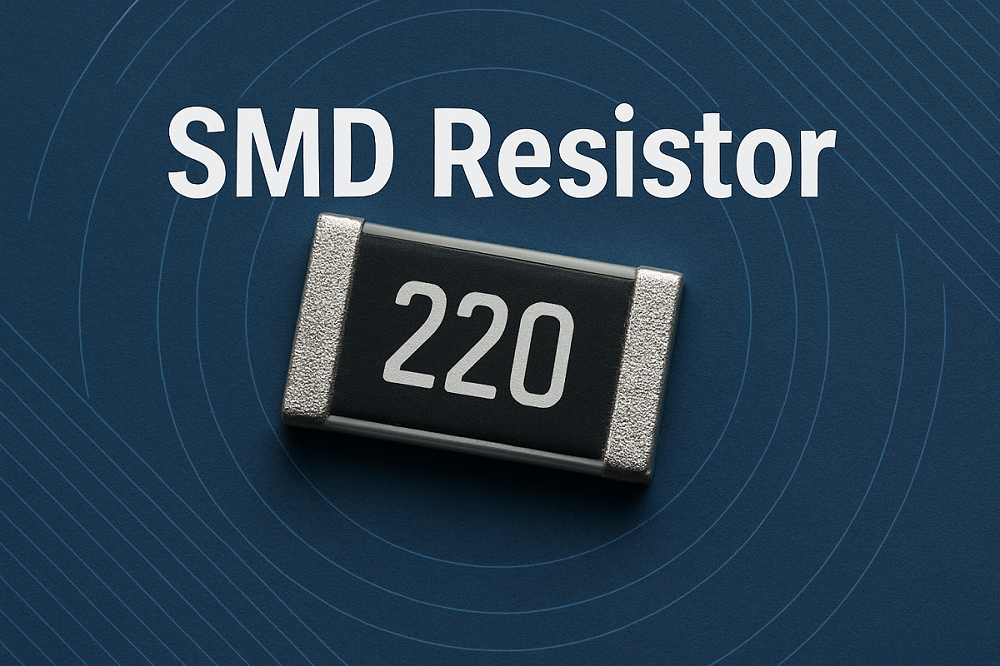
SMD Resistor: Types, Applications, and Selection Guide2025-04-30