The Kynix Blog - LED
Stay Ahead with Expert Electronics Insights,
Industry Trends, and Innovative Tips
- Electronic Components
- News Room
- General electronic semiconductor
- Components Guide
- Sort by
- Robots
- Transmitters
- Capacitors
- IC Chips
- PCBs
- Connectors
- Amplifiers
- Memory
- LED
- Diodes
- Transistors
- Battery
- Oscillators
- Resistors
- Transceiver
- RFID
- FPGA
- Mosfets
- Sensor
- Motors, Solenoids, Driver Boards/Modules
- Relays
- Optoelectronics
- Power
- Transformer
- Fuse
- Thyristor
- potentiometer
- Development Boards
- RF/IF
- Semiconductor Information
- PCB
- transistor
SummaryAs is known,one of the main barriers to a wider adoption of OLED technology resides in its lack of efficiency compared to fluorescent lamps or Light-emitting diodes(LED). The SOLED project hoped to solve this problem using chiral organic semiconductor structures. The difference is undisputable: when put side by side with an LED display (display modules), its OLED counterpart will stand out thanks to its sharper images, better contrast and crisp colours. BodyEnergy efficiency, however, is a key concern for consumers, and OLED is still lagging behind other technologies in this regard. In fact, the only type of display it can top is LCD, but only marginally.To solve this problem, the Weizmann Institute kicked off the SOLED (Chiral organic semiconductor structures) project in January 2016. They aimed to tackle the OLED efficiency problem at its source: ‘The low efficiency of OLED technology is a result of low light emission yield due to the formation of triplet electronic states, in which the two electrons have the same orientation,’ explains Prof. Ron Naaman, coordinator of SOLED.The project’s plan was to use electrons’ spin control with a view to reducing the probability of producing triplet states. This is known as the spin-LED/OLED concept: electrons injected into and from the light-emitting species have a predetermined spin, which helps avoid the formation of ‘dark’, non-emitting triplet states. The team had already benefitted from past experience in this field. They could capitalise on their earlier research on the Chiral-induced spin selectivity (CISS) effect, and proposed to develop chiral organic semiconductor structures to control the spin state of injected electrons and holes in OLEDs.As they initiated the SOLED project, they expected this effect to be able to increase the energy efficiency of OLED devices by a factor of four. Prof. Naaman said "The chiral-induced spin selectivity effect is supposed to allow full control of the electrons’ spin orientation by ensuring that the electron that leaves the emitting molecule has the same spin orientation as the electron entering into the molecule." "Whilst the concept was successfully demonstrated in principle, the team quickly realised that further research would be required to reach their objective. In collaboration with the group of Richard Friend from Cambridge and E. W. (Bert) Meijer from Eindhoven, we could demonstrate our ability to affect the spin orientation in the OLED, but the efficiency of the process was not very high." . "The reason for it is the organisation of the molecules in the OLED. Now, we pursue this work with our collaborators towards better control of material organisation." Until this problem is solved, the team has had to postpone the pre-commercialisation measures they had originally planned for. However, Prof. Naaman is still hopeful that the technology will help OLED technology spread throughout European homes in the form of flexible light emitters. He also underlines the realisation that material organisation is the key factor in achieving spin control as a major outcome for the project. At the end,Prof. Naaman concluded:"We intend to study molecules that self-assemble into three dimensional organised structures, like micro-crystals. We hope to do that under either the FET-OPEN programme or other specific programmes."
kynix On 2017-11-29
Summary As we all know,in case of macro photography or close-up portraits,the availability of a proper lightning source can dramatically improve the final result. For this a soft light, possibly white, not a flash is essential. The LED ring project we are presenting is not only useful for still photography but can be used for video and stop-motion animations. Project Goals Some years ago I started a similar design of a non-portable, white ring light based on a small round neon tube, but soon I abandoned the project due to the difficulty to use it in real, outdoor applications. Really it did not work well outside a photography studio. This idea came back to life when I found a very cheap, PCB LED ring on sale at a local Chinese store. It is a simple, circular design with 24 LEDs powered by either 6 or 12 VCC.Even though this little LED ring was designed for car lighting effects, its diameter and size are perfect for the photographic application I had in mind. Component is very affordable indeed. Portable battery operated Lightweight and easy to carry Variable light intensity Compact battery pack Working in almost every condition, but not underwater Circuit Schematics As shown in the schematics, the LED ring output VCC is triggered by a 4.7K potentiometer to control the intensity. An inline switch (not included in the schematics) is placed between the battery and the rest of the circuitry to turn the LED ring On/Off. The power cable connects to the battery pack through a power jack for better portability. The resulting PCB layout has been designed to fit inside the battery pack cover box fixed with some hot glue. Parts Model Design First of all, I designed the LED ring container; the back support is 3D-printed, while the clear front cover is cut with a CNC router from a sheet of Perspex 1,8 mm thin. Also the battery container is built in two 3D-printed parts: the battery container and the box cover hosting the control circuit. The LED ring is holding the camera through a support fixed to the external flash socket, cut with a CNC router from 3mm Perspex laminate. Power The LED ring is powered by 12 rechargeable 2100 mA/h AA batteries. The batteries, connected in series, are inside two, 6 AA battery holders. Because the LED ring needs to remain powered during the entire photo shoot, testing has been conducted to see how long the batteries will last. This testing showed they provide sufficient power for hours of continuous usage. Dimmer Circuit Design The easiest way to control the dimming intensity is via PWM control. For this project I decided not to use a microcontroller to control the light intensity. Instead I used a simple NE555 IC in an astable configuration. To calculate the component values needed, a few simple inputs were used to determine the proper ratings. Our max rating VCC power is 12V (the nominal battery power is about 14 V when fully charged) The NE555 operates at a maximum rating of 15V For the output current level we will use a NPN P2222A transistor supporting up to 800 mA The LED ring works at a max power rating of about 500 mA Final Design The complete design consists of three main parts: The battery pack The ring camera support The LED ring Everything easily fits into the camera bag when not in use. When you want to use it the LED ring, simply attach it to the camera and then use the long power cord (120 cm) to connect it to the battery in the camera bag. This length of cable has been more than suffieient for all the work that I have done to date.
kynix On 2017-11-21
Article provided by University of Illinois at Urbana-ChampaignArticle edit by kynix A new methord to make Green LEDs more brighter and more efficient have been developed by researchers who at the University of lllinois at Urbana Champaign. Researchers have created gallium nitride(GaN) cubic crystals grown on a silicon substrate that are capable of producing powerful green light for advanced solid-state lighting. "This work is very revolutionary as it paves the way for novel green wavelength emitters that can target advanced solid-state lighting on a scalable CMOS-silicon platform by exploiting the new material, cubic gallium nitride," said Can Bayram, an assistant professor of electrical and computer engineering at Illinois who first began investigating this material while at IBM T.J. Watson Research Center several years ago. "The union of solid-state lighting with sensing (e.g. detection) and networking (e.g. communication) to enable smart (i.e. responsive and adaptive) visible lighting, is further poised to revolutionize how we utilize light. And CMOS-compatible LEDs can facilitate fast, efficient, low-power, and multi-functional technology solutions with less of a footprint and at an ever more affordable device price point for these applications." GaN was formed ethier hexagonal or cubic typically. HExagonal GaN is thermodynamically stable and is by far the more conventional form of the semiconductor. However, hexagonal GaN is prone to a phenomenon known as polarization, where an internal electric field separates the negatively charged electrons and positively charged holes, preventing them from combining, which, in turn, diminishes the light output efficiency. Until now, the only way researchers were able to make cubic GaN was to use molecular beam epitaxy, a very expensive and slow crystal growth method when compared to the widely used metal-organic chemical vapor deposition (MOCVD) method that Bayram used. Bayram and his graduate student Richard Liu made the cubic GaN by using lithography and isotropic etching to create a U-shaped groove on Si (100). This non-conducting layer essentially served as a boundary that shapes the hexagonal material into cubic form. "Our cubic GaN does not have an internal electric field that separates the charge carriers—the holes and electrons," explained Liu. "So, they can overlap and when that happens, the electrons and holes combine faster to produce light." At the end, Bayram and Liu still believe their cubic GaN method may lead to LEDs free from the "droop" phenomenon that has plagued the LED industry for years. For LED lighting color like green, blue, or ultra-violet LEDs , their light-emission efficiency declines as more current is injected, which is characterized as "droop." "Our work suggests polarization plays an important role in the droop, pushing the electrons and holes away from each other, particularly under low-injection current densities," said Liu, who was the first author of the paper, ""Maximizing Cubic Phase Gallium Nitride Surface Coverage on Nano-patterned Silicon (100)", appearing Applied Physics Letters. Having better performing green LEDs will open up new avenues for LEDs in general solid-state lighting. For example, these LEDs will provide energy savings by generating white light through a color mixing approach. Other advanced applications include ultra-parallel LED connectivity through phosphor-free green LEDs, underwater communications, and biotechnology such as optogenetics and migraine treatment. Having better performing green LEDs will open up new avenues for LEDs in general solid-state lighting. For example, these LEDs will provide energy savings by generating white light through a color mixing approach. Other advanced applications include ultra-parallel LED connectivity through phosphor-free green LEDs, underwater communications, and biotechnology such as optogenetics and migraine treatment.
kynix On 2017-11-10
There are a good news that ERP Power LLC,one of the leading provider of small,smart and connected LED drivers for the lighting industry,lanched the world's smallest programmable output drivers with wireless communication for indoor lighting applications on 25.Oct.,2017 and demonstrated it on 27-30th,Oct.,2017 at Hongkong. According to Michael Archer,the CEO of ERP,"ERP is accelerating the Internet of Lights by embedding intelligence, connectivity and dimming into a very small footprint,every LED luminaire design engineer who has held our driver in their hand simply says ‘Wow!' and comments on the industry-leading combination of compact size, extensive dimmer compatibility, and high efficiency at competitive cost. There is no longer a need to compromise the creative style or capabilities of new lighting fixture designs." The UL Class P next generation ERP driver design is one-fifth smaller than similar capacity drivers in the industry; programmable for flexible deployment in a broad range of constant current applications; connected with wired and wireless controls; and high efficiency to reduce electricity consumption. The new ERP drivers are designed in California and built to last with a 5-year limited warranty. Now The patent-pending power electronics design includes 30W/40W/50W models which help LED lighting fixture manufacturers meet the technical requirements of ENERGY STAR®, California Title 24 and the DesignLights Consortium (DLC) specifications. Programmable OutputCustomers can deploy a single driver across multiple lighting fixtures if the power output is programmable. This lowers inventory costs in the customer's supply chain. The ERP next generation driver output is high efficiency and fully programmable in a wide range of output currents while maintaining efficiency of 90% from 50-100% of load with power factor greater than 0.9 and THD less than 20%. ERP’s programmable LED drivers with integrated Bluetooth® mesh communications make dimming, scheduling, and ambient scene control as simple as a swipe of your finger or the sound of your voice. The secure, plug-and-play, Bluetooth® mesh wireless controls architecture leverages a turnkey solution of app, cloud, and firmware pre-integrated with proven LED drivers designed to last for the lifetime of the installation. Tri-Mode DimmingExtensive dimmer compatibility is provided through ERP Power's unique Tri-Mode Dimming™ feature which provides TRIAC, ELV & 0-10 V support and dim-to-off along with options for alternative linear and logarithmic dimming profiles from 1-100%. Wireless ConnectivityOther wireless controls based on Wi-Fi, ZigBee, or IEEE 802.15.4 are available in addition to wired controls protocol support for DALI, DMX, Lutron and others.
kynix On 2017-11-07
As one of the electornic hobbier,I like to make all kinds of electronic projects. Every time I ended an electronic project and saw my trophy,I am so happy and perfectly satisfied. Today I wolud like to share an electronic about LED motorcycle helmet. The costs of helmet you made by yourself are less and meaningful. Now let me introduce it step-by-step. Parts we need: Helmet ( any kind you like)LED RGB Addressable StripQduino MiniLiPo BatteryBattery ChargerString or threadTapeHot GlueSoldering kitWireVelcro tabs Process to create: 1. Plan out your LED design with string and tape (make sure you have a good place to hide the electronics!)2. Cut the LED roll into strips to fit the helmet (make sure they are all in the right direction to make a circuit)3. Stick the LED strips onto the helmet - they are sticky enough to stay on at least temporarily4. Cut open the plastic at the end of the strips to expose the leads you need to solder5. Solder all the LED strips together (this may take some time, so get comfortable)6. Solder the Qduino Mini to the end of the LED circuitGND - GNDDin - D85V - VCC7. Count the number of LEDs and program the Qduino Mini8. Test with a LiPo Battery9. Insulate all solder joints with hot glue, as well as any wires that might be exposed if their plastic casing melted off while soldering10. Optional: If the LED strips don’t stick onto your helmet as well as you’d like, you can either hot glue them or use an adhesive to make sure they won’t come off while riding11. Use Velcro to add the Qduino Mini and LiPo battery to the inside of your helmet12. Plug in, turn on and ride off in style. Trophy Picture Feeling: I'm also an avid motorcycle rider and now I always wear it to go for a drive ! More passer-by will look at me !
kynix On 2017-11-03
The global lamp market has undergone tremedous changes over the last several years. Even government regulation,declining packaged LED and other component prices, and technological advancements have all played a major role in the continued penetration of LED into the overall market. Obvioulsy, LED lamps are the future of lighting, and there is a new invention using LEDs has been pushing out that Osram,a lighting company that offers innovative and sustainable lighting solutions, has revealed that he will stitch LEDs into workwear. About this amazing news,Osram has taken a first step toward weaving smart lighting into clothes, announcing workwear that lights up with LEDs, while strongly hinting that interactive apparel is coming including a cycling jacket that illuminates when you hit the brakes, and lights that flash when your pulse rate rises too high. At the same time,Osram decided to stitching LEDs into safety vests and work jackets,and choosing Fvrth,a Germany-based safety and sportswear company uvex to operate with.Osram's first stab at textile illumination stops short of interactivity. It simply focuses on giving visibility to workers on job sites. “The textile illumination is incorporated into the safety clothing and ensures greater visibility and hence safety in day-to-day work, for example, on construction sites or in road traffic,” Osram said. “The key advantage of the new technology: Reflector strips on conventional work clothing only reflect incident light, while the light modules ensure active illumination at all times, thus improving safety when working in the dark or in poor visibility conditions.” Osram has been testing the technology for some time.The company used it to help illuminate ice hockey players, sticks, and pucks in an outdoor night game nearly10,000 ft high in the German Alps last year, for example. With sportswear as part of the mix, Osram plans to eventually add sensors that will enable integrated LEDs to respond to physical stimuli, providing health alerts, safety measures, and more.“This will in the future allow various applications to be controlled using an app,” Osram said. “Possible examples include sports clothing that warns the wearer about a high pulse rate via the light guides, or a cycling jacket with an integrated brake light.” Like many lighting companies, Osram is trying to establish LED lights and luminaires as nodes and backbones of information technology networks.While some industry observers expect that one day, OLED technology will prevail for integrated textile illumination, Osram has chosen instead to stitch LEDs, as have other illuminated clothing providers. OLED (organic light-emitting diode) is a patch of material that emits light in response to a current, whereas LEDs are single light points. Osram told LEDs Magazine that it has no plans to use OLEDs for lighting textiles.
kynix On 2017-10-28
Join our mailing list!
Be the first to know about new products, special offers, and more.
Feature Posts
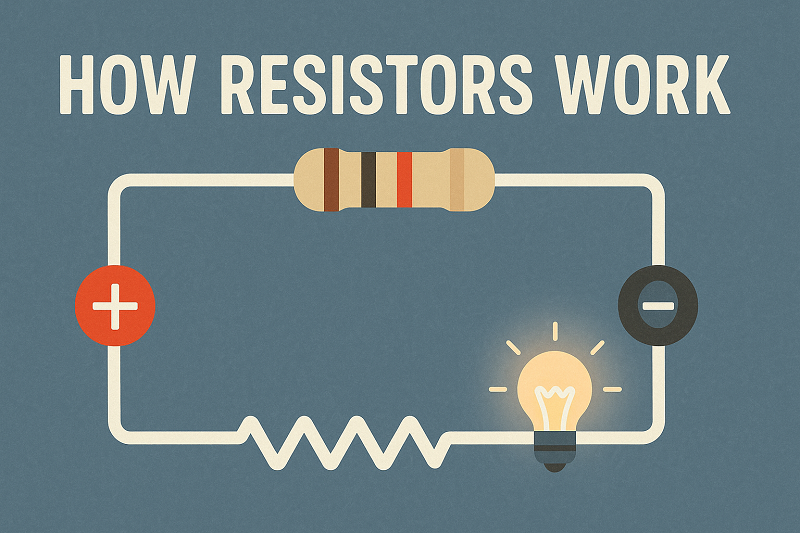
How Resistors Work: From Basic Principles to Advanced Applications2025-07-30
DC Switching Regulators: Principles, Selection, and Applications2025-05-30
FPGA vs CPLD: In-depth Analysis of Architecture, Performance and Application2025-05-07
MOSFET Technology: Essential Guide to Working Principles & Applications2025-05-04
SMD Resistor: Types, Applications, and Selection Guide2025-04-30