info@kynix.com
 00852-6915 1330


 0
0


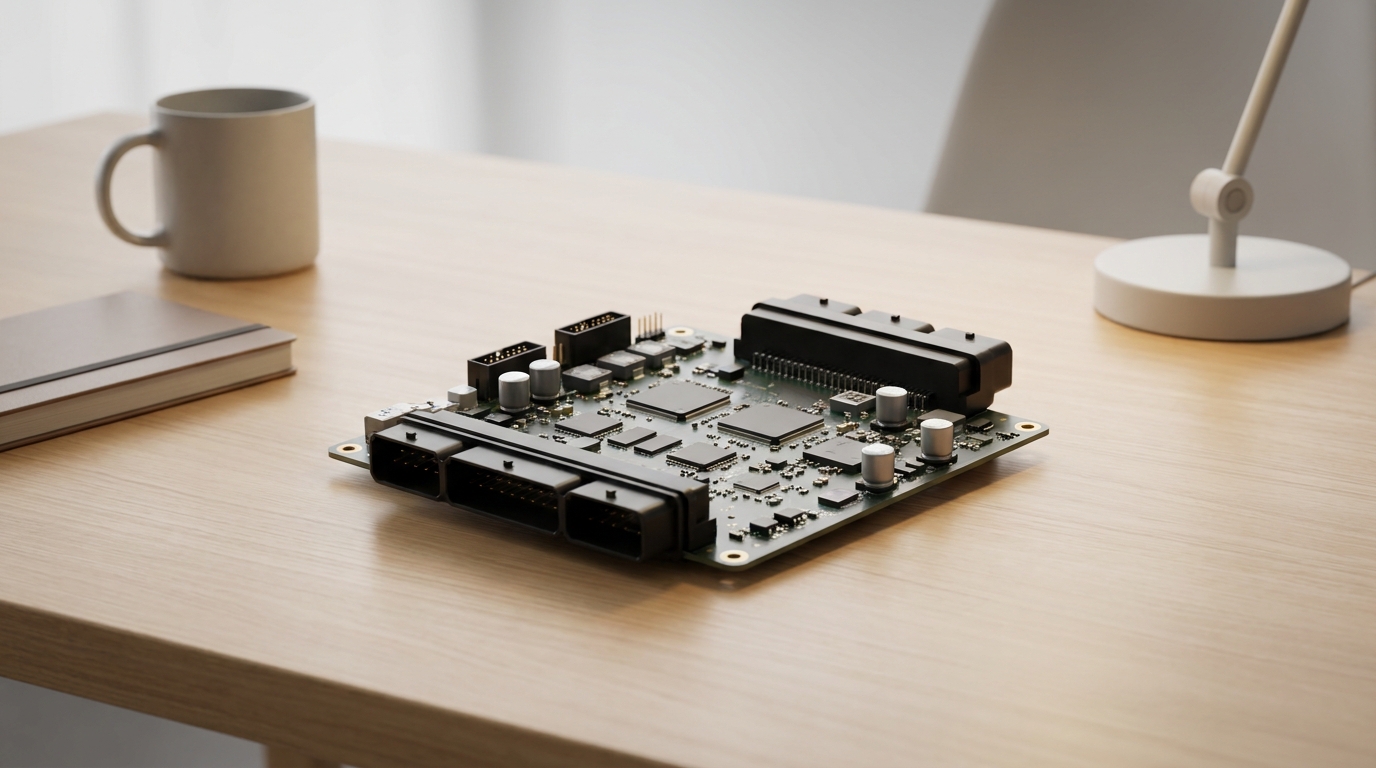
Architectural Guide: This pragmatic guide covers fault tolerant automotive IC design for system architects and embedded engineers navigating ISO 26262 compliance.True fault tolerance in 2026 requires hardware/software co-design, not just redundant silicon. Engineers frequently battle legacy tools like DOORS and safety managers demanding ASIL-D hardware for unutilized checker cores. Intelligently leveraging affordable ASIL-B ICs combined with robust firmware diagnostics achieves system-level ASIL-D compliance while optimizing the Bill of Materials (BOM). Consequently, modern architecture prioritizes mixed-criticality over brute-force physical redundancy.The ASIL-D Dilemma: Why "Certified" Hardware is a Myth in Fault Tolerant Automotive IC DesignASIL-D hardware is insufficient for system safety because a Safety Element out of Context (SEooC) qualification requires a rigorous software handshake to function correctly.Pro Tip: Buying an ASIL-D certified microcontroller does not automatically make your system fault-tolerant. If your software team fails to implement cyclic monitoring functions, the hardware badge is practically useless.The SEooC RealityAutomotive Safety Integrity Level D (ASIL-D) represents the most stringent classification under ISO 26262. However, purchasing an ASIL-D certified microcontroller off a spec sheet typically only provides a Safety Element out of Context (SEooC) qualification. This means the silicon manufacturer designed the IC without knowing the exact final vehicle application. The hardware provides the capability for fault tolerance, but the system architect must implement the specific software routines to realize it.The Unused Lock-Step PitfallA common engineering error involves paying a massive cost penalty for lock-step or split-lock cores. In these architectures, two processor cores run the exact same operations in tandem to detect localized errors. Furthermore, teams often integrate these expensive components only to leave the checker core unutilized due to software integration complexity and tight development deadlines. The hardware redundancy exists, but the system remains vulnerable.Cost vs. RedundancyAdding redundant logic directly bloats the BOM and violates tight spatial constraints in modern zonal E/E architectures. Real-world engineering requires balancing the FIT (Failures In Time) rate against commercial viability. Duplicating sensors and microcontrollers across every vehicle node is financially unsustainable for OEMs scaling electric vehicle production.How Do We Implement System-Level ASIL-D Using ASIL-B ICs?System-level ASIL-D is achievable with ASIL-B ICs because robust firmware diagnostics cyclically revalidate inputs, bridging the hardware capability gap.The Software-First ApproachInstead of over-engineering the hardware, modern fault tolerance relies on a software-first approach. System architects utilize affordable ASIL-B automotive ICs and layer them with rigorous firmware diagnostics. Just as power engineers study how to reduce triac fault in switching circuits through controlled switching, automotive architects use firmware to mitigate silicon-level vulnerabilities. This mixed-criticality architecture saves money, reduces silicon footprint, and directly solves the integration gap between hardware capabilities and software realization.Cyclical Firmware MonitoringSoftware teams achieve system-level ASIL-D by implementing cyclic monitoring functions. For example, firmware can cyclically revalidate inputs from an unsafe space using redundant ADC voltage checks and Memory Protection Units (MPUs). If the ASIL-B hardware produces an anomalous reading, the software detects the deviation and triggers a safe state before the fault propagates.Fail-Silent vs. Fail-Operational ArchitecturesMixed-ASIL architecture dictates how a system responds to a fault.Fail-Silent: The system enters a safe shutdown upon failure (e.g., disabling a non-critical infotainment display).Fail-Operational: The system continues to operate at a reduced capacity (e.g., steering systems maintaining basic mechanical linkage after electronic assist fails).ASIL-B vs ASIL-D Requirements ComparisonFeature/RequirementASIL-B (Hardware Level)ASIL-D (System Level Target)Hardware RedundancySingle core, basic ECC memoryLock-step cores, full memory ECCDiagnostic Coverage> 90%> 99%Target FIT Rate< 100 FIT< 10 FITSoftware HandshakeStandard monitoringCyclical revalidation, strict MPUsCost ImpactBaseline BOM costHigh premium for physical redundancyHardware vs. Firmware: Which Faults Dictate Sub-100ns Responses?Hardware-based desaturation detection is mandatory for traction inverters because modern SiC MOSFETs possess a Short Circuit Withstand Time under 3 microseconds.Counter-Intuitive Fact: While firmware polling is highly flexible, it is mathematically too slow for power-stage faults, making dedicated hardware protection strictly mandatory at the edge.Comparison of Hardware and Software detection speeds relative to SCWTDefining the FTTI (Fault Tolerant Time Interval)The Fault Tolerant Time Interval (FTTI) defines the critical time window a system has to detect and react to a fault before a hazardous event occurs. Understanding the FTTI dictates whether a fault requires a hardware or software intervention.Hardware-Mandated FaultsCertain faults strictly require sub-100-nanosecond hardware responses. According to Firstack and onsemi Application Notes (AND90337/D: Short Circuit Protection Circuit Design), modern SiC MOSFETs and high-power IGBTs in traction inverters have a critically short Short Circuit Withstand Time (SCWT) of less than 3 microseconds. This compares to 5-10μs for older technology. Consequently, engineers must implement hardware-based desaturation (desat) detection circuits with sub-100ns propagation delays to safely trigger a soft shutdown. Firmware polling cannot execute fast enough to prevent catastrophic thermal runaway in these components.Firmware-Managed FaultsConversely, thermal drift in a cabin temperature sensor presents a long FTTI. These faults can be safely managed by cyclical firmware monitoring. By offloading slow-moving faults to the software layer, engineers lower the FIT rate requirements for the underlying silicon, allowing the use of cost-effective ASIL-B components.Traceability & Physical Integrity: The Hidden Foundation of Fault ToleranceComponent traceability is critical for fault tolerance because physical degradation during assembly negates all logical redundancy and software safeguards.Visual Evidence of TraceabilityIn visual component inspections, experts point out that physical traceability is the bedrock of functional safety. Observations of the SN65HVD1050DR (a Texas Instruments EMC-optimized CAN transceiver) reveal vital top-side markings like "VP1050" and batch codes like "19K CQV4". Furthermore, visual stress tests confirm that reliability in automotive design is anchored in traceability—from the MSL 3 rating on the vacuum seal to the 2D data matrix on the reel.Beyond silicon, physical reliability extends to connectivity; following the Automotive Connectors Basic and Performance Standards Overview and proper Automotive Wire Connectors Types Selection Installation ensures the entire signaling chain is ASIL-compliant.The MSL "Gotcha" (Popcorning)Fault tolerance dies at the PCB level if ICs absorb moisture. Based on the Winbond Electronics W25Q128JV Datasheet and DigiKey Environmental Classifications, the Winbond W25Q128JVSIQ (128Mb SPI NOR Flash) carries a strict Moisture Sensitivity Level (MSL) 3 rating. This dictates a maximum factory floor life of exactly 168 hours at ≤30°C/60% RH. If exposed longer, the component must be baked to prevent moisture-induced micro-cracking ("popcorning") during reflow soldering. An ASIL-D software architecture cannot compensate for physically cracked silicon.Brand Vetting & Macro-InspectionEngineers must macro-inspect lead finishes and mold dimples to verify AEC-Q100 standards. Storing moisture-sensitive devices in standard plastic instead of aluminum-lined moisture barrier bags allows humidity to seep in, compromising long-term reliability in harsh vehicle environments.The 2026 Reality: Centralized Compute vs. The Persistence of CAN FDCAN FD remains fundamentally crucial for edge-node fault tolerance because it provides inherently superior low-latency bus protection compared to Automotive Ethernet.Mapping Centralized SoCs to Rugged Edge Communication StandardsThe $88B Market ShiftAccording to Straits Research (Global Software Defined Vehicle Market Size & Trends Report), the U.S. Software-Defined Vehicle (SDV) market has reached a valuation of approximately $88 billion. This financial momentum drives the massive architectural shift toward centralized, high-compute automotive SoCs. However, centralized compute does not eliminate the need for rugged edge-node communication.Why CAN FD Still Wins Low-Byte Fault ToleranceDespite the heavy hype around Automotive Ethernet for high-bandwidth tasks, CAN-FD remains fundamentally crucial in 2026 for high-reliability, fault-tolerant low-byte communication (like door control modules during a crash). Modern physical layer components guarantee low-latency fault management. For example, the SIT1042AQTK3 CAN FD transceiver is AEC-Q100 qualified, supports 5 Mbps flexible data rates, features ±58V bus fault protection, and guarantees a TXD-to-RXD loop delay of strictly less than 100ns (Source: SIT1042AQ Datasheet). Components like the SIT1042AQTK3 prove why physical layer ICs with guaranteed sub-100ns loop delays remain non-negotiable for crash-state modules.ConclusionModern fault tolerance is an exercise in mixed-criticality architecture, optimized BOMs, and rigorous physical traceability. Throwing redundant ASIL-D hardware at a system without a robust software handshake creates unnecessary expense and spatial bloat. By understanding the FTTI, leveraging ASIL-B components with cyclical firmware monitoring, and strictly adhering to MSL handling protocols, engineers can achieve true ISO 26262 compliance.Schedule an architectural review with our automotive IC specialists to optimize your next zonal E/E deployment.FAQ1. What is a Fault Tolerant Time Interval (FTTI)?The FTTI is the critical time window a system has to detect and react to a fault before a hazardous event occurs. It dictates whether a fault requires a microsecond hardware response or can be managed by slower firmware polling.2. Can you achieve ASIL-D compliance with an ASIL-B microcontroller?Yes. System architects achieve system-level ASIL-D by combining ASIL-B hardware with robust software diagnostics, such as cyclical input revalidation and Memory Protection Units, to detect and mitigate faults.3. What is the difference between fail-silent and fail-operational?A fail-silent system safely shuts down upon detecting a critical fault to prevent unpredictable behavior. A fail-operational system continues to function at a reduced, safe capacity, ensuring basic mechanical or electronic control remains active.4. Why is MSL 3 compliance critical for automotive IC fault tolerance?MSL 3 dictates how long a component can be exposed to ambient humidity. Ignoring the 168-hour limit causes the IC to absorb moisture, leading to internal micro-cracking ("popcorning") during reflow soldering, which destroys the physical integrity of the fault-tolerant circuit.5. What is a Safety Element out of Context (SEooC) in ISO 26262?SEooC refers to designing an IC or software component without knowing the exact final vehicle application. It provides the capability for safety, but requires the system integrator to implement specific software and hardware handshakes to achieve actual fault tolerance.
On 2026-07-22