info@kynix.com
 00852-6915 1330


 0
0








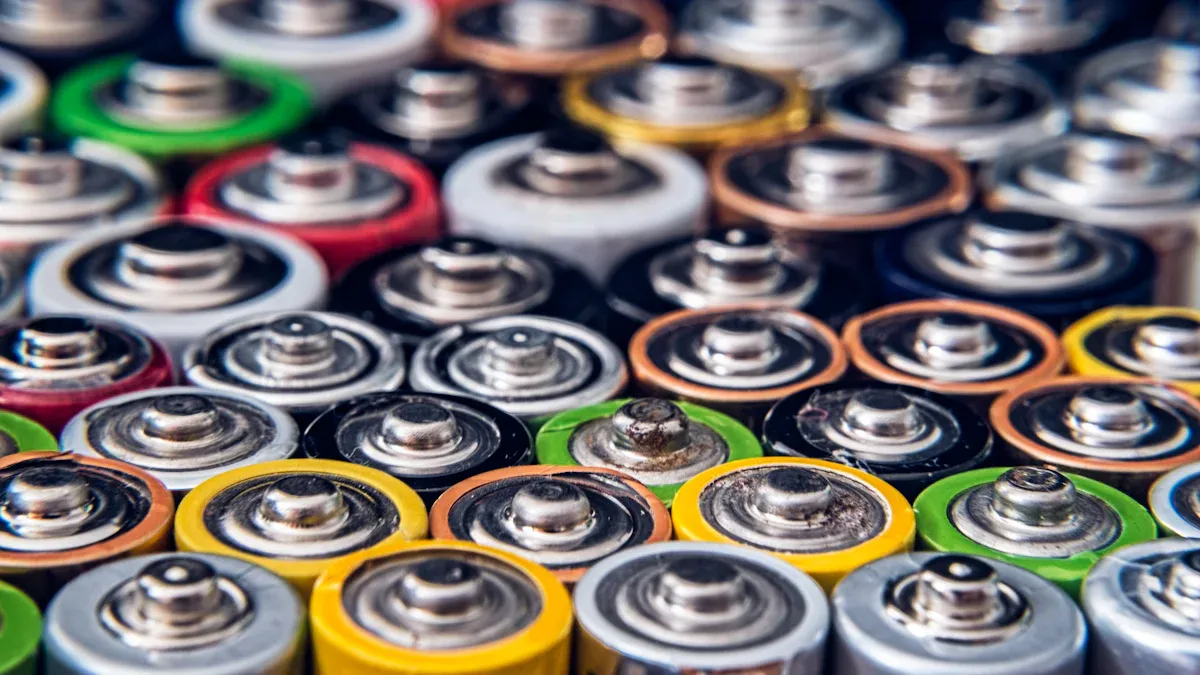
Finding a reliable lr44 battery replacement is rarely as simple as matching a part number. Because button cell batteries are manufactured globally under dozens of regional and brand-specific naming conventions, sourcing teams and repair technicians often face a confusing landscape of equivalent codes. Furthermore, while many batteries share the exact physical dimensions of the LR44, their internal chemistry—specifically alkaline versus silver oxide—dictates their electrical behavior, shelf life, and suitability for precision electronics.This guide synthesizes the mechanical specifications, discharge profiles, and replacement workflows required to select the correct button cell for low-drain devices, precision measurement tools, and vintage electronics.Mechanical and Electrical SpecificationsFor product engineers and hardware technicians, understanding the exact operational parameters of the LR44 is critical for diagnosing device failures or specifying components for a Bill of Materials (BOM).LR44 Mechanical DimensionsPhysical Dimensions: The standard LR44 measures 11.6mm in diameter and 5.4mm in height. The manufacturing tolerance for thickness is strictly 1.55mm (±0.05mm). Low-quality generic cells can sometimes measure up to 1.62mm thick, which risks permanently bending or damaging the battery compartment contacts in precision devices.Voltage Parameters: The LR44 is a 1.5V nominal alkaline cell. A healthy new cell will show an Open Circuit Voltage (OCV) of at least 1.50V. Under a 200-ohm load for 5 seconds, the Closed Circuit Voltage (CCV) should remain at or above 1.10V. The standard cut-off voltage is typically between 0.9V and 1.0V.Capacity and Current Limits: Typical capacity ranges from 110mAh to 150mAh, depending on the manufacturer and the discharge load (standard test load is 6.8kΩ). The LR44 is designed for micro-power applications requiring less than 5mA of continuous discharge. It is not suitable for high-pulse loads exceeding 20mA.Internal Resistance: New LR44 batteries typically exhibit an internal resistance between 3 and 9 ohms.Decoding the Nomenclature: Equivalents and AliasesThe most common mistake beginners make when sourcing a replacement is searching exclusively for the exact proprietary text stamped on a dead battery. Historically, manufacturers used proprietary branding to lock consumers into their ecosystem. For example, visual inspections of vintage Timex electric watches reveal they require a "TIMEX TYPE AL" battery, which is simply a standard LR44.Today, it is common to see multi-label blister packs where a single battery cell is packaged with multiple equivalent designations printed simultaneously, such as AG13, 357A, CX44, and LR44W.To navigate this, it is helpful to review the Top Batteries That Can Replace LR44. Common alkaline equivalents include:AG13 / G13: A highly common designation. If your device calls for this, you can safely use Top-Rated AG13 Battery Equivalent Substitutes, which are identical to the LR44.A76 / 76A / KA76: Widely used in North America.LR1154 / L1154: The standard naming convention in Europe and Asia, where "11" refers to the 11.6mm diameter and "54" refers to the 5.4mm height.V13GA: Varta’s brand-specific designation.Alkaline (LR44) vs. Silver Oxide (SR44): The Chemistry ShowdownWhile the LR44 (alkaline) and SR44 (silver oxide) share identical physical dimensions, their chemical makeup results in vastly different electrical behaviors. Understanding SR44 vs LR44 Which Battery Should You Use comes down to analyzing their discharge curves and environmental tolerances.Sloping vs. Flat Discharge CurvesLR44 vs SR44 Discharge CurvesAlkaline LR44 batteries feature a sloping discharge curve. As the battery drains, its voltage drops steadily from 1.5V down to its 0.9V cut-off. This makes them highly cost-effective for basic electronics like toys, laser pointers, and basic calculators where a gradual dimming of power is acceptable.Silver oxide SR44 batteries (often labeled as 357, 303, or SR44W) feature a flat discharge curve. They maintain a steady 1.55V output for the vast majority of their lifespan, dropping off sharply only at the very end. This predictable voltage curve is mandatory for precision electronics like digital calipers, medical instruments, and quartz watches, where a voltage drop would cause LCD flickering or sensor reset errors.Temperature and Shelf LifeSilver oxide performs significantly better in extreme temperatures. While an LR44 can technically function at -10°C (maintaining a 1.10V CCV), its overall capacity drops by roughly 50% in freezing conditions. In contrast, an SR44 retains up to 85% of its capacity at -10°C. Furthermore, SR44 batteries boast a shelf life of 4 to 6 years with a lower risk of chemical leakage, whereas LR44 alkaline cells typically expire after 2 to 3 years.The "One-Way" Replacement RuleBecause of the differences in chemistry, technicians should follow the "one-way replacement rule": An SR44 can almost always upgrade an LR44, but an LR44 should rarely replace an SR44.If a device was designed for an alkaline LR44, installing a silver oxide SR44 will simply provide longer life and better voltage stability. In benchmark tests using a TI-84 calculator under continuous backlight, a standard LR44 lasted 380 hours, while an SR44 lasted 820 hours.However, if a device was engineered specifically for an SR44, downgrading to an LR44 will lead to erratic behavior, premature failure, and potential device damage over time due to voltage instability.Replacement Workflow and Troubleshooting📺 AG13/A76/LR44 Watch battery EquivalentWhen replacing button cells in sensitive equipment, follow this standard technician workflow to prevent unnecessary resistance and hardware damage:Safe Battery Replacement WorkflowPower Down: Ensure the device is completely turned off to prevent short circuits during removal.Safe Extraction: Use plastic or ceramic tweezers. Metal tweezers can bridge the positive and negative terminals, instantly shorting and draining the new battery.Contact Cleaning: Inspect the battery compartment for white or green crystalline corrosion (a common issue with expired alkaline cells). Clean the contacts with isopropyl alcohol and a cotton swab. Even microscopic layers of finger oils or corrosion can increase internal resistance, mimicking a dead battery.Verify Polarity: Button cells usually have a flat top (positive, marked with a "+") and a slightly raised bottom (negative). Ensure correct orientation as per the device schematic.Decision Matrix: LR44 vs. SR44Use the following framework to determine which chemistry is appropriate for your specific application.Application / Device TypeRecommended ChemistryReason for SelectionToys, Laser Pointers, NoveltiesLR44 (Alkaline)Highly cost-effective; sloping voltage drop does not impact basic functionality.Digital Calipers & MicrometersSR44 (Silver Oxide)Requires flat discharge curve; alkaline voltage drops cause LCD flicker and loss of zero-calibration.Vintage Electric WatchesSR44 (Silver Oxide)High energy draw and need for precise timing require stable 1.55V output.Basic ThermometersLR44 (Alkaline)Low continuous draw makes alkaline sufficient, though silver oxide offers longer shelf life.Outdoor / Cold Weather GearSR44 (Silver Oxide)Retains 85% capacity at -10°C, whereas alkaline capacity drops by 50%.What to Ignore (Industry Noise)When researching battery specifications, you will likely encounter conflicting or inaccurate information. Filter out the following claims:The "3V L1154F" Myth: Some online listings erroneously categorize the L1154F as a 3V lithium battery. The L1154 is strictly a 1.5V alkaline equivalent to the LR44. If a device requires 3V, it likely needs a CR-series lithium coin cell (e.g., CR2032), which has entirely different dimensions and chemistry.The "Silver Iodide" Typo: Certain low-tier component blogs mislabel the 357A or SR44 as "silver iodide." The correct chemical composition is silver oxide.Proprietary Lock-in: Ignore device manuals that insist you must buy a specific brand's proprietary battery code (like V13GA or Type AL) to maintain warranty or performance. As long as the physical dimensions (11.6 x 5.4mm) and chemistry match, the brand name is irrelevant.Frequently Asked QuestionsAre LR44 batteries rechargeable?No. LR44 and their equivalents (AG13, A76, SR44) are primary cells, meaning they are strictly non-rechargeable. Attempting to recharge them in a battery charger can cause them to rupture, leak caustic potassium hydroxide, or explode.Why did my new LR44 battery die immediately in my digital calipers?Digital calipers require a stable voltage to maintain their measurement sensors. Because LR44 batteries have a sloping discharge curve, their voltage drops quickly below the threshold required by the caliper's processor, even if the battery still has capacity. You must use a silver oxide SR44/357 battery for calipers.What is the difference between 357 and 303 batteries?Both are silver oxide equivalents to the LR44. Historically, the 357 was designed for high-drain devices (like watches with alarms or backlights), while the 303 was designed for low-drain devices (basic analog watches). Today, most manufacturers combine them into a single "357/303" dual-label battery.How should I store spare LR44 batteries?Store them in a dry, climate-controlled environment (ideally between 68°F and 77°F) with low humidity. Keep them in their original blister packaging. If stored loose in a drawer, the cells can touch each other or other metal objects, causing them to short-circuit and drain prematurely.How do I safely dispose of LR44 batteries?While modern LR44 batteries no longer contain mercury, they still contain zinc, manganese dioxide, and potassium hydroxide. They should not be thrown in household trash. Tape the terminals with clear tape to prevent short-circuiting and take them to a local e-waste or community battery recycling drop-off point.
On 2026-05-18