info@kynix.com
 00852-6915 1330


 0
0


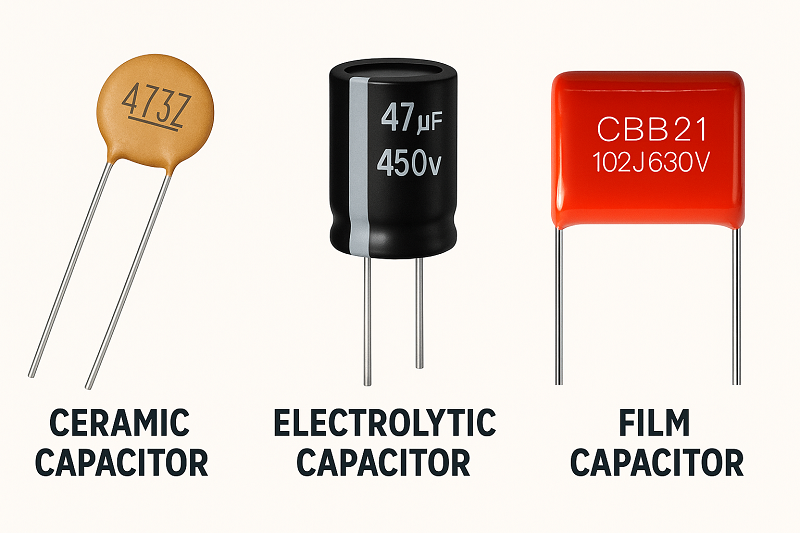

This technical guide evaluates soft-termination multilayer ceramic chip capacitors (MLCCs), mechanical board flexure failure mechanisms, and design-for-manufacturability (DFM) controls for printed circuit board (PCB), component, and reliability engineers. Mechanical stress during assembly and operation remains one of the primary causes of latent electrical failures in surface-mount ceramic capacitors.Standard Class II MLCCs, particularly in package sizes of 0805 and larger, risk brittle fracture under printed circuit board assembly (PCBA) deflections as low as 2 mm during qualification testing and dynamic handling strains exceeding 700 to 1,000 με. Soft-termination MLCCs introduce an elastic, metal-filled conductive resin layer between the inner copper termination and outer nickel/tin plating, raising the guaranteed deflection threshold to 3 mm to 5 mm under AEC-Q200-005 test standards[2]. Furthermore, this architecture shifts the failure mode from an internal inter-electrode dead short to a benign external peel-off (fail-open). However, soft termination does not replace proper layout: excessive solder fillet height (>75% of chip thickness) forms a rigid metallic bridge that completely bypasses the polymer cushion, causing ceramic fracture regardless of the termination rating.The Mechanics of MLCC Flex Cracking and Latent Field FailuresTensile Stress Concentration and the 45-Degree Ceramic Shear CrackCeramic dielectric materials, such as barium titanate (BaTiO3), exhibit high compressive strength but poor tensile strength. When a printed circuit board bends, convex deflection stretches the outer surface of the laminate. This elongation transmits mechanical strain through the copper solder pad and the rigid solder fillet directly into the lower margin of the capacitor's termination cap.Because the solder fillet adheres tightly to the outer metallization, tensile bending moments concentrate at the junction where the rigid metal termination ends and the bare ceramic body begins. When local tensile stress exceeds the fracture modulus of the ceramic matrix—typically 150 to 200 MPa for standard ferroelectric formulations—the material shears, as documented in evaluations of ceramic capacitor cracking[8]. The fracture follows the principal stress plane, propagating inward and upward at an angle of roughly 45 degrees. This diagonal crack slices through the active interleaved internal electrode layers, mechanically rupturing the sub-micron dielectric barrier separating opposing polarities.Latent Failure Dynamics: From Micro-Crack to Insulation Resistance BreakdownThe primary engineering challenge of flex cracking is its latent behavior. A 45-degree micro-crack rarely severs continuity across the entire component immediately. At the factory gate, the cracked capacitor typically retains sufficient dielectric integrity to pass automated optical inspection (AOI), in-circuit testing (ICT), and functional end-of-line verification.Field failure develops progressively through environmental exposure and electrical bias:Moisture Ingress: Ambient atmospheric humidity enters the microscopic ceramic fissure via capillary action.Electrochemical Dissolution: Under continuous operating DC voltage bias, local electric fields across the narrow crack reach tens of kilovolts per millimeter. Metal ions from internal electrode layers (typically nickel in Base Metal Electrode systems) dissolve into the moisture film.Dendritic Migration: Metal dendrites grow along the crack interface between opposing electrode margins.Dielectric Collapse: Insulation resistance (IR) drops exponentially from gigohms to milliohms. Localized leakage current generates focal I2R heating, triggering thermal runaway that culminates in an unrecoverable dead short, component incineration, or PCB carbonization.Package Size Scaling: Why 0805 and Larger Cases Bear Elevated RiskMechanical strain transferred into a surface-mount capacitor scales directly with component body length (L) and the span between solder fillets.Miniature packages such as 0201 (0603 metric) and 0402 (1005 metric) possess short geometric spans. Under typical handling flexure, the differential deflection between their two termination pads is negligible; consequently, they rarely experience sufficient tensile bending moment to cause fracture.Conversely, packages of 0805 (2012 metric), 1206 (3216 metric), and 1210 (3225 metric) span substantial board distances. In dynamic strain evaluations, 1206 ceramic capacitors on standard FR4 substrates fail at board strains between 1,700 με and 2,500 με, with fracture occurring at deflections under 2 mm to 3 mm. As component thickness and length increase, the mechanical lever arm amplifies stress at the ceramic margin, making large MLCCs vulnerable to minor assembly flexure.Standard vs. Soft Termination: Internal Architecture and Failure ModesLayered Construction: Integrating the Conductive Polymer BufferStandard MLCC end terminations consist of three primary layers:An inner thick-film copper (Cu) electrode bonded directly to the ceramic and the internal nickel electrodes.An electroplated nickel (Ni) barrier layer to resist solder leaching.A matte tin (Sn) outer finish for solderability.All three layers consist of rigid metals with high elastic moduli (E>100 GPa). When the board deflects, this rigid stack transmits strain straight into the brittle ceramic.Soft-termination (flexible or resin-electrode) capacitors modify this stack by interposing a conductive polymer matrix between the inner copper electrode and the nickel plating layer, as detailed in the Murata GCJ Series documentation[5] and KYOCERA AVX FLEXITERM technical analysis[6]. This buffer layer consists of an epoxy or polymer matrix heavily doped with conductive metal particles (typically silver or copper). The polymer matrix features a low elastic modulus (E≈2 to 5 GPa), providing mechanical compliance. When substrate bending induces shear forces across the solder joint, the polymer layer deforms elastically and plastically, absorbing strain energy and dampening stress concentrations before they reach the ceramic body.Qualification Benchmarks: AEC-Q200-005 Standard Deflection vs. Soft-Termination GuaranteesThe automotive standard for assessing capacitor flex resistance is AEC-Q200-005 (Substrate Bending Test), part of the broader AEC-Q200 passive component qualification suite[1]. The test geometry is strictly standardized:Support Span: 90 mm between cylindrical support rollers.PCB Substrate: 1.6 mm thick FR4 board (100 mm×40 mm).Actuator Speed: 1.0 mm/second applied at the center of the board.Duration: Deflection held for 60 seconds (+5 seconds).Under AEC-Q200-005, standard Class II ceramic capacitors (e.g., X7R, X8R) require a baseline qualification deflection of only 2 mm without mechanical fracture or capacitance shift outside specification limits.By contrast, tier-1 automotive soft-termination MLCCs guarantee 3 mm to 5 mm of continuous deflection under identical test conditions. In destructive testing where boards are bent until failure occurs, soft-termination capacitors routinely withstand deflections up to 8 mm to 10 mm before electrical disruption, providing substantial mechanical headroom over standard components.Failure Mode Transition: Catastrophic Short Circuit vs. Benign Fail-Open (Peel-Off)The critical reliability distinction between standard and soft-termination capacitors lies in the ultimate failure mode under extreme over-stress:Standard Termination: When board bending exceeds mechanical limits, tensile stress fractures the ceramic body across the active electrode region. The end-state failure mode is an internal inter-electrode dead short, creating a direct conductive path across power rails.Soft Termination: Under extreme deflection exceeding the elastic absorption capability of the polymer (>5 mm to 8 mm), stress resolves through adhesive failure at the metal-polymer interface. The outer nickel/tin termination peels cleanly away from the conductive resin buffer (termination peel-off). The underlying ceramic body remains structurally intact, leaving the component in a benign open-circuit state (Fail-Open).While an open circuit interrupts circuit functionality, it prevents catastrophic thermal runaway, short-circuit fire hazards, and localized board destruction.Parasitic and Thermal Trade-Offs: Addressing ESR Penalties and Asymmetric TerminationsEngineers frequently hesitate to specify soft-termination MLCCs on power conversion rails due to potential parasitic penalties. In conventional full-wrap soft termination, the conductive resin completely encloses the terminal cap. Because conductive epoxy exhibits lower bulk conductivity than pure copper, full-wrap parts introduce a small increase in equivalent series resistance (ESR) and equivalent series inductance (ESL). On high-ripple DC-DC output stages and 48 V automotive domains, this added resistance can lead to higher I2R internal heating.To resolve this trade-off, manufacturers have developed asymmetric terminal structures, such as the TDK MLCC solution guide architecture[4]. In visual stress tests and 3D architectural renders of advanced configurations (such as TDK's CNC series), the conductive soft resin layer is restricted solely to the bottom-side mounting pad beneath the outer metal plating, leaving the vertical end faces and top edge with standard low-resistance metal plating.CNC Series: Low Resistance Soft Termination MLCC | Datasheet PreviewExperts point out that by placing the resin exclusively on the bottom plane where board-flex shear forces enter the component, the high-frequency current loop traversing the vertical terminal walls bypasses the polymer layer entirely. This maintains low ESR and low ESL characteristics while preserving mechanical compliance.From a thermal endurance standpoint, the polymer buffer also relieves internal stress driven by coefficient of thermal expansion (CTE) mismatches between the ceramic body (≈9.5 to 11.5 ppm/∘C) and the FR4 substrate (≈14 to 17 ppm/∘C). Consequently, tier-1 soft-termination series routinely achieve qualification across >3,000 thermal shock cycles (−55∘C to +125∘C/+150∘C), triple the standard AEC-Q200 baseline requirement of 1,000 cycles.Manufacturing Stress Hotspots: Depaneling, Fastening, and InterconnectsEven components that satisfy qualification benchmarks will fail if PCBA manufacturing processes generate excessive mechanical strain. Under IPC/JEDEC-9704A strain measurement guidelines[3], dynamic strain must be monitored across transient assembly operations using triaxial rosette strain gauges. Allowable dynamic microstrain (με) depends directly on board thickness and strain rate:Max Allowable Strain=2.35PWB Thickness×[1900−300×log10(Strain Rate)]During high-velocity operations, allowable transient limits frequently drop below 700 to 1,000 με. Three primary manufacturing operations routinely exceed these safe limits.Depaneling Operations: V-Cut Scoring vs. Router Milling MechanicsDepaneling is the single largest contributor to MLCC flex cracking in production:V-Cut Scoring: Breaking panels along V-grooves using circular blades ("pizza cutters") or manual snapping generates high out-of-plane torsional flexure and local shear stress. As the blade wedges into the score line, localized board deflection easily induces strains from 1,500 to over 3,000 με, fracturing adjacent MLCCs oriented perpendicular to the cut.Router Milling: High-speed mechanical spindle routing dramatically reduces transient panel flexure compared to V-scoring. However, stress transfers to the break-out tabs ("mouse bites"). Cutting these retention tabs with manual nibbling tools or punch dies without underside mechanical backing fixtures generates severe localized bending moments.Hardware Fastening: Screw Boss Warpage and Torque-Induced StrainSecuring a populated circuit board into a chassis with threaded fasteners introduces severe static strain:Uneven Boss Heights: If cast aluminum or molded plastic standoffs deviate in planar height by as little as 0.2 mm, torquing a screw pulls the semi-rigid FR4 laminate into severe dish or saddle warpage.Torque Transfer: Without counter-torque fixtures, screw head friction twists the local board area around the mounting hole. This locks static tensile stress permanently into adjacent solder joints, lowering the margin required for subsequent thermal cycles to initiate cracking.Dynamic Assembly Stress: Connector Mating and In-Circuit Test FixturesConnector Insertion: Pressing large multi-pin wire harnesses or automotive header connectors into unsupported circuit boards creates significant downward flexure. Manual insertion forces reaching 50 to 100 N across an unsupported span can generate board deflections exceeding 4 mm.ICT Bed-of-Nails Pressing: In-circuit test fixtures utilize spring-loaded pogo pins that press upward against the PCBA while mechanical push-rods press downward from above. If push-rods and backup pins are misaligned or spaced too far apart, the compressive force bends the board locally during test actuation, cracking components situated near test pads.Field Observations: Perspectives from Assembly and Reliability EngineersEngineering discussions on technical forums and failure analysis reports highlight recurring operational patterns regarding MLCC cracking:The "Zero-Defect" Illusion at EOL: Assembly engineers frequently note that lots experiencing severe depaneling stress often pass initial factory testing with 100% yields. Failures only appear 3 to 12 months later following humidity exposure in the field, often misleading teams into blaming component quality rather than depaneling fixtures.The Manual Handling Risk: Technicians handling large panel arrays before separation frequently flex the board during transport. Panel flexure caused by picking up unsupported boards with one hand generates sufficient flexure to induce micro-cracks in 1206 capacitors near the center of the panel.Bypassing the Upgrade: Quality teams reporting component failures after upgrading to soft-termination parts regularly find that SMT solder paste volumes were left unadjusted. The resulting excessive solder fillets bridged over the flexible polymer layer, nullifying the upgrade.PCB Layout DFM and Assembly Process Controls: Preventing the Solder Bypass TrapComponent-level upgrades cannot compensate for poor physical layout or out-of-spec soldering processes. Mitigating flex cracking requires a multi-layered design defense.Component Orientation: Mitigating Strain through Geometric AlignmentThe orientation of an MLCC relative to the board's primary bend axis dictates the magnitude of tensile stress transmitted into the ceramic body.Perpendicular Placement (High Risk): When the longitudinal axis of the capacitor sits perpendicular to the bend axis (e.g., perpendicular to a V-cut line or board edge), board deflection pulls the two solder fillets apart. This maximizes the tensile bending moment across the ceramic body.Parallel Placement (Low Risk): Aligning the capacitor's longitudinal axis parallel to the bend axis ensures that both terminals experience uniform deflection simultaneously. Empirical strain gauge evaluations and finite element analysis (FEA) show that parallel orientation reduces mechanical tensile stress across the termination by up to 50% compared to perpendicular placement under identical deflection levels.Mechanical Keep-Out Distances for High-Risk Board FeaturesLayout designers must enforce strict mechanical clearance zones around manufacturing stress concentrators.Stress FeatureMinimum Clearance (0402 / 0603)Mandatory Clearance (0805 / 1206 / 1210)Recommended OrientationV-Cut Score Line≥3.0 mm≥5.0 mmStrictly ParallelRouted Edge / Break-Out Tab≥1.5 mm≥3.0 mmParallel to tab edgeScrew Mounting HoleWasher Radius +3.0 mmWasher Radius +5.0 mmCircumferential (Tangential)Heavy Connector Boundary≥2.0 mm≥4.0 mmParallel to insertion axisICT Fixture Support Pins≥2.5 mm≥4.0 mmNon-criticalThe Solder Fillet Bypass Risk: Why Excess Solder Paste Negates Soft TerminationThe most common implementation failure involving soft-termination MLCCs occurs on the surface-mount technology (SMT) assembly line.Soft-termination capacitors rely on the exposed, compliant resin band situated between the inner electrode and the rigid outer plating to absorb shear stress. According to tier-1 manufacturer mounting guidelines (including Murata and Knowles Syfer), the solder fillet height (h) must remain between 1/3 and 2/3 (33% to 66%) of the component's total thickness (T), with an absolute maximum allowable limit of <75% of T.If stencil apertures deposit excessive solder paste, surface tension pulls molten solder up the termination during reflow. When the solidified solder fillet exceeds 75% of the component's thickness, the metallic solder forms a rigid bridge directly from the PCB landing pad to the upper ceramic body, completely spanning past the soft polymer resin band.This rigid bridge physically couples the board's tensile deflection directly into the brittle ceramic. Under mechanical flexure, the capacitor cracks at the standard 45-degree angle, rendering the soft-termination design ineffective. Stencil apertures for soft-termination parts must be reduced by 10% to 20% relative to standard pad sizes to control paste volume.Capacitor Architecture Selection FrameworkHardware and component engineers must match capacitor architecture to the specific mechanical and electrical criticality of each net.Structural Comparisons: Soft-Termination vs. Open-Mode vs. Floating-Electrode DesignsWhen evaluating crack-resistant and fail-safe capacitors, three primary internal architectures exist:Soft Termination (External Mechanical Cushion): Adds an external conductive polymer resin buffer. It acts externally to dissipate mechanical strain and prevent ceramic cracking up to 5 mm of deflection, converting over-stress failures into external terminal peel-off.Open-Mode Design (Internal Margin Defense): Standard termination externally, but internal electrode prints are set back away from the capacitor end caps. If a 45-degree shear crack forms across the terminal corner due to mechanical bending, the fracture plane passes through an inactive ceramic zone without intersecting overlapping opposing electrode plates. Capacitance drops slightly, but an internal short circuit is avoided.Floating-Electrode / Serial Design (Internal Redundancy): Divides the internal dielectric array into two capacitive elements connected in series within a single ceramic block. If board flexure cracks one side of the capacitor and shorts that section, the opposing intact serial capacitor maintains basic dielectric isolation, preventing power rail collapse.Automotive Rail Requirements and Critical System Standards (VW 80808-2)In safety-critical applications, such as automotive electronics, regulatory and OEM specifications dictate fail-safe strategies. The Volkswagen Group standard VW 80808-2 failsafe MLCC specification[7] establishes strict criteria for ceramic capacitors connected directly to unswitched power networks:Scope: Applies to any circuit where an MLCC short-circuit could disable critical vehicle safety functions or generate a localized power dissipation exceeding 2.5 W.Direct Battery Rails (Terminal 30 / KL30): Because Terminal 30 connects directly to the vehicle battery without switched ignition isolation, a short circuit presents a fire hazard. VW 80808-2 mandates capacitors qualified to 5 mm deflection (soft termination) combined with open-mode internal geometries, or the use of two standard capacitors placed in mutually orthogonal series layouts.Engineering Selection Matrix: Matching Architecture to Risk VectorOperating / Layout ConditionRecommended Capacitor ArchitectureTarget Package SizesAEC-Q200-005 Deflection LimitPrimary Failure Mode Under Severe StressTypical Circuit ApplicationsLow-Risk Core Zones(>10 mm from edges/screws; flat substrate)Standard Class I / Class II Termination0201, 0402, 06032 mmCatastrophic internal dead short (45° shear crack)High-speed digital decoupling, RF matching, precision analog filteringModerate-Risk Zones(3–5 mm from V-cut; near connectors; package ≥0805)Soft Termination (Conductive Resin Layer)0805, 1206, 12103 mm to 5 mmBenign external open circuit (terminal peel-off)Intermediate buck/boost stages, general industrial I/O, ECU power suppliesHigh-Ripple Power Paths(High-flex zone + strict ESR/thermal limits)Asymmetric Soft Termination (Bottom-Only Resin)0805, 12063 mm to 5 mmBenign external open circuit (terminal peel-off)DC-DC converter output filters, point-of-load regulators, battery charge pathsDirect Battery Lines (Fail-Safe)(Unfused Terminal 30 / KL30 automotive nets)Dual Protection (Soft Termination + Open-Mode / Serial)0805, 1206, 12105 mmFail-open / intact secondary series dielectric marginAutomotive 12V/48V KL30 power inputs, safety-critical aerospace busesSevere Mechanical Deflection(Board flex >5 mm; high CTE thermal mismatch)Metal Lead-Frame Capacitors (Megacap / Lead-Frame)1812, 2220, stacked arrays>6 mm to 10 mmElastic lead-frame deformation; ceramic isolated from boardHeavy industrial motor drives, high-voltage EV traction inverters, resonant tanksPractical Reliability Checklist and Implementation WorkflowReliability in high-stress environments depends on integrating component selection with layout and process audits. Engineering teams should review this verification checklist prior to tape-out and production ramp.PCBA Mechanical Stress Audit & DFM Verification Checklist1. Schematic and Net Criticality ReviewIdentify all capacitors tied directly to unswitched DC battery rails (KL30 / Terminal 30) or power buses where short-circuit dissipation can exceed 2.5 W.Mandate dual-protection capacitors (soft termination combined with open-mode or serial internal structure) for all safety-critical nets per VW 80808-2.Review decoupling positions on high-ripple power rails: specify asymmetric bottom-resin soft termination if ripple currents demand minimal ESR and ESL.2. Layout Geometry and Keep-Out AuditVerify that all MLCCs in package sizes ≥0805 are oriented parallel to adjacent board edges, V-cut score lines, and break-out tabs.Verify a minimum keep-out distance of ≥5.0 mm between 0805+ MLCCs and V-cut breakout lines.Verify a minimum clearance of screw head/washer radius +3.0 mm (preferably +5.0 mm) for all mounting holes.Verify that no MLCCs are placed directly beneath or immediately adjacent to large through-hole connectors subject to manual mating forces.3. SMT Stencil and Assembly Process VerificationInspect SMT stencil aperture designs for MLCC footprints: ensure aperture volumes are scaled to yield a solder fillet height between 33% and 66% (strictly <75%) of chip thickness (T).Verify that pick-and-place nozzle placement forces do not exceed manufacturer limits to prevent micro-cracking during component centering and placement.Perform dynamic strain gauge testing per IPC/JEDEC-9704A on prototype assemblies during depaneling, ICT bed-of-nails pressing, and connector insertion, ensuring transient microstrain remains below safe limits (<700 to 1,000 με).Frequently Asked QuestionsHow much more PCB deflection can soft-termination MLCCs handle compared to standard parts?Under the standardized AEC-Q200-005 test method (90 mm support span on a 1.6 mm FR4 board held for 60 seconds), standard Class II MLCCs (such as X7R) require a baseline qualification deflection of only 2 mm. Tier-1 automotive soft-termination MLCCs guarantee 3 mm to 5 mm of deflection without mechanical fracture or insulation degradation. Under destructive over-stress evaluations, soft-termination capacitors routinely withstand 8 mm to 10 mm of deflection before mechanical disruption occurs.Will a soft-termination MLCC short circuit if board bending exceeds its maximum deflection threshold?No. Standard MLCCs crack across the active internal electrodes, creating an inter-electrode breach that results in a catastrophic short circuit. Soft-termination MLCCs are engineered to exhibit a fail-open mechanism: when deflection exceeds material absorption limits (>5 mm to 8 mm), shear stress triggers an adhesive separation at the polymer interface, causing the terminal to peel away from the component (termination peel-off). The ceramic body remains intact, interrupting the circuit path and preventing thermal runaway.Why does excessive solder fillet height negate the advantages of soft termination?Soft termination functions because the exposed, compliant conductive polymer band absorbs shear strain transmitted from the solder joint. If stencil paste deposits are excessive and the solder fillet climbs beyond 75% of the capacitor's total thickness (T), the solder forms a continuous, rigid metallic bridge from the PCB land to the upper ceramic body. This bypasses the flexible resin layer entirely, routing raw tensile stress directly into the ceramic and causing standard 45-degree flex cracking.Does soft termination increase equivalent series resistance (ESR) or high-frequency losses?Conventional soft termination introduces a minor increase in ESR and ESL because the conductive polymer matrix has lower bulk conductivity than pure copper. While negligible for standard low-frequency decoupling and filtering, this added resistance can impact high-ripple power rails. Modern asymmetric soft-termination designs resolve this by restricting the conductive resin strictly to the bottom mounting face while keeping the vertical end faces standard metal plating. This provides mechanical strain absorption while preserving low ESR and ESL across high-frequency switching loops.Can soft-termination MLCCs substitute for proper PCB layout keep-out zones and depaneling support?No. Soft-termination components provide an essential safety margin against unforeseen mechanical flexure, but they are not a substitute for proper DFM practices. Severe manufacturing operations, such as manual panel snapping or driving screws into unlevel standoffs, can generate local strains exceeding 2,500 to 3,500 με. Strains of this magnitude exceed the absorption capability of any surface-mount passive component. Soft termination must be deployed as the final layer of a defense-in-depth strategy alongside parallel orientation, proper keep-out distances, and controlled solder paste volume.ReferencesAEC-Q200 REV D: Stress Test Qualification for Passive Components — Automotive Electronics CouncilAEC-Q200-005 REV A: Board Flex Test — Automotive Electronics CouncilIPC/JEDEC-9704A: Printed Circuit Assembly Strain Gage Test Guideline — IPC / JEDEC Solid State Technology AssociationFlex Crack Countermeasures in MLCCs: High-Reliability Series Solution Guide — TDK CorporationGCJ Series Soft Termination Chip Multilayer Ceramic Capacitors Product Documentation — Murata Manufacturing Co., Ltd.AVX MLCC FlexiTerm: Guarding Against Capacitor Crack Failures — KYOCERA AVX Components CorporationMLCC Failsafe Strategy: Future-proof products for demanding Automotive Applications (VW 80808-2) — Samsung Electro-MechanicsCracking Problems and Mechanical Characteristics of PME and BME Ceramic Capacitors — NASA Electronic Parts and Packaging (NEPP) Program
On 2026-09-11